

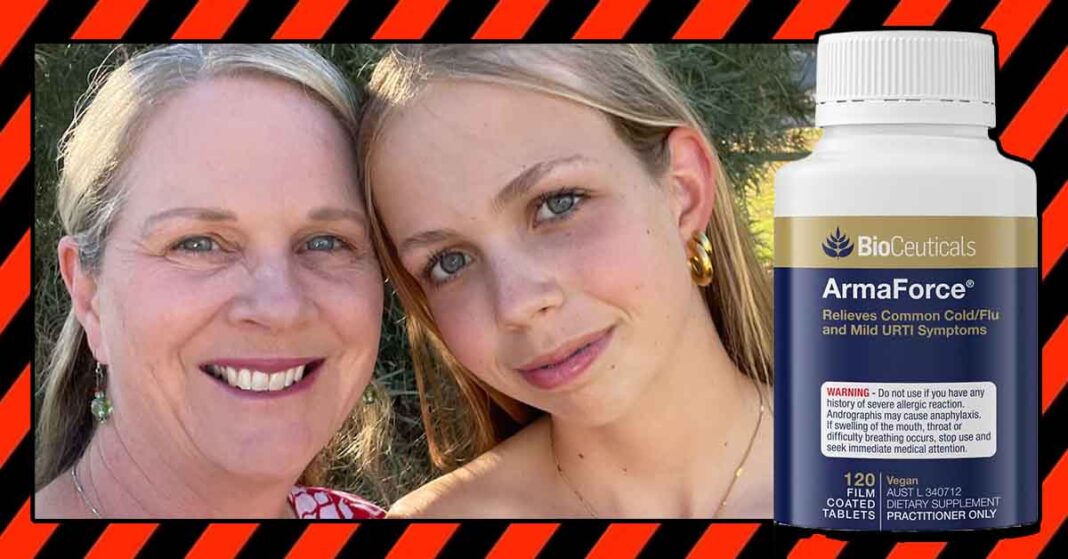
Kerry Smith, a 51-year-old mother from Perth, Australia, has become the face of a growing medical alert after a common cold and flu supplement, ArmaForce — sold worldwide — triggered life-threatening anaphylaxis. The incident, which occurred on Monday, has prompted urgent calls from medical experts for Australia’s Therapeutic Goods Administration (TGA) to move beyond warning labels and consider banning the product from over-the-counter sale.
The ordeal began when Smith, feeling the onset of a minor illness, took a popular herbal remedy. Within minutes, she developed a severe allergic reaction that rapidly escalated into a medical emergency. “I just felt my throat closing up and my skin was on fire,” she recounted, describing the terrifying speed at which the herbal supplement affected her body.
Crucially, Smith was prepared for such an event, though not because of the supplement. She had been prescribed epinephrine years earlier because of a known allergy to bee stings. However, she rarely had cause to use it, as her previous encounters with bees had been infrequent and manageable. Having the life-saving devices on hand in her medicine cabinet ultimately proved to be the difference between life and death.
As her symptoms worsened, she realized her only hope was the epinephrine auto-injectors she had kept for years. “I knew I had the EpiPens for the bees, but I never thought I’d be using them for a vitamin tablet,” she said. Despite her hesitation and the rarity of their use in her daily life, she successfully administered the medication, which stabilized her condition long enough for paramedics to arrive and transport her to the hospital.
The culprit in the supplement is believed to be Andrographis paniculata, an herb commonly used in traditional Chinese and Indian medicine. Marketed as a natural immune booster, the herb has been linked to hundreds of reports of hypersensitivity and anaphylaxis to the TGA. Medical professionals now warn that the risk is particularly high in multi-ingredient products like ArmaForce, which often combine andrographis with other potential allergens, such as echinacea.
Doctors who treated Smith expressed alarm at how easily a consumer can purchase a product with such potent risks. One medical expert noted, “We are seeing a trend of severe reactions to these ‘natural’ remedies that people perceive as harmless. In this case, the patient was lucky she had a history of other allergies, or she might not have had an EpiPen at home.”
The TGA has previously issued safety alerts and updated labeling requirements for products containing andrographis, but this latest incident has intensified the debate over whether these measures are sufficient. Critics argue that a simple warning on the back of a bottle is inadequate for a substance capable of causing a fatal reaction in otherwise healthy individuals who have no history of drug allergies.
Now recovering at home, Smith is sharing her story to warn others about the hidden dangers in the supplement aisle. “I just want people to realize that ‘natural’ doesn’t always mean safe,” she warned. Her experience serves as a harrowing reminder of the importance of carrying epinephrine for those with known allergies, even if, like her, they rarely expect to use it.