

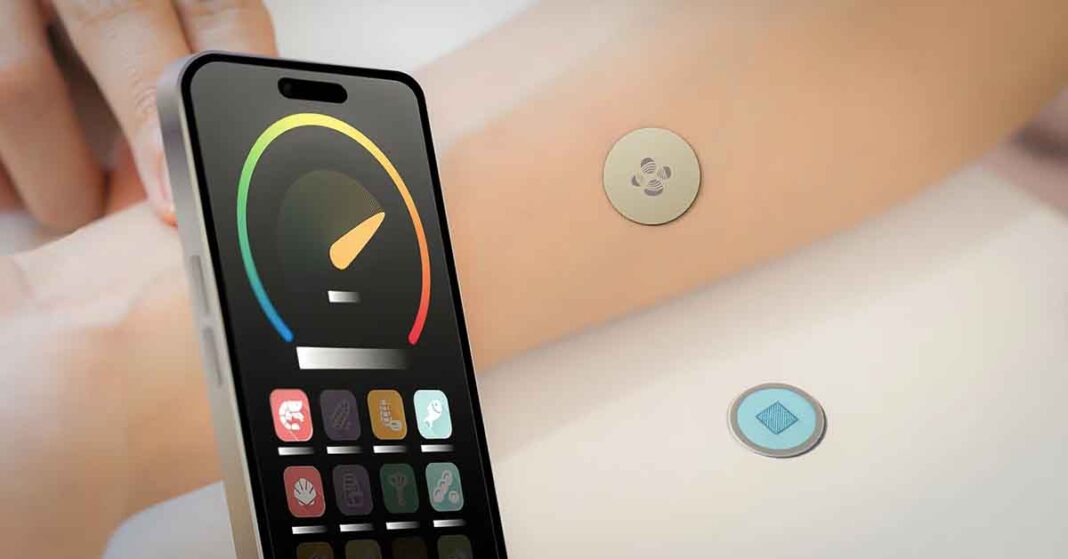
The management of food allergies has long been a reactive process, often involving emergency interventions to counter sudden, severe immune responses. Researchers at the King Abdullah University of Science and Technology (KAUST) have developed an innovative wearable biosensor, the AllergE patch, that promises to fundamentally shift this paradigm. This device monitors key biomarkers in real-time, offering an early warning system that could revolutionize how millions of people manage their daily risks from common allergens like nuts, milk, eggs, and seafood.
This technology has the potential to create a safer environment for allergy sufferers. The AllergE patch is designed to offer a proactive approach, with the ultimate goal to “reduce life-threatening anaphylaxis and transform allergy management from reactive to preventive care.” By providing continuous, non-invasive data on a person’s allergic state, the patch ensures that risks can be identified and mitigated long before exposure leads to a dangerous immune reaction and the onset of debilitating symptoms.
The AllergE patch’s core function relies on an array of tiny, porous microneedles — each less than a millimeter in length — that are designed to interact with the body’s internal chemistry. The patch is described as a biosensor that “painlessly detects immunoglobulin E (IgE), the antibody that triggers allergic reactions, directly from the fluid beneath the skin.” Traditional allergy tests, such as skin pricks and blood draws, are often time-consuming, invasive, and carry the slight risk of provoking a reaction; the AllergE patch bypasses these drawbacks entirely.
Inside each miniature microneedle are DNA strands called aptamers, which function as molecular sensors. When these sentinels encounter IgE antibodies, they generate an electrochemical signal, which a small reader translates into measurable, continuous data. Dana Alsulaiman, the study’s corresponding author, highlighted the patch’s significance for personal health monitoring, stating, “This smart patch could one day help prevent anaphylaxis and enable safe, at-home early allergy sensitization detection.” The eventual goal is to allow the device to sync with a smartphone, enabling simple and effective remote monitoring.
The technical capabilities of the AllergE patch are impressive. In testing, the device successfully detected IgE concentrations as low as 30 picograms per milliliter, a sensitivity level described as “hundreds of times more sensitive than most current assays.” Crucially, the patch also proved capable of distinguishing IgE from other structurally similar antibodies that are abundant in the body’s immune defenses but are not involved in triggering allergic responses, ensuring highly accurate results.
Manufacturing the patch components requires a high degree of precision, which the researchers achieved using two-photon polymerization, a high-resolution 3D lithography technique. This structural control over the microneedles ensures they can function optimally: they are “deep enough to sense, but shallow enough to stay painless and unobtrusive,” while also maintaining their integrity for repeated uses. This advanced fabrication technique is essential for creating a comfortable, effective, and reliable wearable diagnostic tool.
Looking forward, the KAUST team, which includes collaborators from the Lab of Biomedical Materials and Devices (BioMAD Lab) and the Sensors Lab, envisions a future far beyond just allergy detection. They see the AllergE patch “as part of a broader family of skin-worn diagnostics, capable of tracking immune molecules, hormones, and other biomarkers linked to inflammation and disease.” This initial success paves the way for a generation of non-invasive, continuous diagnostic devices that could profoundly improve personalized healthcare and disease management.