
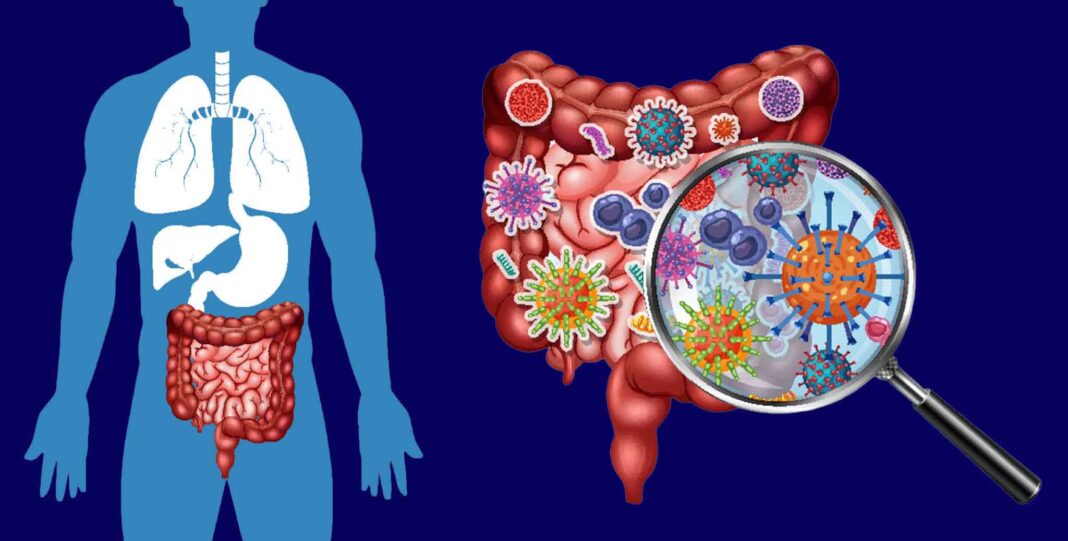
A new scientific review in the International Journal of Molecular Sciences is shining a spotlight on an emerging idea researchers call the “gut–allergy axis.” In simple terms: what’s happening in your gut may influence how strongly your body reacts to allergens.
The paper focuses on SIBO (Small Intestinal Bacterial Overgrowth)—a condition where excess bacteria build up in the small intestine—and how it may be linked to asthma, food allergies, and other allergic conditions.
Researchers describe how this bacterial imbalance can irritate the gut lining and trigger immune signals that promote allergic-type inflammation. When the gut barrier is disrupted, the immune system may become more reactive—essentially lowering the threshold for allergic responses.
The connection appears strongest in asthma. The review found that SIBO is more common in people with asthma, and some studies suggest it may be tied to more severe symptoms. There are also reports that treating SIBO can improve asthma control in certain patients, though this isn’t yet proven across the board.
There’s also a possible link to mast cell activation syndrome (MCAS), a condition where the body’s allergy cells release chemicals too easily. Some studies cited in the review found that addressing SIBO was associated with symptom improvement in people with MCAS—but again, the evidence is still limited.
For food allergies, the theory centers on what’s often called “leaky gut.” When the intestinal barrier is weakened, food proteins and bacterial byproducts can pass into the bloodstream more easily, potentially triggering the kind of immune response that drives allergic reactions. While this mechanism makes sense biologically, researchers emphasize that more data is needed to understand how much SIBO actually influences real-world food allergy risk or severity.
The link is less convincing for chronic hives (urticaria). Treating SIBO has not consistently improved symptoms, and other gut-related factors—like H. pylori infection—may be more important in those cases.
The bottom line: researchers believe the gut–allergy axis is real and worth exploring—but it’s not yet a proven pathway doctors can reliably target for treatment. For now, it remains a promising area of research rather than a standard approach to managing allergies.