
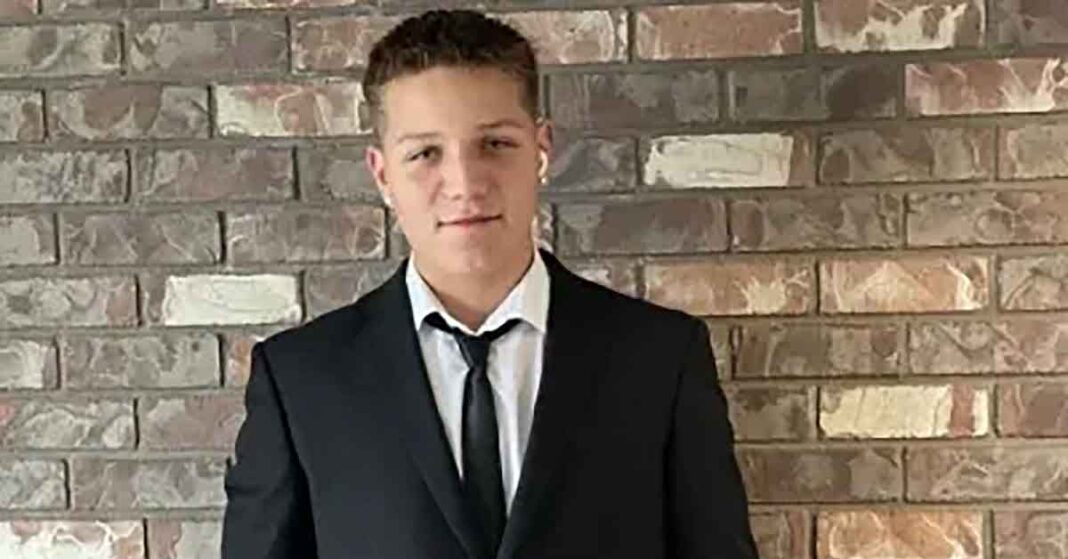
14-year-old Malachy Flores suffered anaphylaxis during a hockey trip. Please heed our advice to prevent similar tragedies.
[Trigger Warning]
Jerika McArter of Port Hardy, British Columbia, is publicly advocating for widespread access to epinephrine auto-injectors in public places following the tragic death of her 14-year-old son, Malachi Flores. The fatal incident occurred on September 28th in the Comox Valley while Malachi was on a hockey trip. His death was caused by a severe allergic reaction after he unknowingly consumed a snack containing cashews, an food to which he was allergic. The heart-wrenching loss has spurred his mother to push for policy change regarding the availability of life-saving epinephrine auto-injectors.
Malachi’s fatal reaction was the result of a rare lapse in his usual cautious behavior regarding his allergies. McArter recounted the circumstances to CHEK News, explaining her son’s typical diligence: “He’s usually so good – he always looks at all his labels with granola bars and cookies; he usually doesn’t eat different things, he’s also a really picky kid,” she explained. On this day, however, he was drawn to a treat that he believed was safe, situated next to one that clearly contained nuts at a local establishment.
McArter detailed the moment Malachi realized his mistake, stating:
He loves chocolate and he was like, ‘Oh, I’m going to get that one – it was like cookie dough.’ He had a bit and he knew there was something in it right away.
Typically, Malachi would carry his own auto-injector, but McArter tragically confirmed that he did not have one with him at the time of the reaction. Despite her immediate call to 911, the allergic reaction was severe and fatal before medical aid could arrive.
Motivated by this profound loss and solidarity from others, McArter is now calling for epinephrine auto-injectors to be readily available in public settings, drawing a parallel to the public access of Narcan for opioid overdoses. She understands personal responsibility but argues for a public safety net:
(In a perfect world), we would all have our EpiPens on us, but it doesn’t happen all of the time, or you need more than one EpiPen,” she said. She added, “First aid kits should have them and all food establishments and daycares. I have so many people messaging me saying they’ve been stocking up, putting EpiPens at work and in their cars.
The need for this public access is supported by precedent and common experience. McArter emphasized that her family’s tragedy is not unique, noting that “This heartbreaking incident is not isolated. Many families have faced similar situations where they couldn’t locate an EpiPen in time, and the rush to the nearest hospital can be the difference between life and death,” said McArter. She is using the immense public support—a GoFundMe for the family has already raised $35,250—to fuel her advocacy efforts.
Evidence for the success of public auto-injector programs exists locally, as the University of Victoria began stocking epinephrine in 2018, an initiative that has successfully managed anaphylactic reactions on campus and continues nearly five years later, according to Food Allergy Canada. This model gives McArter hope for wider adoption. She has created a petition to ensure widespread access to the auto-injectors during emergencies, gathering support for a formal policy change.
Ultimately, McArter’s goal is to approach politicians with the petition to facilitate widespread policy changes, ensuring that a life-saving device is always within reach for anyone experiencing anaphylaxis. Her mission to increase public safety is deeply personal, driven by the desire to honor the memory of her son Malachi Flores, with the hope that continued learning and research will lead to a policy that prevents future avoidable tragedies.
Here is an Instagram Post memorializing Malachi:
Another young life has been lost due to the risks inherent in everyday teen life. We extend our heartfelt condolences to Ms. McArter and the Flores family during this terrible loss. We wholeheartedly support Ms. McArter’s efforts to bring stock epinephrine—epinephrine designated for use in anyone suffering anaphylaxis—to all places of public accommodation.
As we always do, we look for strategies others in the food allergy community can employ to avoid similar tragedies.
It is absolutely crucial for anyone prescribed epinephrine to always carry two doses. Epinephrine is the only drug capable of stopping and reversing life-threatening anaphylaxis, but speed is critical. Administer the first dose when you first suspect anaphylaxis to achieve the best outcome. Remember, epinephrine can’t save your life if you don’t have it with you.
Always verify the ingredients and origin of any food you consume, ensuring that precautions were taken to prevent cross-contact with your specific allergen. While we don’t know if the treat Malachi consumed contained or was exposed to cashews, the tragic outcome underscores this necessity. We urge everyone to strictly avoid unpackaged food and to carefully check all labels, recognizing that, in the US, the label alone may not guarantee a product’s safety.