
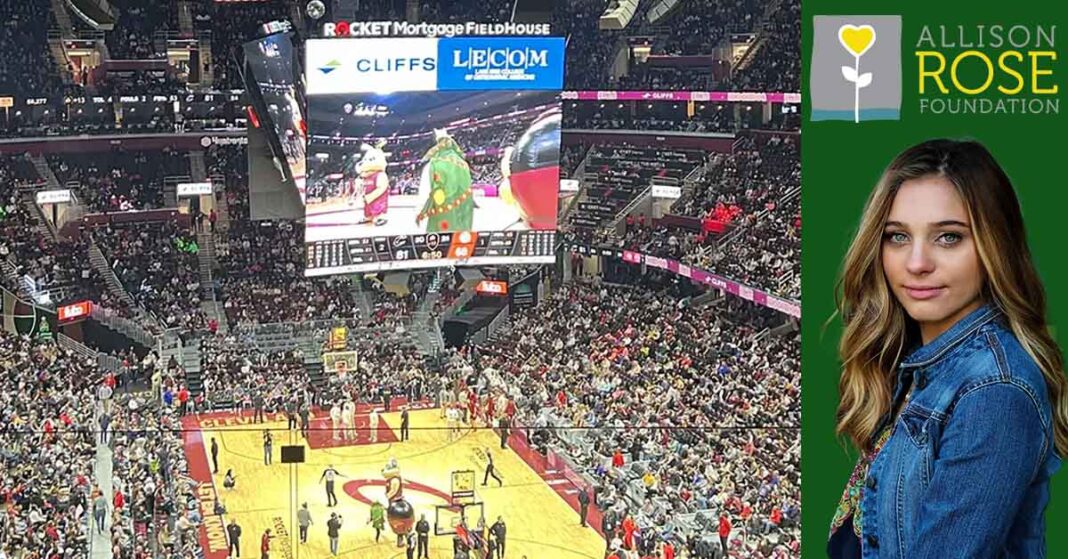
The Rocket Arena, located in downtown Cleveland and home to the Cavaliers, is taking steps to significantly improve its emergency preparedness by implementing a new policy to keep stock epinephrine auto-injectors on hand. While most large venues already have safety equipment such as first aid kits and defibrillators, this move positions the arena as a leader in protecting patrons and staff from anaphylaxis, a severe, potentially life-threatening allergic reaction.
The initiative is a collaboration with the Allison Rose Foundation, a non-profit dedicated to advocating for food allergy awareness, education, and research. This partnership honors the memory of Allison Rose Suhy, who tragically died from an anaphylactic reaction in 2017 while attending Ohio University. Her parents, Michael and Rebecca Suhy, founded the organization to channel their grief into preventive action across communities and institutions.
Michael Suhy explained the profound motivation behind their work, stating, “We did the foundation to not only honor but also try to prevent this tragedy from happening to another family.” By partnering with major venues, the Foundation expands its reach beyond its initial focus on K-12 schools, universities, and restaurants, ensuring that critical, life-saving medication is available in high-traffic public spaces where severe allergies can unexpectedly pose a threat.
As part of the deployment, over a dozen Rocket Arena staffers recently underwent comprehensive, hands-on training on the proper use of epinephrine auto-injectors, led by the Foundation’s certified medical professional instructors. This training is vital, as the effective administration of epinephrine is essential to quickly halt the progression of an allergic reaction. Ron Velazquez, Rocket Arena’s Senior Vice President of Venue Experiences, acknowledged the value of the instruction, admitting he was previously unfamiliar with the device.
Velazquez highlighted the groundbreaking nature of the arena’s new policy, claiming that Rocket Arena is setting a new standard for emergency health protocols in large venues across the country: “We’re the leaders in this space, and we’re hoping to have an impact with other arenas in the country, other stadiums and ballparks. If we can do it, I think they should as well.” The arena proudly states that it is one of the first in the nation to require stock epinephrine to be easily accessible to the public.
This potentially life-saving medication will be strategically located throughout the venue, stored alongside existing emergency equipment like defibrillators. The auto-injectors will be housed in a distinct, easily identifiable yellow box, a meaningful detail chosen because yellow was Allison Rose’s favorite color. This small feature serves as a visible tribute to the young woman whose memory is driving this important safety upgrade.
The initiative ensures that in the event of an allergic emergency, rapid intervention is possible, potentially saving lives and giving peace of mind to the thousands of patrons who attend events at Rocket Arena. By adopting this advanced protocol, the arena hopes to inspire other major venues across the United States to follow suit, turning a personal tragedy into a universal standard for public safety.
Here is a WKBN-TV news report of Rocket Arena’s work with the Allison Rose Foundation:
Our sincere thanks to the Allison Rose Foundation for their tireless efforts in protecting the allergic community in memory of Allison Rose.
- Rocket Arena to keep epinephrine auto-injectors on standby — Spectrum 1 News
- Rocket Arena receives food allergy emergency training — WKBN-TV