
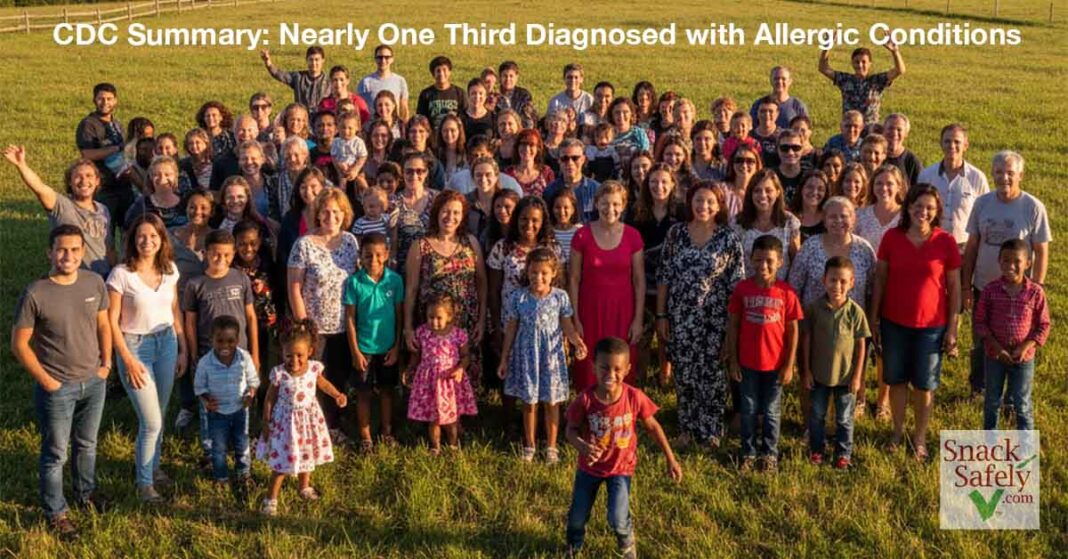
In 2024, allergic conditions remained a significant health concern across the United States, affecting nearly one-third of the population. According to data from the National Center for Health Statistics (NCHS), 31.7% of adults and 29.5% of children aged 0–17 were diagnosed with at least one of three major allergic conditions: seasonal allergies, eczema, or food allergies. While the overall prevalence is similar between the two age groups, the specific types of allergies and their demographic distributions reveal a complex landscape of public health challenges.
Seasonal allergies, also known as hay fever, stand as the most common allergic diagnosis for both age groups. Among adults, 25.2% suffer from these environmental sensitivities, a figure that is slightly higher than the 20.6% reported in children. Interestingly, geography plays a significant role in the frequency of these diagnoses; both adults and children living in nonmetropolitan areas are more likely to have seasonal allergies than those in metropolitan settings. For children, this disparity is particularly notable, with 25.6% of rural children affected compared to 19.8% of their urban and suburban counterparts.
Eczema, or atopic dermatitis, presents a different demographic pattern, appearing more frequently in the pediatric population. While 7.7% of adults live with the condition, the prevalence rises to 12.7% among children. Sex differences are also prominent in the adult data, where women (9.5%) are significantly more likely to be diagnosed than men (5.7%). In contrast, the gap between boys and girls is negligible. Unlike seasonal allergies, adult eczema is more common in metropolitan areas (7.9%) than in nonmetropolitan areas (6.4%), suggesting that urban environments may exacerbate certain skin conditions.
Food allergies represent the least common of the three categories but carry significant risks for severe reactions. The NCHS reports that 6.7% of adults and 5.3% of children have been diagnosed with a food allergy. Among adults, race and Hispanic origin are major factors in prevalence; Black non-Hispanic adults report the highest rate at 9.9%, compared to just 5.4% for Hispanic adults and 6.4% for White non-Hispanic adults. For children, the likelihood of a food allergy diagnosis appears to increase with age, rising from 3.9% in those under five to 6.9% in adolescents aged 12–17.
Age serves as a critical lens through which these conditions are understood. For adults, the prevalence of seasonal allergies follows a “u-shaped” or quadratic trend, peaking at 27.7% in the 45–64 age bracket before declining in older age groups. Conversely, eczema and food allergies generally trend downward as adults age. Among children, the opposite is true for seasonal and food allergies, both of which show a marked increase as children transition from early childhood into their teenage years.
The 2024 data also highlights persistent disparities based on race and ethnicity. In the adult population, White non-Hispanic individuals are the most likely to be diagnosed with seasonal allergies (28.5%), while Hispanic adults report the lowest rates (16.5%). For eczema, Black, Asian, and White adults all show significantly higher rates than Hispanic adults. These variations suggest that a combination of genetic factors, environmental exposures, and differences in healthcare access for diagnosis may be influencing how these conditions are recorded across different communities.
Ultimately, these reports underscore the pervasive nature of allergic conditions in American life. With nearly 30% of the entire population managing at least one diagnosed allergy, the burden on the healthcare system and individual quality of life is substantial. By identifying specific trends—such as the high rate of food allergies in Black adults or the prevalence of seasonal allergies in rural children—public health officials can better tailor prevention and treatment strategies to the needs of specific vulnerable populations.