

[Trigger Warning]
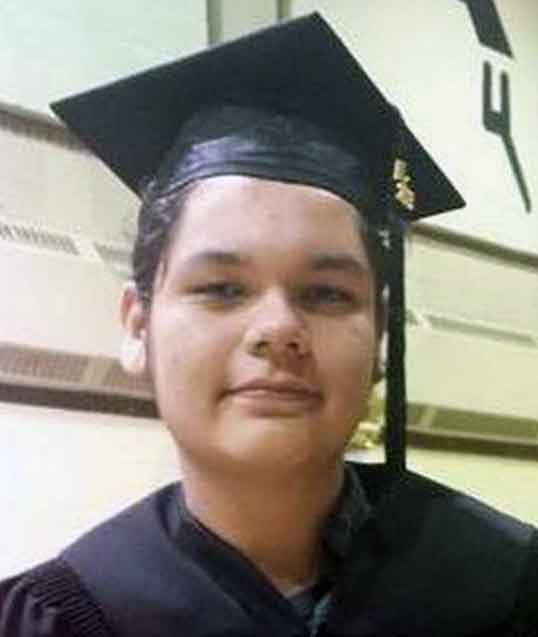
A Quebec Superior Court judge has ordered Urgences-santé, the public emergency medical service of Montreal, to pay more than $450,000 to the family of Nutin McFarland, an 18-year-old Innu man who died from a severe peanut allergy reaction. The judge found that McFarland’s death could have been prevented had paramedics not taken an excessive amount of time to transport him to a hospital less than half a mile away.
In a lawsuit against Urgences-santé, McFarland’s family alleged the paramedics’ negligence was an act of discrimination. They claimed that they “strongly believe that the delayed transport to the hospital by 30 minutes by the […] paramedics was an act of discrimination towards their son, who was a visibly Indigenous person and whose anaphylactic reaction they did not take seriously.” However, while Judge Jeffrey Edwards agreed that the paramedics were negligent, he did not find evidence of discrimination.
In his ruling on August 29, Judge Edwards stated, “With all due respect, the court is of the opinion that the evidence presented before it does not support this allegation.” He acknowledged the serious errors made, writing, “Serious violations of standard practice were committed by the ambulance technicians. Similarly, Urgences-santé was at fault for not providing the ambulance technicians with functional telephones in the ambulances, which was an aggravating factor that prolonged the delay in providing Nutin with the hospital care he needed.” Still, the judge concluded that the evidence did not prove a link between the errors and McFarland’s Indigenous identity. “However, with respect, the evidence does not establish a link between these errors and Nutin’s visible membership in an Indigenous community.”
According to the judge, the paramedics’ negligence was the result of a significant delay in transporting McFarland. The teen had called 911 at 7:11PM and the ambulance arrived at 7:22PM, minutes after firefighters had arrived and administered an EpiPen to McFarland. But the ambulance did not arrive at the hospital until 7:50PM — a journey which should have taken no more than three minutes — which was determined a crucial factor in the case. The judge stated that, “By failing to follow the applicable intervention protocol, the ambulance technicians acted negligently and were at fault,” and that “when Nutin arrived at the hospital, he had already changed color and was blue.”
Adding to the delay, the paramedics failed to notify the hospital in advance. The judge explained, “the necessary treatment was further delayed because the ambulance technicians had not sent the required advance notice to the hospital. They failed to notify the hospital earlier and were then unable to use the ambulance telephone for this purpose.” As a result, the hospital’s emergency team was unprepared to receive McFarland, and his treatment was further prolonged. “It was not until 7:53 p.m. that hospital staff were able to take charge of Nutin. However, due to the lack of advance notice, the hospital’s emergency room team was not ready to receive Nutin, and the required care was further delayed.”
The tragic death of McFarland, a Dawson College student, occurred on October 29, 2017, after he unknowingly ate a tuna sandwich containing peanuts at a friend’s house and suffered anaphylaxis. His death has highlighted the challenges Indigenous individuals face within Quebec’s healthcare system and brought intense scrutiny to Urgences-santé. The ambulance service has a history of criticism regarding long response times and an insufficient number of ambulances.
Urgences-santé’s spokesperson, Judith Goudreau, was unable to comment on the judgment. She told the Gazette, “We cannot comment out of respect for all the parties involved.”
One year after McFarland’s death, Urgences-santé announced it would revise its emergency protocols. However, this decision was reportedly a result of a different case, where a man with severe neurological symptoms waited nine hours for an ambulance, rather than in direct response to McFarland’s passing. The case also brings to mind the death of Joyce Echaquan, an Atikamekw woman who live-streamed her humiliation at the hands of nurses before she died in a Quebec hospital in 2020.
Our heartfelt condolences go out to the McFarland family for their terrible loss. We hope the conclusion of this lawsuit brings them some measure of closure.
As we do when reporting such tragedies, we identify strategies that others in the food allergy community can use to prevent similar outcomes.
Epinephrine is the only drug that can halt and reverse the progression of anaphylaxis, but it must be administered promptly after the onset of symptoms to provide the best outcome. It seems Nutin did not receive epinephrine until firefighters administered it upon arriving at the scene, a delay that likely contributed to his death.
We urge everyone who has been prescribed epinephrine to take two doses along everywhere, every time, and to administer the first when anaphylaxis is first suspected. The time you save could be the difference between life and death.