
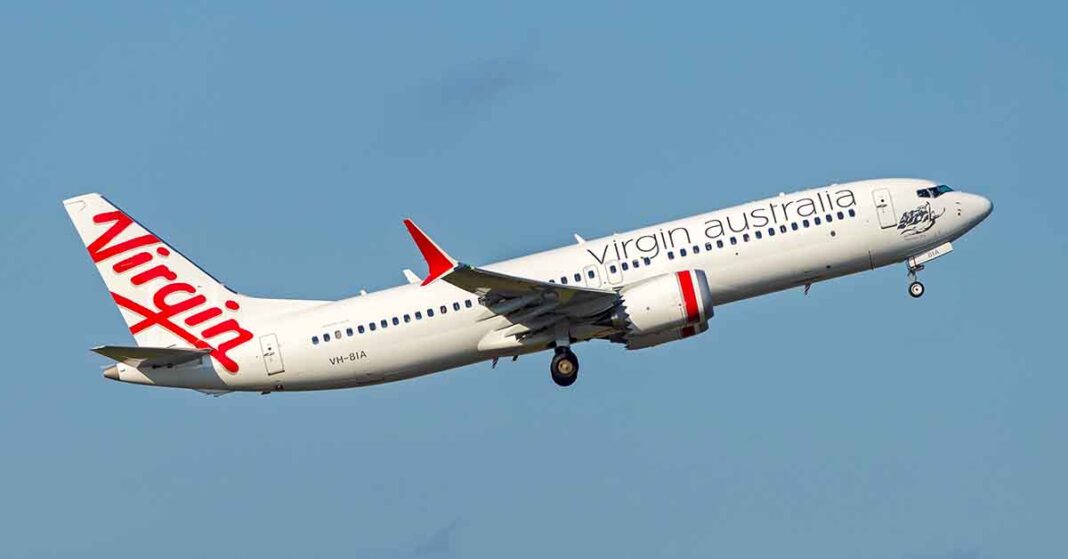
A Sunday flight to a remote Australian mining town turned into a life-or-death struggle when passenger Andrew Rawle went into severe anaphylactic shock mid-flight. Rawle, who has known allergies to nuts and certain medications, was traveling on a Virgin Australia flight to Newman on January 4 when the medical emergency began. Despite eating only “cheese and crackers” he believed were safe, his body mounted a violent immune response.
The reaction escalated with terrifying speed, leaving Rawle struggling to breathe as his airways constricted. “Very clearly, the cabin crew could see there was something wrong… I’d gone incredibly tomato red,” Rawle told the Australian Broadcasting Corporation. Recognizing the onset of a life-threatening episode, he knew he had only moments to act before losing consciousness or his ability to speak entirely.
In the first critical step toward survival, Rawle took immediate action using his own medical supplies. He recalled the frantic moment he realized he was in danger: “I just immediately jumped up, knowing that in my hand luggage I had an EpiPen.” With his voice already failing, he managed to ask the cabin crew through a “very strained voice” if he could step behind the curtain to administer the life-saving medication into his leg.
While the initial dose of epinephrine provided temporary relief and allowed him to breathe again, the danger was far from over. Approximately 20 minutes later, Rawle felt the terrifying symptoms returning. He described the sensation of a “wave or another episode” coming on as his throat began to tense up once more, signaling that the first dose of epinephrine was wearing off and his body was still in crisis.
The situation grew even more dire when the flight crew discovered the aircraft’s emergency medical kit lacked an epinephrine auto-injector. Although Virgin Australia crews are trained to manage anaphylaxis, the absence of a second dose on board forced the crew to turn to the other passengers for help. They used the intercom to ask whether anyone on the flight was carrying the specific medication needed to save Rawle’s life.
A fellow passenger quickly became Rawle’s savior. “Then a lovely young lady, a stranger to me, pressed the call button and delivered me an EpiPen, which I then jabbed into my other leg,” Rawle said. This second dose proved to be the turning point in stabilizing his condition until the aircraft could reach the ground.
As the medical drama unfolded in the cabin, the pilots took drastic measures to reach help as quickly as possible. Rawle noted that the flight deck “absolutely punched it” toward Newman to minimize their time in the air. Upon landing, an ambulance was already waiting on the tarmac to administer additional adrenaline and transport Rawle to a nearby hospital for emergency treatment.
Reflecting on the harrowing experience, Rawle expressed immense gratitude for the quick thinking of the crew and the generosity of the stranger who shared her medication. “I don’t think we’d have made it anywhere, either to Newman or an alternate airport, had that passenger not put their hand up,” he admitted. He also praised the flight attendants, stating he was “very happy” with the care they provided during the crisis.
We are relieved Mr Rawle survived the ordeal, thanks to his foresight in bringing epinephrine along in his carry-on. Epinephrine is the only drug that can halt and reverse the progression of anaphylaxis — a serious, life-threatening allergic reaction — but it must be administered quickly after the onset of symptoms to offer the best outcome. As this event shows, one can never assume that epinephrine will be on hand when anaphylaxis strikes,
In this case, one dose was not enough to stabilize his condition, which, according to a study published in the journal JACI: In Practice, happens to 16% to 36% of patients experiencing anaphylaxis. That’s why it is imperative to take two doses of epinephrine along everywhere, every time, and to administer the first at the first sign of anaphylaxis. If symptoms do not improve, the second dose can be administered any time after 5 minutes, and emergency medical services (EMS) should be called.