
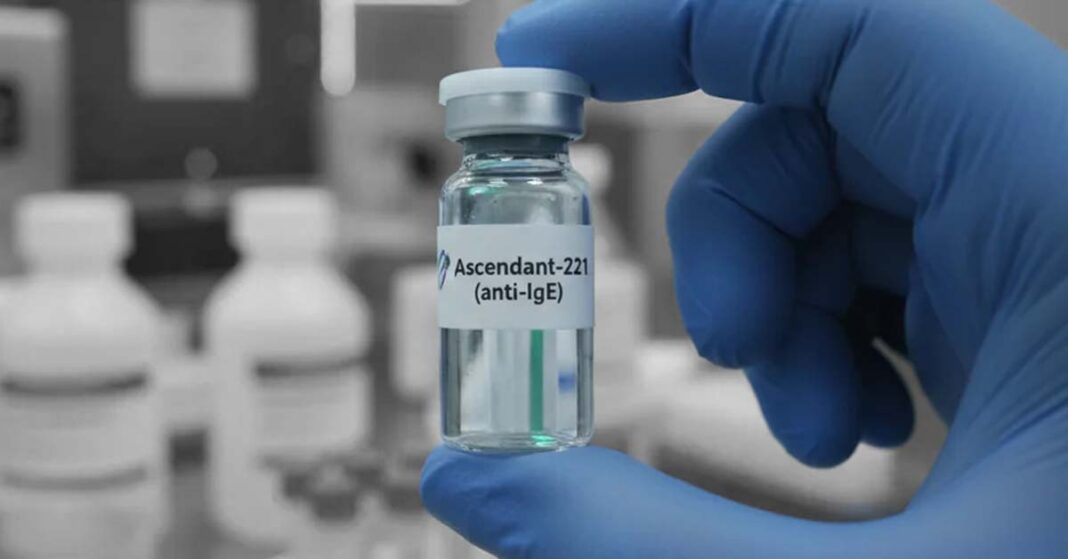
For millions of people living with severe food allergies, the threat of accidental exposure demands constant vigilance. An investigational therapeutic candidate, Ascendant-221 (formerly UB-221)—recently licensed by Cue Biopharma for global development—aims to fundamentally shift how these allergies are treated by targeting the underlying immune mechanisms that drive allergic reactions.
At the center of an allergic reaction is a specific type of antibody called Immunoglobulin E (IgE). People with food allergies carry allergen-specific IgE antibodies bound to immune cells called mast cells and basophils. When a trigger food—such as peanuts, tree nuts, milk, or egg—is consumed, the allergen binds to and cross-links these antibodies, prompting the cells to rapidly release histamine and other inflammatory chemicals. This cascade can trigger symptoms ranging from hives and swelling to life-threatening anaphylaxis.
Ascendant-221 is a next-generation biologic therapy designed to interrupt this process. It is a humanized monoclonal antibody—a laboratory-engineered immune protein—developed to seek out and neutralize IgE. By binding to free-floating IgE molecules, the drug alters their structure and prevents them from effectively attaching to the receptors on immune cells responsible for initiating allergic reactions.
What sets Ascendant-221 apart from existing anti-IgE therapies is its dual mechanism of action. While currently available treatments primarily neutralize circulating IgE, Ascendant-221 also stabilizes membrane-bound CD23 on B cells. This stabilization triggers a natural biological pathway that signals B cells to reduce production of new IgE antibodies, potentially lowering overall IgE levels more effectively over time.
This dual approach could eventually meaningfully improve the quality of life for people managing severe allergic conditions. In early Phase 1 clinical studies, a single dose of Ascendant-221 suppressed free IgE levels for more than 12 weeks. According to Cue Biopharma CEO Dr Shao-Lee Lin, the durability of the response suggests “the possibility for less frequent dosing as compared to standard of care.” If future studies confirm these findings, patients may require treatment only every few months rather than on a more frequent schedule.
Researchers are also interested in the drug’s potential for patients with very high baseline IgE levels, a group that can be challenging to treat with existing anti-IgE therapies. Lin noted that Ascendant-221 offers “potential expansion into patients with high-IgE who are not adequately served by the limitations of current therapies.”
Cue Biopharma’s near-term focus is tracking an ongoing Phase 2 study of Ascendant-221 in chronic spontaneous urticaria (chronic hives), with data expected in late 2026. While the drug is being tested in chronic hives and asthma first, its potent IgE-clearing capability means it holds significant therapeutic potential for future expansion into food allergy trials.
Although significant clinical testing remains ahead, Ascendant-221 represents a promising next-generation approach. If future studies demonstrate both safety and efficacy, the therapy could offer a longer-lasting safety net against accidental exposure and help reduce the daily burden of living with severe food allergies.
- Cue Biopharma Expands Pipeline with Exclusive License from Ascendant Health Sciences Ltd. for Clinical-Stage Dual-Mechanism Anti-IgE Antibody — Company Press Release
- IgE-neutralizing UB-221 mAb, distinct from omalizumab and ligelizumab, exhibits CD23-mediated IgE downregulation and relieves urticaria symptoms — Journal of Clinical Investigation
- Cue Biopharma licenses anti-IgE antibody for allergic diseases — Investing.com