
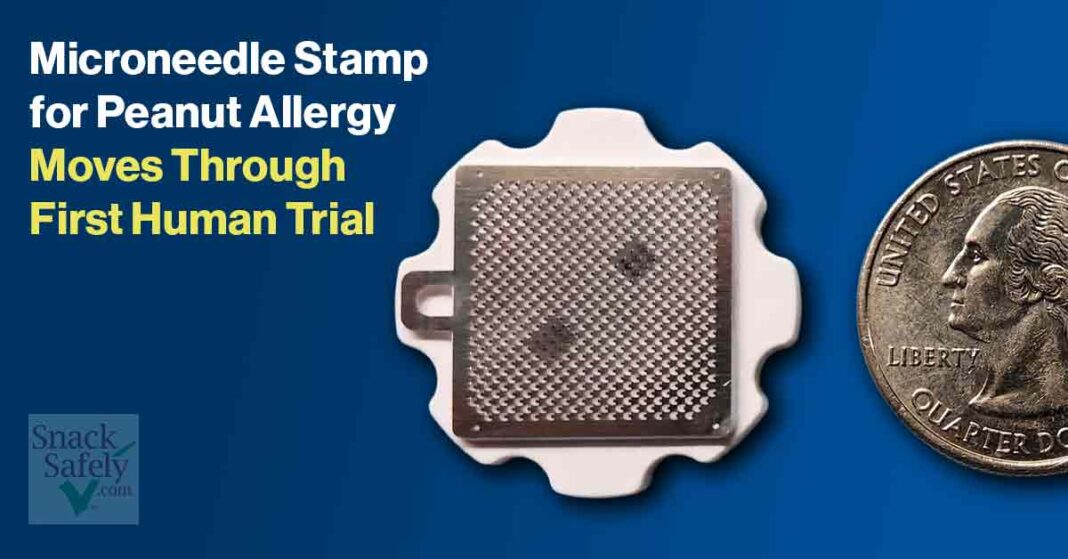
Dr Brian P Vickery, principal investigator of a first-in-human Phase 1 clinical trial evaluating a novel microneedle peanut allergy stamp at Children’s Healthcare of Atlanta, has outlined a potential clinical development roadmap leading toward Phase 2 testing and, ultimately, a pivotal Phase 3 trial, contingent on favorable results from the ongoing study. Vickery, who is also vice chair of clinical research in the Department of Pediatrics at Emory University School of Medicine, holds an ownership interest in Moonlight Therapeutics, the company developing the dermal delivery device.

The investigational microneedle device aims to address significant gaps in the current therapeutic landscape for food allergies. Underscoring this clinical demand, Vickery noted: “I think there’s a real opportunity for a treatment like this to gain traction because there is still a lot of unmet need in the space.” He emphasized that many patients in his clinic either do not qualify for existing treatments or have tried them and experienced adverse effects.
The ongoing Phase 1 study is structured as an ascending-dose trial focused primarily on safety and tolerability, with an additional goal of identifying an appropriate dose for subsequent development. Unlike later-stage food allergy efficacy studies, the current protocol does not include oral food challenges. Importantly, the trial is not designed to determine whether the microneedle stamp protects patients from allergic reactions; subsequent studies would address that question if the initial safety findings support further development.
Pending supportive Phase 1 results, investigators envision a Phase 2 trial involving repeated dosing over several months—potentially up to 52 weeks—to determine whether the microneedle system changes patients’ allergic reactivity to peanut proteins. This next phase would incorporate oral food challenges before and after treatment to quantitatively measure changes in reaction thresholds. If Phase 2 produces a signal of efficacy, those findings could then support the design of a properly powered, pivotal Phase 3 study.
To safely introduce the technology across different age groups, the Phase 1 trial follows a step-wise, age-de-escalating protocol. Enrollment began with an initial cohort of young adults ages 18 to 26 at Children’s Healthcare of Atlanta and adults ages 27 to 55 at Emory University. Progression to subsequent cohorts—first comprising 10 adolescents and later 20 pediatric patients as young as 4 years old—requires review and clearance by a data safety and monitoring committee at each transition.
Enrollment spans multiple sites nationally, including Children’s Healthcare of Atlanta and Emory University in Georgia, the University of North Carolina at Chapel Hill, the University of Arkansas, the University of Michigan, and a clinical research organization in Nebraska. This multicenter approach allows investigators to characterize the device’s safety in adults before expanding exposure to younger participants.
Looking ahead over the next five to 10 years, Vickery emphasized the clinical need for a diverse array of therapeutic choices tailored to individual patients. “As an allergist seeing patients, I would love to have a toolkit of 4, 5, 6 options to offer patients because we recognize that one size does not fit all in this condition,” he concluded.