
A first-in-human clinical trial of a promising new food allergy treatment may be just around the corner. Following the completion of a $75 million oversubscribed financing round, Lycia Therapeutics announced that it plans to advance LCA-0061—its lead experimental therapy for food allergy and other allergic diseases—into a Phase 1 clinical trial. The study will evaluate the drug’s safety, tolerability, and its effects on biomarkers of allergic disease in participants with elevate levels, marking the first time the company’s novel approach will be tested in people.
What makes LCA-0061 especially intriguing is that it takes a fundamentally different approach from existing anti-IgE therapies. Instead of simply blocking IgE from triggering allergic reactions, it is designed to physically remove the antibody from the bloodstream. The treatment is built on Lycia’s proprietary LYTAC (Lysosome Targeting Chimera) platform, a technology developed to selectively eliminate harmful proteins that circulate outside cells or are attached to their surfaces. Researchers believe this strategy could eventually provide longer-lasting control of IgE-mediated food allergies by reducing the amount of IgE available to trigger allergic reactions.
At the heart of this approach is the LYTAC platform. As the company explains, “Our LYTAC platform enables targeted degradation of circulating and membrane-bound extracellular proteins.” Rather than simply blocking a harmful protein’s activity, LYTAC is designed to remove it altogether. In Lycia’s experimental food allergy program, scientists are using this technology to target IgE, the antibody responsible for triggering allergic reactions, with the goal of clearing it from the bloodstream. By eliminating IgE instead of merely neutralizing it, researchers hope to provide longer-lasting control of allergic disease while opening the door to treating conditions once considered “undruggable.”
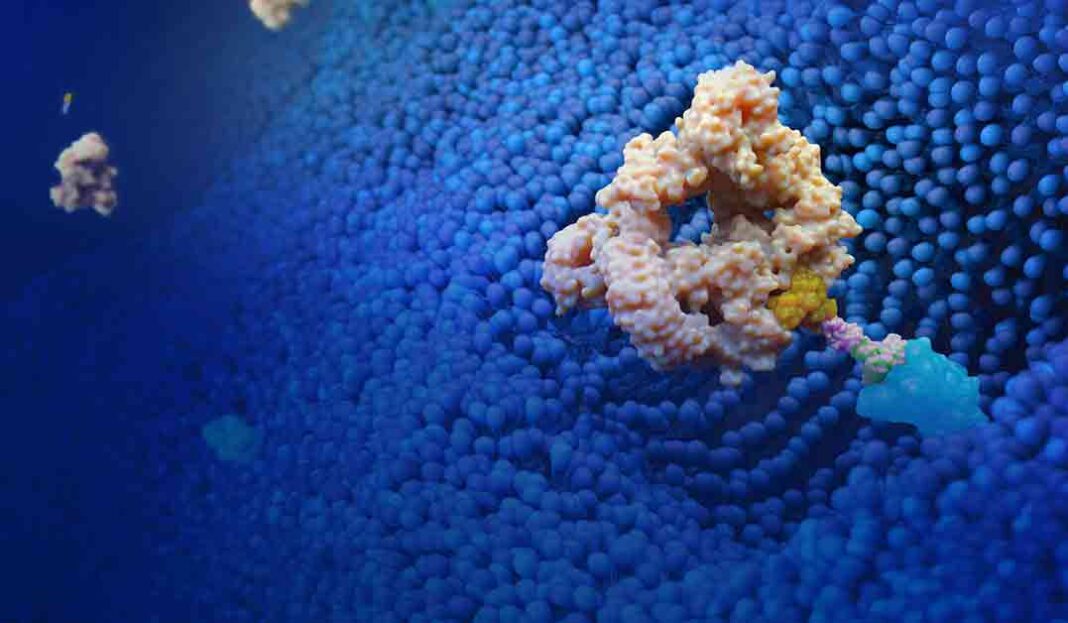
To understand how a LYTAC-based therapy works, imagine a molecular matchmaker with two arms. As Lycia describes it, “A LYTAC degrader consists of two parts: one that binds a target protein and one that binds an internalizing receptor.” One arm attaches to the target protein—in this case IgE—while the other binds to a specific receptor on the surface of a cell. Once both are connected, the cell naturally pulls the entire complex inside and delivers it to the lysosome, the cell’s recycling center, where the unwanted protein is broken down and permanently removed. By reducing the amount of circulating IgE available to activate allergy cells, this strategy aims to interrupt the allergic cascade that can ultimately lead to severe reactions, including anaphylaxis.
The science behind this technology began with pioneering research at Stanford University. Dr. Carolyn Bertozzi, who later received the Nobel Prize in Chemistry, helped invent the LYTAC concept with her research team before co-founding Lycia Therapeutics. Their breakthrough demonstrated that cells could be engineered to selectively capture and destroy harmful extracellular proteins, laying the scientific foundation for an entirely new class of medicines.
One of the greatest strengths of the LYTAC platform is its flexibility. Lycia emphasizes that “Our platform is modular and flexible: LYTAC degraders can use small molecule, antibody, and other modalities to best target the specific proteins implicated in particular diseases.” That means researchers can adapt the same basic technology to target many different disease-causing proteins, including IgE. Unlike conventional drugs that often must completely block a protein’s function, a LYTAC degrader simply needs to bind tightly enough to escort its target into the cell’s recycling machinery, where the protein is destroyed.
Choosing the right cellular “doorway” is another critical part of the design. Different cell types display different internalizing receptors on their surfaces, and because Lycia’s technology is “amenable to a wide range of internalizing receptors,” scientists can select the receptors best suited for removing specific disease-causing proteins. For food allergy, this offers the potential to efficiently clear circulating IgE before it can bind to mast cells and basophils—the immune cells responsible for releasing the chemicals that drive allergic reactions.
To address proteins that are continually replenished by the body, Lycia has developed an enhanced version of the platform known as CataLYTAC degraders. Rather than being consumed after delivering a single protein for destruction, these catalytic molecules behave more like reusable recycling trucks: they escort one target protein to the lysosome, are released, and then go on to capture another. As the company notes, “CataLYTAC degraders are particularly effective for target proteins that have a high concentration or a fast resynthesis rate.” Because the immune system continually produces new IgE antibodies, this catalytic approach could repeatedly eliminate newly formed IgE more efficiently than therapies that simply block its activity.
LCA-0061 is the first CataLYTAC therapy being developed specifically for food allergy and other IgE-mediated allergic diseases. In preclinical studies involving non-human primates, Lycia reports that a single dose rapidly reduced both free IgE and total IgE—a potentially important distinction from currently available anti-IgE therapies, which primarily neutralize free IgE while allowing total IgE levels to remain elevated. If these findings translate to humans, the approach could provide more complete and durable suppression of the allergic response.
While many questions remain until human studies are completed, the upcoming Phase 1 trial represents an important milestone not only for Lycia Therapeutics but also for the broader field of food allergy treatment. Rather than simply preventing IgE from interacting with immune cells, LCA-0061 is designed to eliminate the antibody itself, potentially offering a fundamentally new way to reduce the risk of severe allergic reactions following accidental food exposures. If successful, it could usher in an entirely new class of medicines that harness the body’s own cellular recycling system to treat allergic disease.