

French biotechnology company DBV Technologies has announced that it now plans to submit a Biologics License Application (BLA)—the formal request for US Food and Drug Administration (FDA) approval—for its investigational peanut allergy treatment, Viaskin Peanut, in the fourth quarter of 2026. The updated timeline follows a recent alignment meeting with the FDA, during which the agency and company reached agreement on the clinical data package required for regulatory review. The revised schedule is intended to support a more comprehensive submission and provide greater clarity on the path toward potential approval.
The planned BLA seeks approval of Viaskin Peanut for children ages 4 through 7 years with peanut allergy. The submission will rely heavily on data from two key clinical programs: the Phase 3 VITESSE trial, which is evaluating the Viaskin Peanut patch in children ages 4 to 11 years with peanut allergy, and the ongoing VITESSE Open-Label Extension (OLE) study. Together, these studies are designed to provide the efficacy and long-term safety data needed to support the application.
As part of the agreed-upon submission package, the FDA requested that DBV include six-month safety data from approximately 240 participants enrolled in the VITESSE and VITESSE OLE studies. Incorporating these additional data will provide a more comprehensive safety database for the agency’s review and led the company to move its planned submission to the fourth quarter of 2026.
DBV Technologies’ leadership expressed confidence that the discussions with the FDA have established a clear regulatory pathway for Viaskin Peanut. Daniel Tassé, Chief Executive Officer of DBV Technologies, stated, “We are very pleased with the outcome of our discussions with the FDA, which provide us with a clear and predictable path forward to the BLA submission for Viaskin Peanut.”
Tassé also emphasized the value of including the expanded safety dataset in the initial application. “Aligning on the inclusion of six-month safety data from approximately 240 subjects from VITESSE and VITESSE OLE at the time of submission allows us to present a more robust and comprehensive safety database to the agency,” he said, noting that the additional information will strengthen the overall safety profile presented for regulatory review.
From a financial perspective, DBV Technologies stated that its existing cash resources are expected to support operations through the planned BLA submission, providing the resources needed to complete the remaining clinical and regulatory work associated with the application.
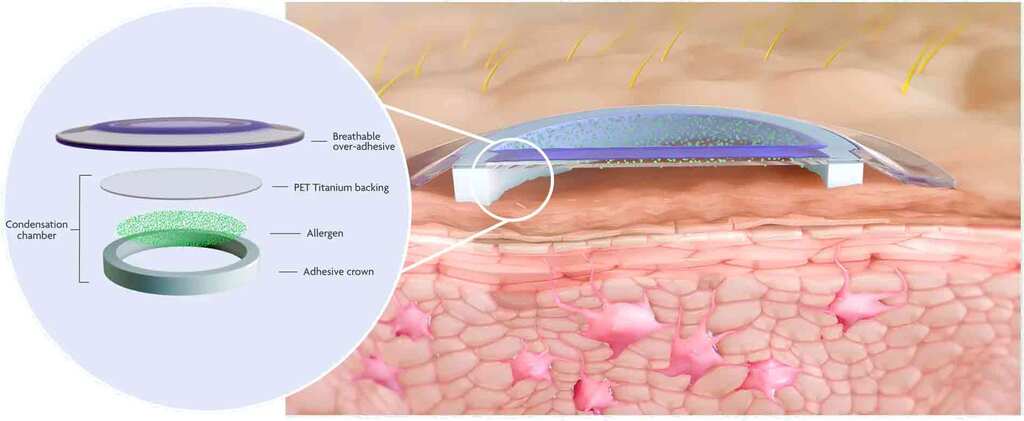
Unlike oral immunotherapy, which requires patients to consume carefully measured amounts of peanut protein under medical supervision, Viaskin Peanut uses epicutaneous immunotherapy—a patch applied to the skin that delivers microscopic amounts of peanut protein through intact skin to gradually retrain the immune system. This needle-free, non-invasive approach is designed to reduce allergic sensitivity while minimizing systemic allergen exposure.
If approved by the FDA, Viaskin Peanut would become the first epicutaneous immunotherapy approved in the United States for peanut allergy. For many families, it could offer an important new treatment option alongside existing therapies, expanding the choices available to help reduce the risk of allergic reactions following accidental peanut exposure.