
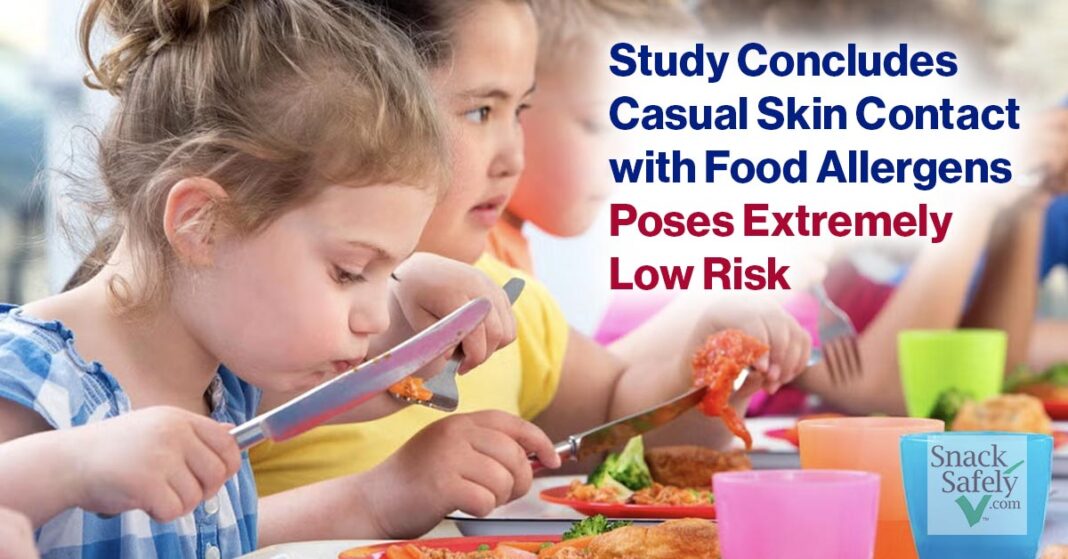
A large Israeli study offers reassuring evidence to families managing severe food allergies: accidental contact between allergenic foods and normal, intact skin appears highly unlikely to cause anaphylaxis in allergic children. Published in the journal Acta Paediatrica, the research found no systemic allergic reactions among hundreds of controlled skin exposures, suggesting that the risk of a serious reaction from casual contact with intact skin is extremely low.
Led by Dr Idit Lachover-Roth, director of the allergy and clinical immunology unit at Rambam Health Care Campus in Haifa, the three-year study is one of the largest prospective multicenter trials of its kind. Researchers evaluated 293 children and teenagers aged 1 to 18 at Meir Medical Center in Kfar Saba and Schneider Children’s Medical Center in Petah Tikva. Of the participants, 192 had confirmed food allergies, while 101 comprised the control group.
To test skin reactivity, researchers applied common allergens—including milk, peanuts, eggs, sesame, and tree nuts—directly to participants’ forearms for 15 minutes. A total of 465 patch tests were conducted, including 263 in children with confirmed food allergies and 202 in the control group. Among the 263 exposures in the food-allergic group, 83.7% caused no reaction whatsoever. About 15% produced mild, localized reactions such as temporary redness or slight swelling, while just three resulted in a somewhat broader reaction confined to the tested arm that resolved with an antihistamine. Crucially, not a single child suffered a systemic allergic reaction or anaphylaxis.
“Many families live in a constant state of vigilance because they fear that even accidental skin contact with an allergenic food could lead to anaphylaxis,” Dr Lachover-Roth explained. “Our findings, the result of three years of work, show that when allergenic food comes into contact with intact skin—even in children with confirmed food allergies—the risk of a serious reaction is extremely low, approaching zero. These results allow us to provide families with evidence-based guidance and help reduce fears that are not supported by scientific data.”
Addressing the psychological toll that hyper-vigilance can take on families, Dr Lachover-Roth emphasized that the central takeaway for parents is that “kids have to be kids.” She noted that while touching an allergenic food may be unpleasant, contact with normal skin is not considered dangerous based on the study’s findings, and washing the affected area with water is sufficient. Fear of casual contact can lead some parents to extreme measures—such as excluding children from birthday parties and social activities, avoiding restaurants, or banning allergenic foods entirely from the home—potentially restricting children’s social lives and affecting family quality of life.
Younger children were more likely to develop mild localized skin reactions, with younger age emerging as the strongest predictor of skin reactivity. Children with milk allergies also experienced somewhat higher rates of localized reactions. Dr Lachover-Roth suggested that milk may produce more local reactions because it is a liquid and its molecules may penetrate the skin more easily, although this possible explanation was not established by the study. She also criticized overly restrictive policies in Israeli schools and nurseries, saying severe allergic reactions there are uncommon and that most occur at home or in restaurants.
The researchers stressed that their findings apply specifically to intact skin and do not change established precautions designed to prevent ingestion. Children should continue avoiding foods to which they are allergic, preventing oral exposure, and carrying prescribed epinephrine auto-injectors. The study also did not examine exposure involving broken skin or mucous membranes, where the risk could be different, nor does it eliminate the danger of allergen residue being transferred from hands, toys, or surfaces to the mouth. Still, by distinguishing the significant danger of ingestion from the very low risk posed by contact with intact skin, the findings may help families reduce unnecessary anxiety while maintaining appropriate food allergy precautions. As Dr Lachover-Roth concluded, “As long as standard safety precautions are followed, families can reduce unnecessary anxiety about accidental skin contact with allergenic foods.”