
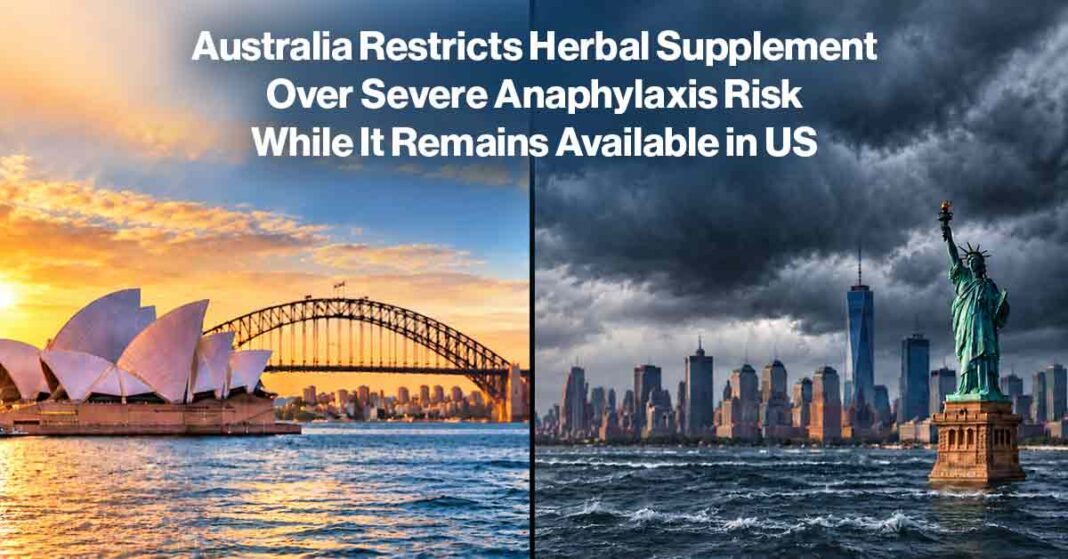
Australia’s medical regulator, the Therapeutic Goods Administration (TGA), has officially removed the popular herbal extract Andrographis paniculata from its permissible ingredients determination for new listed medicines. Effective September 17, 2026, the botanical—long marketed for immune support and cold relief—can no longer be included in new medicines listed under Australia’s lower-risk therapeutic framework due to mounting evidence of life-threatening allergic reactions.
The decision follows years of regulatory monitoring and an escalation in severe adverse events. Explaining the intervention, the TGA stated:
Listed medicines are generally lower-risk products. We have decided that the risk of severe allergic reactions, including anaphylaxis associated with Andrographis, cannot be managed well enough under this pathway.
The regulator noted that it had continued to receive reports of acute hypersensitivity linked to the herb, including a fatal case reported in June 2024, prompting an updated safety review and targeted stakeholder consultation.
While newly formulated products containing Andrographis can no longer be listed on the Australian Register of Therapeutic Goods (ARTG), existing products will not disappear immediately. The TGA warned that “medicines that are already listed on the ARTG will not be removed immediately,” meaning consumers may still encounter these supplements during the transition. The agency is asking sponsors to voluntarily cancel affected products or recall them where appropriate. If sponsors do not act promptly, the TGA says it may pursue compulsory recalls or cancellations from the ARTG.
In the meantime, the TGA has advised consumers to carefully review supplement labels and consult healthcare providers. Health professionals were cautioned that allergic reactions can be rapid and unpredictable: “Be aware that reactions may happen on first use or after previous use without problems,” the regulator emphasized. Symptoms of a severe allergic reaction can include difficulty breathing, swelling of the tongue or throat, dizziness and collapse, with the TGA noting that reactions “often happen within 30 minutes” of taking the medicine.
The intervention highlights a significant difference between Australia’s regulatory approach and the landscape in the United States, where Andrographis paniculata remains available in products marketed as dietary supplements. Under the Dietary Supplement Health and Education Act (DSHEA) of 1994 and the broader Federal Food, Drug, and Cosmetic Act, dietary supplements generally do not undergo FDA premarket approval for safety or effectiveness. Manufacturers and distributors are responsible for ensuring their products are safe and properly labeled, although certain “new dietary ingredients” are subject to a premarket notification requirement.
As a result, much of the US Food and Drug Administration’s oversight of dietary supplements occurs after products have entered the marketplace. Manufacturers, packers, and distributors are required to report serious adverse events they receive, and FDA also monitors reports from consumers and healthcare professionals. The agency can take enforcement action when a supplement is adulterated, including when evidence indicates that it presents a significant or unreasonable risk of illness or injury. Unlike Australia’s TGA, however, FDA has not announced a comparable nationwide action removing Andrographis from dietary supplements because of the anaphylaxis risk identified by Australian regulators.
The regulatory difference is particularly noteworthy given the TGA’s warning that severe allergic reactions can occur even in people who have previously taken Andrographis without problems. As Australia begins removing affected listed medicines from its market, US consumers may still encounter Andrographis in herbal supplements and multi-ingredient products. The Australian action therefore provides important safety information for consumers elsewhere: previous tolerance of Andrographis does not guarantee that a serious allergic reaction will not occur with a subsequent dose.
Have you ever experienced an allergic reaction to an herbal supplement? Please share your experience in the comments section below.