
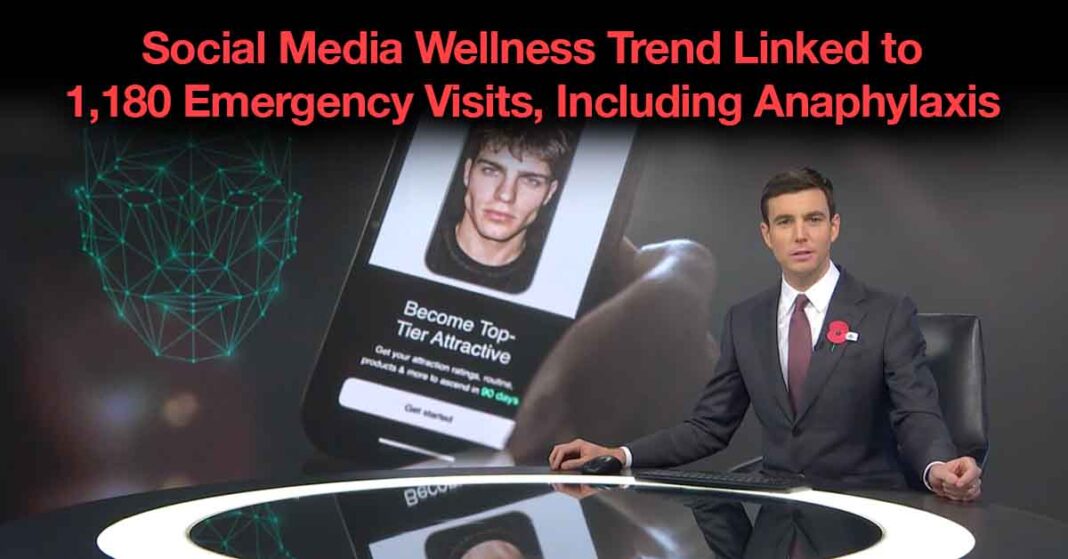
More than 1,000 emergency department visits in New South Wales, Australia, have been linked to adverse reactions from unapproved peptide products promoted by social media influencers. According to newly released figures from NSW Health, hospitals recorded 1,180 emergency department presentations between July 2025 and September 2026 involving these substances, which are often marketed for weight loss, muscle growth, improved athletic performance, and anti-aging benefits. Among the reported complications were allergic reactions, including potentially life-threatening anaphylaxis.
The number of emergency visits has increased dramatically, from just five in July 2025 to 217 in September 2026 alone. Young adults accounted for a substantial share of cases: 25% involved people aged 16 to 24, while 32% were aged 25 to 34 and another 26% were aged 35 to 44. Men accounted for 51% of presentations. The figures suggest that the trend has attracted people across a broad range of ages, not just young fitness enthusiasts.
Patients seeking emergency treatment reported abdominal pain, nausea, vomiting, and chest pain. Some also experienced allergic reactions, including anaphylaxis, a potentially fatal reaction that requires immediate treatment with epinephrine. Although health officials identified anaphylaxis among the complications, they did not specify how many patients experienced it or whether any deaths occurred. Many of the products involved are injectable substances promoted online with promises of rapid weight loss, increased muscle mass, improved physical performance, or a more youthful appearance.
One experimental drug, retatrutide, was reported in connection with approximately 71% of the emergency department presentations. Retatrutide is being studied as a treatment for obesity but has not been approved for general use. Other peptides promoted online include BPC-157, GHK-Cu, TB-500, and CJC-1295. Australian authorities warn that many of these products are not approved by the Therapeutic Goods Administration (TGA) and may be illegal to import, supply, or advertise. Many are purchased through websites and social media sellers without medical supervision.
New South Wales Health Minister Ryan Park warned that the trend is putting both consumers and the healthcare system at risk. “We know that using these unapproved substances can come with real health risks, but it’s particularly alarming to see the growing pressure they’re placing on our health system,” Park said. He added: “Even when a product looks professional or comes in convincing packaging, that does not guarantee it is safe for use.”
Health officials are particularly concerned that consumers have no reliable way to know exactly what they are injecting. Products sold under identical labels may contain different ingredients or concentrations, potentially exposing users to unexpected and dangerous reactions. NSW Health Chief Health Officer Dr Kerry Chant warned that attractive packaging, online reviews, and claims of purity offer no assurance that a product contains what its seller promises. Without reliable quality controls, consumers may be injecting substances of unknown strength or composition directly into their bodies.
“A professional looking website, a label, purity claim, reviews, or influencer endorsement is not proof of what is inside the product,” Dr Chant emphasized. She urged consumers to seek qualified medical advice rather than trust online personalities promoting experimental substances: “We encourage people to discuss the risks, benefits and safer alternatives to products they see advertised with their usual general practitioner or qualified healthcare provider.” The warning is especially relevant as social media increasingly blurs the line between legitimate medical treatments and potentially dangerous wellness trends.
Here is a TVNZ report on this crisis: