
When we think about gut health, bacteria usually steal the spotlight. However, two groundbreaking 2026 studies published in Nature Communications reveal that a poorly understood community of microscopic residents—the gut fungal microbiome, or mycobiome—may also play a critical role in determining whether children develop food allergies and other allergic diseases. While scientists have long known that imbalances in gut bacteria can predispose children to chronic conditions, these new studies show that infant fungal communities follow predictable developmental milestones that appear to help educate the developing immune system. Delayed maturation of this fragile fungal ecosystem was associated with a higher risk of childhood food allergies and eczema, while companion laboratory experiments uncovered biological mechanisms that may help explain why.
A massive longitudinal study tracking more than 1,400 Canadian children discovered that the types of fungi residing in an infant’s gut serve as reliable biological clocks for mycobiome maturation. Researchers found that a healthy infant gut undergoes a coordinated transition of fungal species during the first year of life. However, when this natural succession is delayed, children were significantly more likely to be diagnosed with atopic dermatitis (eczema) and food allergies by the time they reached five years of age.
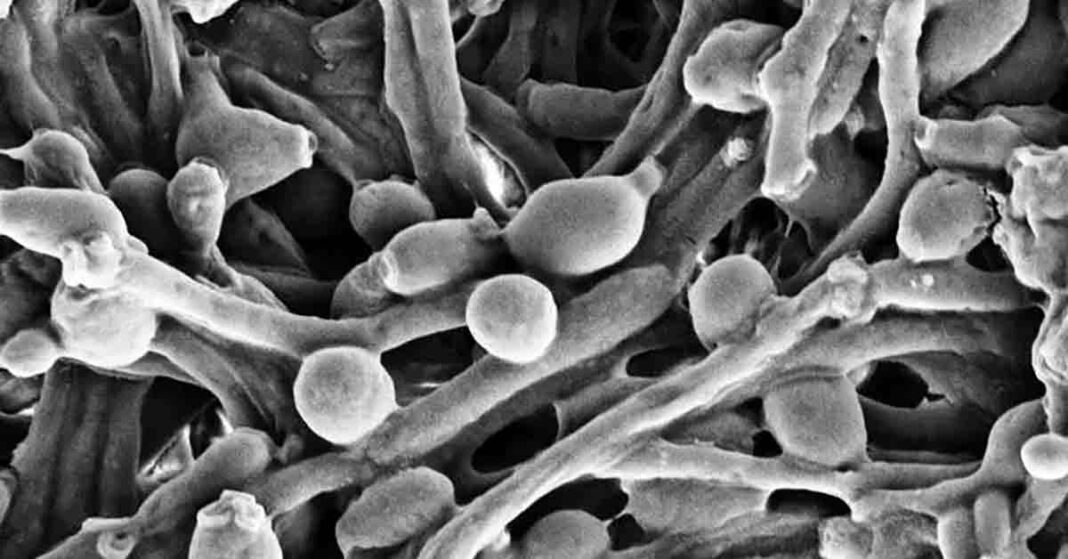
The primary drivers of these developmental milestones are two dominant groups of fungi: Saccharomycetaceae (a family of common yeasts) and Malassezia (lipid-dependent yeasts). In a normally maturing gut, Malassezia levels naturally declined 48-fold during the first year of life, while Saccharomycetaceae increased 14-fold. When the mycobiome’s developmental clock lagged behind, Malassezia remained unusually abundant. Although fungi represent only a tiny fraction of the gut microbiome, they interact extensively with bacteria and the immune system, allowing them to exert effects far greater than their numbers would suggest. Indeed, Malassezia and Saccharomycetaceae ranked among the strongest biological predictors of gut age across both fungal and bacterial communities.
The second study illustrates how one of the most common medical interventions during infancy can accidentally disrupt this developmental process. Examining infants younger than six months of age, researchers found that antibiotic therapy substantially reduced bacterial abundance and diversity while simultaneously promoting fungal overgrowth. Most notably, antibiotic use consistently expanded Malassezia species. The authors concluded that the “expansion of Malassezia spp. is a previously overlooked collateral effect of infant antibiotic use,” potentially leaving the developing immune system vulnerable to long-term disruption.
To investigate whether this fungal expansion could directly influence immune development, researchers colonized germ-free mice with Malassezia restricta, one of the fungal species that increased most dramatically after antibiotic treatment in infants. Although the laboratory experiments focused primarily on allergic airway inflammation rather than food allergy, they demonstrated biological mechanisms that may help explain why delayed fungal maturation in human infants was associated with a greater risk of allergic disease. Despite colonizing the gut at relatively low abundance, M. restricta significantly altered both local and systemic immune responses. Its presence triggered an influx of inflammatory myeloid cells along with increased populations of T-helper 2 (Th2) and T-helper 17 (Th17) cells within the intestine. Together, these immune changes produced an immune profile associated with allergic inflammation and heightened airway responses in experimental models.
The connection between gut fungi and food allergies likely involves the complex relationship between the immune system and the body’s protective epithelial barriers. As the researchers note, both atopic dermatitis and food allergy frequently arise in the setting of epithelial barrier dysfunction. Persistent fungal dysbiosis may therefore contribute to immune changes that interact with the gut and skin barriers, although additional research is needed to fully understand these relationships. Because eczema often develops before food allergy in the well-established “atopic march,” these findings raise the possibility that delayed mycobiome maturation may contribute to the earliest stages of allergic disease development.
Together, these complementary studies provide compelling clinical and mechanistic evidence that “early life fungal ecology plays a critical role in immune imprinting.” The human study identified delayed fungal maturation as a potential early marker of future allergic disease, while the companion mouse study demonstrated biological mechanisms linking persistent Malassezia colonization to immune dysregulation. Rather than focusing exclusively on bacteria, the research suggests that physicians and scientists should also pay close attention to the developing infant mycobiome. Looking ahead, selectively monitoring and protecting healthy fungal development during infancy could eventually become an important new strategy for reducing the risk of food allergies and related allergic diseases before they take hold.