
The Codex Alimentarius Commission has officially adopted new international guidance that could transform how “may contain” allergen warnings are used on packaged foods worldwide. Announced in Geneva and Rome, this development marks a crucial step toward making precautionary allergen labeling (PAL) more meaningful, science-based, and consistent for consumers with food allergies worldwide.
Food allergies currently affect an estimated 4.3% of the global population, with potential reactions ranging from mild discomfort to life-threatening anaphylaxis. For millions of these individuals, precautionary allergen statements play an essential role in daily survival, often serving as a deciding factor when determining whether a particular food product is safe to eat.
Despite their importance, the current use of warning labels such as “may contain” varies widely across products and borders, and remains entirely unregulated in many parts of the world, including the US. Because of this, consumers frequently encounter inconsistent information, making it difficult to assess the true level of risk. Some manufacturers apply precautionary statements broadly to limit liability, while others use them more selectively. The resulting inconsistency causes some people to unnecessarily avoid foods that may be safe while leading others to disregard the warnings altogether, potentially increasing their risk of a serious allergic reaction.
During food production, tiny amounts of an allergen can unintentionally enter a product through shared equipment, production lines, storage, transportation, or other manufacturing processes, even when the allergen is not an intended ingredient. In these situations, precautionary allergen labeling is intended to alert consumers to a genuine residual risk that cannot be eliminated despite appropriate allergen controls.
The newly adopted Codex guidance partially addresses this issue by ensuring that these warnings are used only when the risk has been scientifically assessed and cannot be adequately controlled through effective allergen management practices. To support consistent decision-making, the guidance incorporates internationally recognized reference doses that establish action levels—scientifically derived thresholds used to determine when unintended allergen contamination warrants a precautionary PAL statement. Adopted as an annex to the General Standard for the Labeling of Pre-packaged Foods (CXS 1-1985), the guidance establishes a risk-based approach to precautionary allergen labeling.
The recommendations emphasize that precautionary allergen labeling should never replace effective allergen management practices. Food manufacturers are expected to first implement appropriate measures to prevent unintended allergen cross-contact, then conduct a scientific risk assessment. A PAL statement should be used only when that assessment determines that residual allergen levels remain above the established action level despite those preventive efforts.
For consumers with food allergies, the goal is to make precautionary allergen labeling significantly more trustworthy. Rather than appearing whenever manufacturers choose to use it, PAL statements would increasingly reflect a consistent, science-based evaluation of actual residual risk. Over time, this could help consumers make more informed purchasing decisions while reducing both unnecessary food avoidance and dangerous complacency toward precautionary warnings.
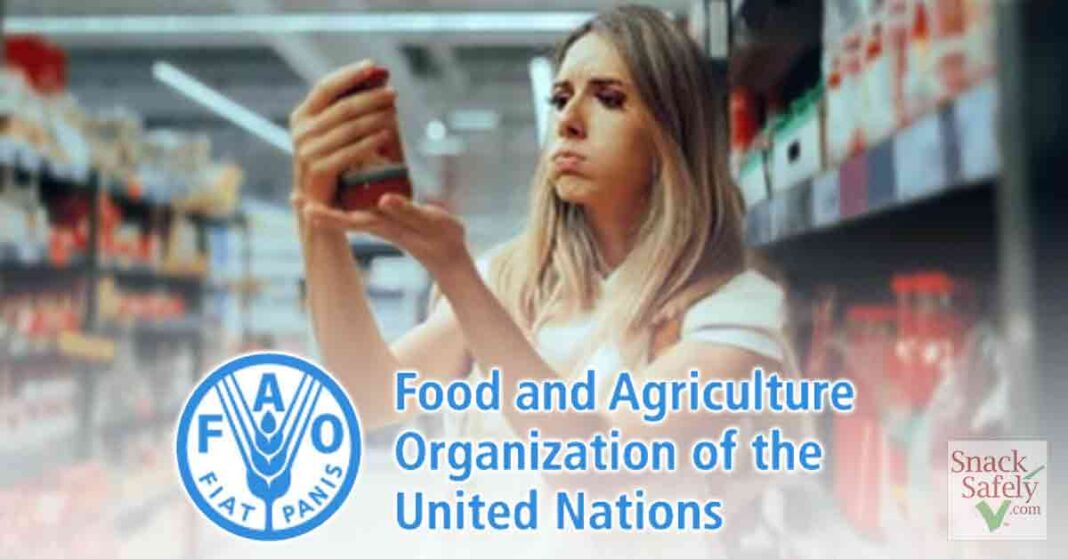
The body responsible for these standards, the Codex Alimentarius Commission, was established jointly by the Food and Agriculture Organization (FAO) and the World Health Organization (WHO) to develop international food standards, guidelines, and codes of practice. Its mission is to protect consumer health and promote fair practices in the global food trade. While the texts it creates are voluntary, they serve as internationally recognized benchmarks that governments frequently use when developing national food regulations and facilitating international trade. Backed by scientific advice developed through seven joint FAO/WHO expert consultations, the framework was finalized during the Commission’s 49th Session, held from July 6 through 10, 2026. Although implementation will ultimately depend on individual countries and manufacturers, the new guidance has the potential to improve the consistency and credibility of precautionary allergen labelling while strengthening consumer confidence and public health worldwide.
Our take: While adopting these regulations would be a major step in the right direction, there’s no telling when, or if, the US Food and Drug Administration (FDA) will act on them. That said, the international thresholds may prove too high for the most sensitive individuals and may not go far enough to warn consumers about potential hazards. We propose four straightforward regulatory changes the FDA could adopt NOW to make allergen labeling significantly safer and less ambiguous for those with allergies. Read and sign our petition.