
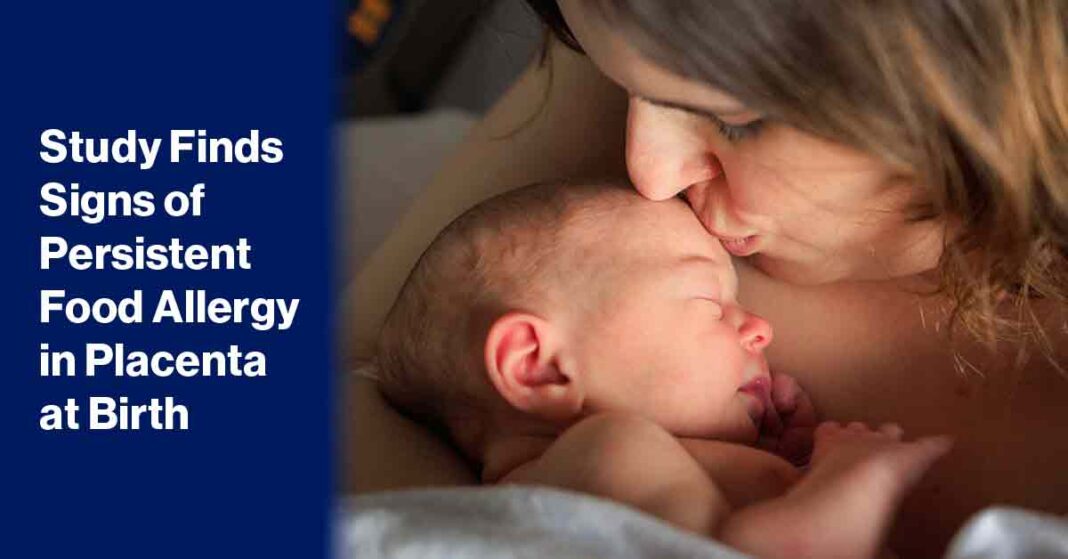
For many parents, a childhood food allergy diagnosis comes with an agonizing question: will my child eventually outgrow this, or will they face potentially life-threatening reactions for years to come? While some children develop tolerance to trigger foods like egg or milk, others remain allergic well into adolescence and adulthood. A new study published in the journal Allergy sheds light on this puzzle, suggesting that biological signatures associated with whether a food allergy resolves or persists may already be detectable in the placenta before a child is born.
To investigate why food allergy pathways diverge, researchers followed 1,518 children from birth to age seven through the COCOA (COhort for Childhood Origin of Asthma and Allergic Diseases) study. By analyzing health data over several years, the researchers classified the children into four distinct groups: the vast majority had no food allergy (87.3%), while others experienced early remission (6.9%), late remission (1.1%), or early persistent food allergy (4.6%). Identifying these trajectories allowed scientists to look back toward birth for biological differences that might help explain the children’s later outcomes.
The researchers then performed detailed placental DNA methylation analysis on samples from 59 randomly selected children representing the no-allergy, early-remission, and early-persistent groups. The late-remission group was excluded from this portion of the study because too few samples were available. The researchers examined epigenetic alterations — chemical modifications known as DNA methylation that can influence how genes function without changing the underlying DNA sequence. In children whose food allergies persisted throughout early childhood, two specific genes — RPS6KA2 and GCSAML — were significantly hypermethylated compared with children who never had food allergies or whose allergies went into early remission.
These placental epigenetic markers were also associated with measurable signs of allergic sensitization and inflammation later in childhood. Increased methylation of the GCSAML gene correlated with higher total immunoglobulin E (IgE), egg white-specific IgE antibodies, higher eosinophil counts early in life, and higher levels of the inflammatory cytokine IL-5 at age seven. The findings suggest a biological connection between epigenetic differences detectable at birth and the immune characteristics associated with persistent food allergy, although they do not establish that the placental changes themselves cause food allergies to persist.
The researchers also examined immune signaling molecules called cytokines in a separate group of 251 randomly selected children. Children in the early-persistent food allergy group had higher levels of IL-4, IL-5, and IL-6 at ages three and seven than children in the no-food-allergy group. At age three, children with early-persistent food allergy also had significantly lower levels of IL-10 than children whose allergies went into late remission. IL-10 plays an important role in regulating inflammation and immune tolerance, making the difference particularly noteworthy.
As the study authors summarized in their conclusion: “Hypermethylation of RPS6KA2 and GCSAML, reduced IL-10 levels, and elevated Th2 cytokines were associated with early persistent FA trajectory, potentially influencing its allergic inflammation and persistence.”
The findings provide intriguing evidence that persistent childhood food allergy is associated with epigenetic differences already present in the placenta as well as distinct patterns of immune regulation during childhood. Importantly, the study establishes associations rather than proving that these placental changes cause food allergies to persist. The epigenetic analysis was also relatively small, involving just 59 children, so the findings will require confirmation in larger and independent populations. Still, identifying biological signatures that distinguish persistent from resolving food allergy could eventually help researchers develop tools for predicting a child’s likely allergy trajectory and provide new clues for designing early interventions aimed at promoting immune tolerance.