
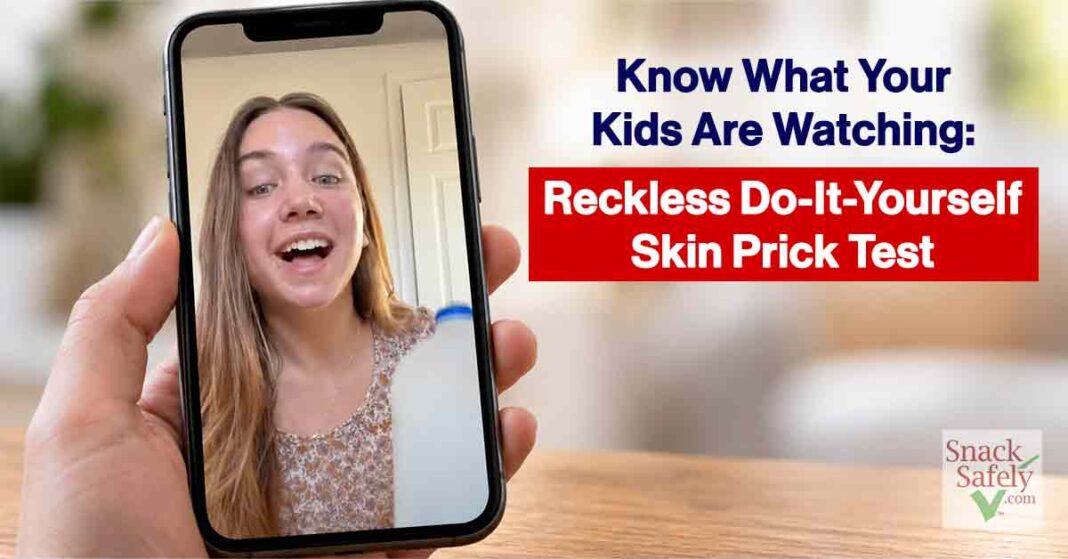
We’ve shared several social media videos highlighting dangerous and misguided trends involving food allergies. This latest video was so troubling that it inspired us to create a new category: Know What Your Kids Are Watching.
In the video, an influencer with 1.5 million followers demonstrates how to perform a do-it-yourself milk allergy skin prick test at home. We’ve removed her social media details to avoid rewarding her reckless behavior with additional attention:
This is a recipe for disaster, especially for anyone with a milk allergy, diagnosed or not.
Allergy testing should be performed in a medical setting under the supervision of a qualified healthcare professional, not at home as part of a social media “let’s see what happens” experiment.
Here’s why this trend is so dangerous:
- Risk of Life-Threatening Reactions: Skin prick testing can, in rare cases, trigger anaphylaxis, a potentially life-threatening allergic reaction. Testing should be performed by trained healthcare professionals with immediate access to epinephrine and other emergency treatments.
- Unreliable and Misleading Results: Clinical skin prick tests use carefully prepared allergen extracts along with controls to help ensure accurate results. Grocery-store milk is not standardized for allergy testing, and improvised testing methods can produce misleading skin reactions. Even when performed correctly, skin prick tests cannot diagnose a food allergy on their own. Results must be interpreted by a qualified healthcare professional alongside the patient’s medical history.
- Risk of Infection and Injury: Puncturing the skin with a sewing needle or another unsterilized object can introduce bacteria and cause infection. Without proper equipment and training, there’s also a risk of unnecessary injury.
Food allergy testing should be guided by a physician based on a patient’s symptoms and medical history. It’s not something to experiment with at home, especially when the consequences could be life-threatening.
We encourage you to watch this video with your children and use it as an opportunity to discuss the dangers of following medical advice from social media influencers. Remind them that just because someone has millions of followers doesn’t mean they know what they’re talking about.
When it comes to food allergies, medical advice should come from qualified healthcare professionals, not social media feeds.
Has your family been exposed to dangerous advice on social media, food allergy-related or otherwise? Please share your experience in the comments section.