
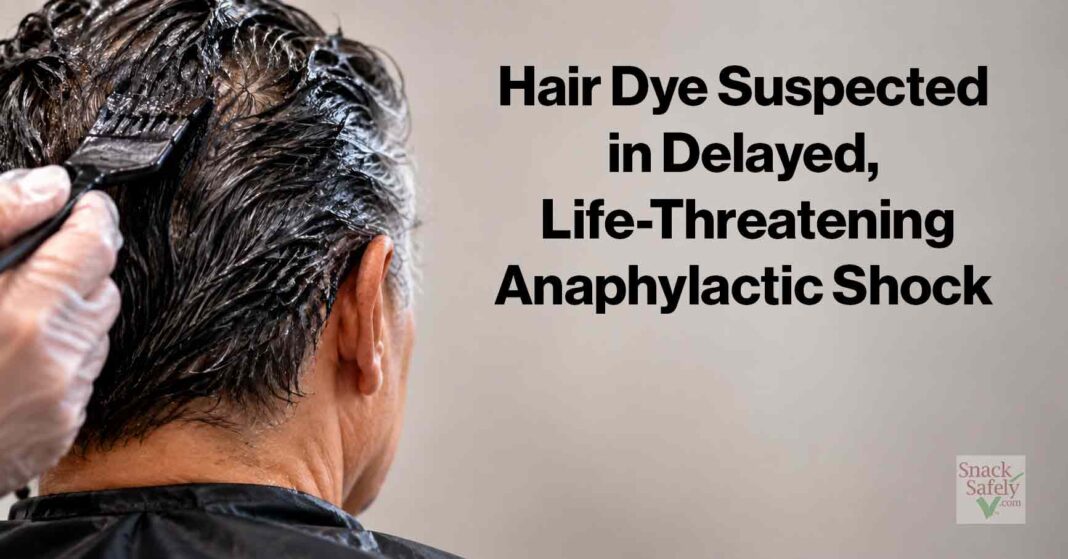
What began as a routine grooming session escalated into an intensive care emergency when a 61-year-old man experienced life-threatening anaphylactic shock suspected to be related to permanent hair dye. The patient, who had underlying medical conditions including hypertension and ischemic heart disease, presented to the hospital with recurrent fainting episodes (syncope) and dangerously low blood pressure. Severe systemic reactions following topical cosmetic use are rare, making the cause of his condition initially difficult to identify.
According to a clinical case report published in the Indian Journal of Case Reports, titled “Cosmetic catastrophe: A case report of delayed anaphylactic shock likely following hair dye exposure,” the man had applied commercial hair dye two days before arriving at the emergency department. After using the product, he developed mild itching of his scalp, neck, and face and took cetirizine for two days. He subsequently developed nausea and recurrent episodes of fainting, prompting emergency evaluation.
At the hospital, his blood pressure was just 80/60 mmHg, although his oxygen saturation was 99% on room air and his heart rate was 77 beats per minute. Initially, physicians noted only mild swelling around his right eye. Neurological testing, including MRI and EEG, did not explain his recurrent fainting. His condition then deteriorated as swelling progressed to involve both eyes and eventually his entire face while his hypotension worsened. A careful review of his recent exposures revealed the hair dye use and preceding itching, leading physicians to suspect anaphylaxis associated with the product.
Hair dye-related allergic reactions are increasingly common, mainly due to para-phenylenediamine (PPD) in permanent hair dyes. Systemic hypersensitivity reactions such as anaphylaxis are rare and may present atypically.
Para-phenylenediamine, commonly known as PPD, is a frequent cause of allergic reactions to permanent hair dyes, particularly darker formulations. Dermatologists more commonly encounter localized allergic contact dermatitis from PPD, which can cause itching, redness, swelling, or burning. Much more rarely, exposure to hair dye can be associated with systemic hypersensitivity reactions, including anaphylaxis. Importantly, however, physicians did not identify the specific ingredient responsible for this patient’s reaction, so PPD cannot be definitively blamed in this case.
Recognizing that his symptoms met criteria for anaphylaxis, physicians treated the patient with 0.5 mg of intramuscular epinephrine, intravenous corticosteroids, antihistamines, and aggressive intravenous fluid resuscitation. Because his dangerously low blood pressure persisted despite initial treatment, an intravenous epinephrine infusion was started and continued for approximately 16 hours. Over the following 24 to 36 hours, his blood pressure stabilized and the facial swelling substantially subsided.
Laboratory testing showed elevated inflammatory markers, including a C-reactive protein level of 80.9 mg/L and a white blood cell count of 13.1 thousand/µL. Additional investigations found no evidence supporting other likely explanations for his shock. Physicians also noted that he had spent two to three hours outdoors each day with substantial sun exposure during the preceding two days. The authors discussed whether ultraviolet exposure could potentially modify hair-dye allergens such as PPD and influence allergic responses, although they did not establish that this contributed to his reaction.
The unusually delayed and evolving presentation was a central feature of the case. The authors considered whether the early itching followed by later systemic symptoms could represent a combination of early and delayed hypersensitivity responses, and they discussed delayed or biphasic anaphylaxis as possible explanations. They emphasized the importance of asking about recent cosmetic and chemical exposures when patients present with otherwise unexplained fainting or shock:
This case highlights the importance of detailed exposure history and early recognition of anaphylaxis in unexplained syncope or shock.
Consumers using permanent hair coloring products should be aware that allergic reactions can occur even after previous uneventful use. Manufacturers and health authorities commonly recommend performing an allergy alert or skin test before applying hair dye, but such testing cannot guarantee that a serious systemic reaction will not occur. Anyone who develops symptoms such as widespread itching, facial swelling, difficulty breathing, dizziness, fainting, or other signs of a serious allergic reaction following hair dye exposure should seek emergency medical attention. The case also underscores that anaphylaxis does not always follow the familiar pattern or occur immediately after an exposure.