
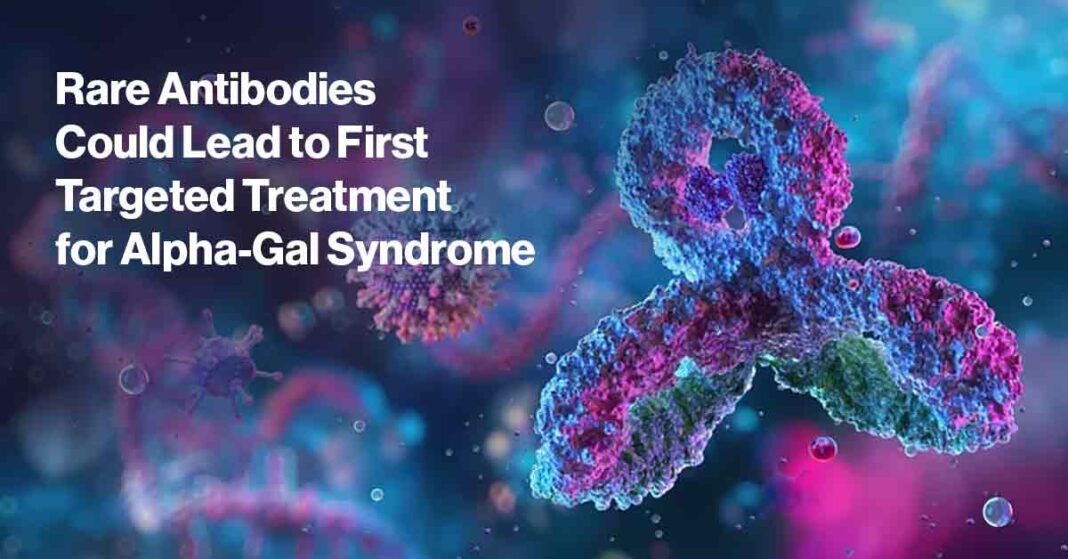
Researchers at the National Institutes of Health (NIH) have identified rare antibodies that could potentially serve as a biological shield against alpha-gal syndrome (AGS), an emerging, tick-bite-associated allergy. In laboratory testing, the newly discovered antibodies successfully blocked allergy-associated IgE antibodies from binding to specific alpha-gal-containing allergens. The findings, published in the Journal of Clinical Investigation, could open the door to developing targeted medical interventions for the condition.
Currently, individuals diagnosed with AGS have no specific treatment or prevention option beyond avoiding their triggers. “Tick bite-associated cases of AGS are increasing in the US and globally, and there is currently no specific treatment or prevention for it other than avoiding red meat,” said John Powers, MD, acting director of the National Institute of Allergy and Infectious Diseases (NIAID). “This discovery of monoclonal antibodies by NIAID scientists and their collaborators is the first step in potentially identifying ways to prevent AGS and develop new targeted therapies for people before they are affected by this disabling condition.”
Alpha-gal syndrome is triggered by tick bites that cause the body to develop an immune reaction to galactose-α-1,3-galactose (alpha-gal), a sugar molecule found in mammalian meat and other mammal-derived products. Since 2010, approximately 110,000 suspected cases have been documented in the United States alone, though the actual number is believed to be substantially higher due to underdiagnosis. Symptoms can range widely in severity, from gastrointestinal distress to potentially life-threatening anaphylaxis.
The breakthrough originated from an unexpected avenue of research. Scientists initially set out to isolate antibodies that could target alpha-gal molecules on malaria parasites to prevent malaria infections. After isolating 42 alpha-gal-specific antibodies from individuals exposed to malaria, the investigators discovered that the antibodies bound only weakly to the malaria parasite, prompting them to redirect their focus toward food allergy applications.
Upon screening the 42 isolated antibodies against AGS-associated allergens, the research team found that 13 successfully bound to allergy-associated targets. Crucially, two of the antibodies prevented immunoglobulin E (IgE) from AGS patients from attaching to key allergens. Furthermore, one antibody suppressed allergen-mediated activation of basophils sensitized with serum from AGS patients. Basophils are white blood cells that play an important role in allergic reactions, including the release of histamine.
The discovery highlights the unexpected clinical benefits of broad-based global health research. “We are thrilled that this research is helping to advance the development of alpha-gal-specific monoclonal antibodies as a potential intervention for AGS,” stated Peter Crompton, MD, a lead author of the study and senior investigator at NIAID. “This discovery is also a remarkable example of how collaborative global health research can lead to breakthroughs that improve the health and well-being of Americans.”
Moving forward, the collaborative team—which was also led by Scott Commins, MD, PhD, of the University of North Carolina at Chapel Hill—believes the findings could lead to future studies evaluating whether alpha-gal-specific antibodies can prevent allergic reactions in people with AGS. Future research may also focus on identifying and engineering additional monoclonal antibodies capable of working against a broader spectrum of alpha-gal-containing allergens.