
At SnackSafely.com, we have taken on the difficult task of analyzing reports of people succumbing to anaphylaxis to understand what went wrong and provide guidance on how to prevent similar tragedies in the future.
The vast majority of these horror stories have one thing in common:
Epinephrine was not available or administered too late when anaphylaxis struck.
The result is often a death that could have been prevented, as epinephrine is the only drug that can halt and reverse the progression of anaphylaxis — a severe reaction to a food, medicine, insect venom, or environmental substance — but it must be given promptly after symptoms start to work best.
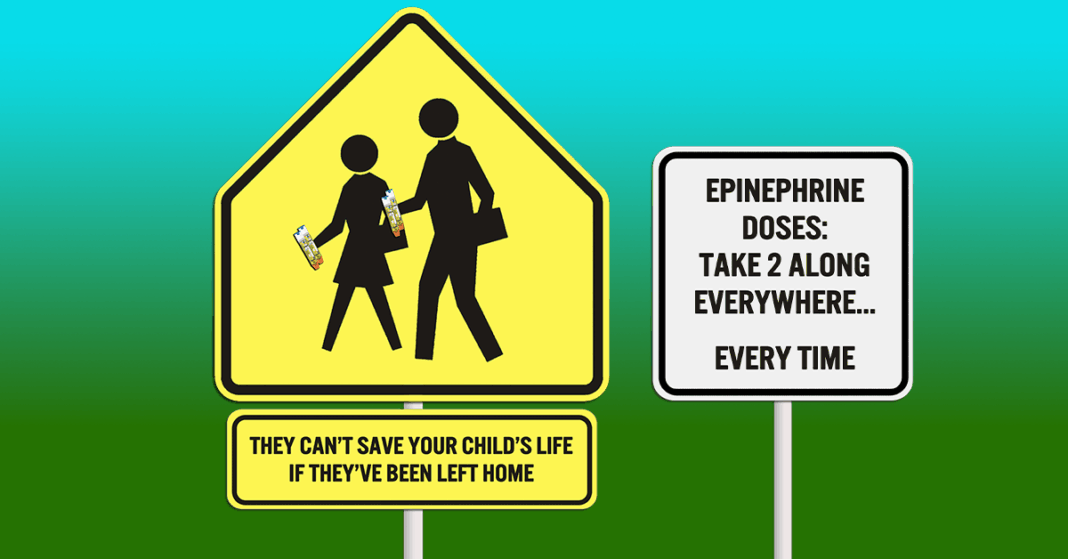
If your child self-carries, make sure they always take two epinephrine doses everywhere, every time, period, full-stop. It is incumbent upon you to ensure they know how and when to use them and to train, cajole, plead, or nag them into always having them on hand. Perform spot checks. Keep them home if they refuse, because allowing them out in the world without epinephrine is to leave them unprotected against the one danger that lurks everywhere.
If your child is too young to carry, make sure their caregivers always have access to their epinephrine and are trained to recognize the symptoms of anaphylaxis and administer epinephrine immediately when it is suspected.
Whether your child is 4 or 24, whether they are about to enter daycare or their senior year of college, your job as protector doesn’t end until there’s a cure!
Click here for a set of flyers from our Take 2 Campaign and post them at home and school to remind everyone to be vigilant. Let’s pledge to do everything we can to keep our kids out of the headlines!
How to Determine Whether it’s Anaphylaxis
Epinephrine First, Period