
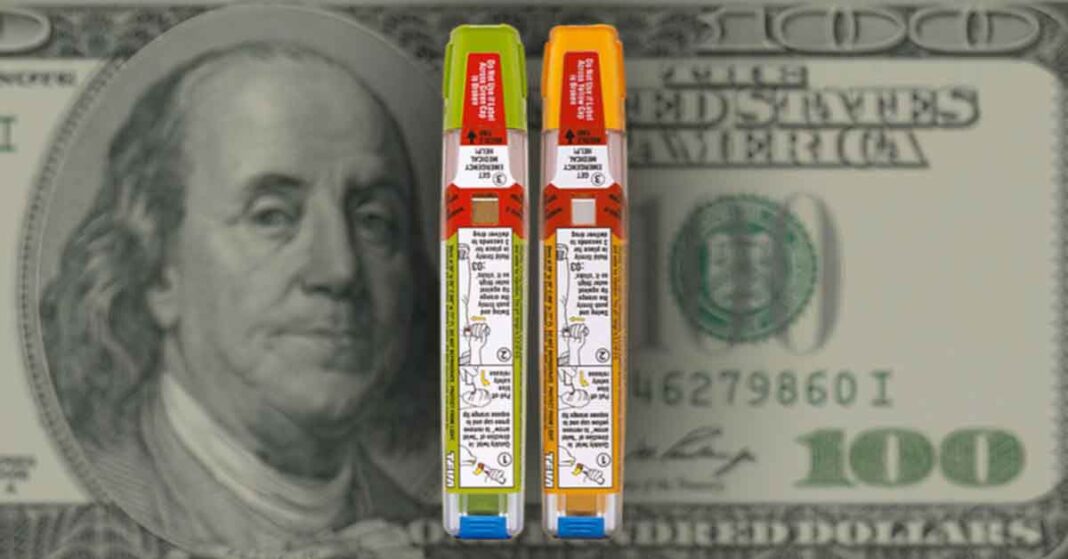
A lawsuit challenging a Colorado law that makes epinephrine auto-injectors more affordable is set to proceed to trial. The law, which took effect in January last year, caps the average price of a two-pack of auto-injectors at $60, a significant reduction from the previous cost of around $600. It also established an affordability program for uninsured individuals with a prescription, making the life-saving medication much more accessible.
Dr Rohit Katial of National Jewish Health in Denver emphasized the importance of this access, stating, “You just don’t know when you’re going to have an accidental exposure or get stung if you’re outdoors, especially here in Colorado, where people hike and do mountain activities.” The law was a response to the needs of the approximately 565,824 people in the state with life-threatening food allergies.
According to Katial, “The EpiPen, in most guidelines, is the first medication that should be administered for anaphylaxis. It buys you time to get to a healthcare facility for more durable care or monitoring or additional epinephrine, along with other medications to really treat the reaction.” Epinephrine auto-injectors — often called ‘EpiPens’, referring to a particular brand — are sold in two-packs because a single dose may not be sufficient for a severe reaction. As Katial explained, “One is not always enough.”
Just before the law was enacted, Teva Pharmaceuticals, which sells a generic version of the injector, sued the state. The company argued that the affordability program violated the Fifth Amendment’s “taking clause,” which requires the government to provide “just compensation” if it takes private property for public use. Colorado countered that the law was an act of economic regulation, not property seizure.
Amneal Pharmaceuticals, another manufacturer, also sued Colorado on the same grounds. A federal judge denied both companies’ requests for a preliminary injunction and rejected the state’s attempt to dismiss the case. The 10th Circuit Court recently ruled that Teva’s lawsuit can proceed, with Senior Judge Bobby R. Baldock writing, “We affirm the district court’s denial of Defendants’ motion to dismiss based on Eleventh Amendment immunity and remand this case to the district court for further proceedings.”
The court’s decision allows both companies to take their cases to trial, but does not halt or pause the law. The $60 price cap will remain in place for now. If the manufacturers ultimately win, uninsured Coloradans would likely be the first to lose the affordability program.
While the $60 cap for insured individuals would likely remain in place initially, the impact on uninsured people would be significant. Katial noted that the effect is “much more nuanced and complex,” as “Someone could be insured but just not afford the cost. So it could be the entire gamut. I think at a minimum, it would definitely impact uninsured folks or those that don’t have appropriate drug plan coverage.” If Teva prevails, the state could appeal or rush to create a legislative fix.