
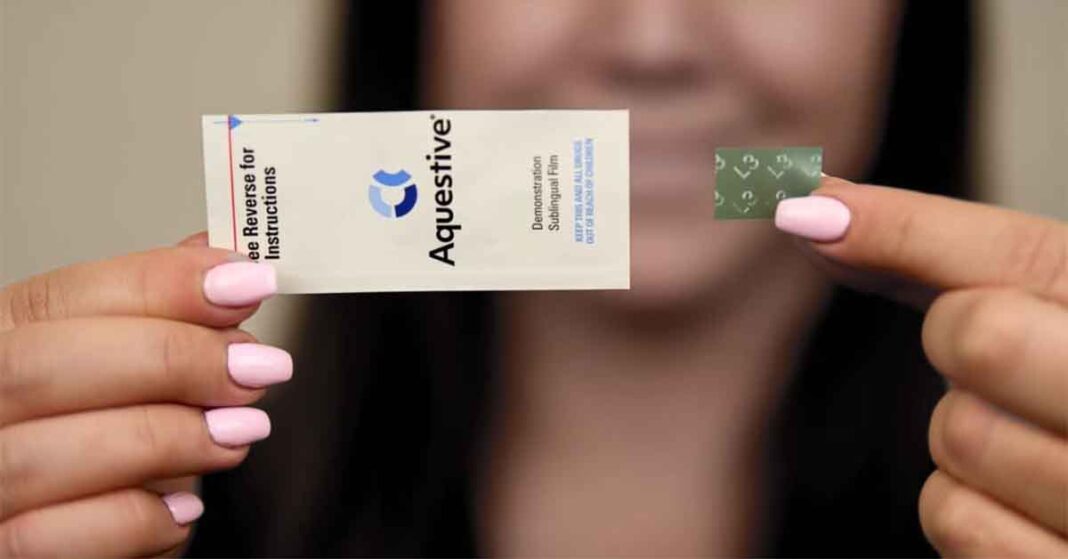
Aquestive’s initial study (Phase 1) of the sublingual film, AQST-109, shows promising results as a new, easy-to-use option for treating severe allergic reactions, like anaphylaxis. AQST-109 is a film that dissolves under the tongue to deliver epinephrine, the standard life-saving medication for these emergencies. The study evaluated its effectiveness and safety in children and teenagers and found that it works very similarly to how it works in adults.
Study Participants and Design
This study involved 32 pediatric patients between the ages of 7 and 17, all of whom had a history of severe allergic reactions. The participants had to weigh at least 30 kilograms (about 66 pounds). The study was “open-label,” meaning both the doctors and the patients knew they were receiving the drug. Each participant was given a single 12 mg dose of the AQST-109 film under their tongue. The main goals were to see how the drug was absorbed into the body (pharmacokinetics, or PK) and what effects it had on the body (pharmacodynamics, or PD), such as changes in heart rate and blood pressure.
How the Drug Worked
The study showed that AQST-109 delivered epinephrine into the pediatric patients’ bloodstreams in a way that was similar to what has been seen in adults. Comparing the amount of epinephrine in the blood over time, the results suggested there was no statistical difference in the maximum concentration of the drug reached in children compared to adults. This indicates the film delivered the necessary amount of epinephrine just as effectively in the younger patients.
The drug quickly caused significant changes in vital signs, exactly what epinephrine must do to reverse anaphylaxis. The time to reach maximum effect was 12.0 minutes for heart rate, 12.0 minutes for systolic blood pressure (SBP), and 8.0 minutes for diastolic blood pressure (DBP). The maximum changes included an average increase of 12.5 beats per minute for heart rate, 15.4 mmHg for SBP, and 9.8 mmHg for DBP. These vital sign changes indicate that the medication is active and effectively working to stabilize the patient during an allergic reaction.
Safety and Tolerability
The safety data was also positive, showing that the film was generally well-tolerated by the children in the study. All adverse reactions were short-lived and mostly mild in severity. Mild reactions were defined as symptoms that were barely noticeable and did not interfere with the patient’s normal activities. The most common side effects were related to the area where the film was placed (under the tongue), such as numbness (paresthesia/hypesthesia), discomfort, or pain. These are considered “on-target” reactions, meaning they are expected from an epinephrine product applied in that area.
Why This Matters
This study is a significant step toward providing another needle-free alternative to epinephrine auto-injectors. For children and adults alike, a dissolving film is easier to carry and may be less intimidating to administer than a shot, potentially leading to faster treatment during a frightening emergency like anaphylaxis. The fact that it works similarly in children and adults suggests it could be a reliable and convenient new option for a wide range of patients.
ACAAI Annual Meeting Slides
See the slides presented on this topic at the American College of Allergy, Asthma & Immunology (ACAAI) annual meeting taking place in Orlando, Florida: