
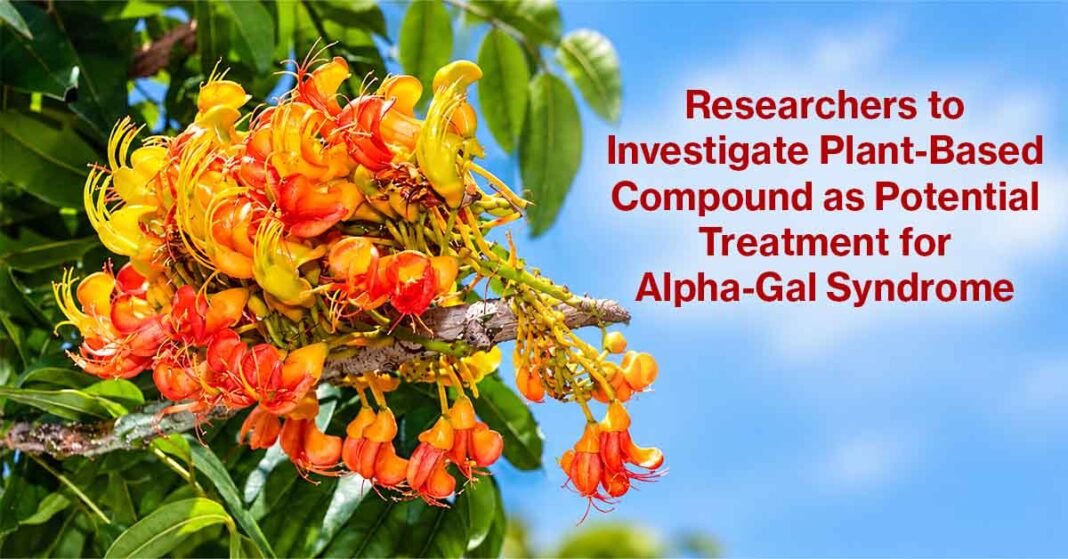
Washington, DC-based biotechnology company 60 Degrees Pharmaceuticals has announced a new research partnership with The University of Southern Mississippi (USM) to investigate a potential treatment for alpha-gal syndrome (AGS), commonly known as the “red meat allergy.” The collaboration will examine castanospermine, a naturally occurring compound derived from the Australian Chestnut tree (Castanospermum australe), to determine whether it could eventually help people living with this increasingly recognized tick-associated allergy.
Alpha-gal syndrome develops when certain tick bites trigger an immune response to galactose-α-1,3-galactose (alpha-gal), a carbohydrate found in meat from most mammals, including beef, pork, and lamb, as well as certain dairy products and other mammalian-derived ingredients. In the United States, the condition is most commonly associated with bites from the lone star tick. Unlike typical food allergies, which often cause symptoms within minutes, alpha-gal reactions frequently occur several hours after exposure, making the condition particularly difficult to recognize and manage.
Currently, there are no FDA-approved medications specifically indicated to treat or prevent alpha-gal syndrome. People diagnosed with the condition must primarily rely on avoiding foods and other products that trigger their reactions. This can be challenging because mammalian-derived ingredients may appear in unexpected foods, medications, and other everyday products. Severe reactions can include anaphylaxis, a potentially life-threatening emergency that requires prompt treatment with epinephrine.
The new partnership will investigate whether castanospermine has therapeutic potential using nonclinical laboratory models of alpha-gal syndrome. The compound belongs to a class of substances called iminosugars, which can influence certain biological processes involving sugars. Although castanospermine has demonstrated biological activity in previous research involving other conditions, its effectiveness against alpha-gal syndrome has not been established. The newly announced studies are intended to help determine whether further development is warranted.
The collaboration brings together 60 Degrees Pharmaceuticals’ experience developing treatments for diseases associated with ticks and other disease-carrying organisms with USM’s expertise in tick biology and related research. Under the agreement, the company will fund the studies and retain an option to commercialize and market intellectual property resulting from the research.
The company is also considering how a potential castanospermine-based treatment might eventually be regulated. Before pursuing a conventional prescription drug development program, 60 Degrees Pharmaceuticals plans to explore whether a botanical regulatory pathway could be appropriate. However, the company has not established which pathway would be available, and plant-derived treatments are not automatically exempt from requirements to demonstrate safety and effectiveness.
This is not the company’s first initiative involving castanospermine and alpha-gal syndrome. In July 2026, 60 Degrees Pharmaceuticals announced an exclusive option agreement with the Florida State University Research Foundation covering potential therapeutic applications of the compound for several tick-associated conditions. Those included alpha-gal syndrome, Powassan virus disease, tick-borne encephalitis, and post-treatment Lyme disease. The new Southern Mississippi partnership represents another step in the company’s broader effort to investigate castanospermine’s medical potential.
Founded in 2010, 60 Degrees Pharmaceuticals previously secured FDA approval for ARAKODA (tafenoquine), a medication used to prevent malaria, in 2018. The company also reports three active clinical trials investigating treatments for babesiosis, another disease transmitted by ticks.
Although the new research offers a potentially promising direction, it remains at a very early stage. The company has not announced results demonstrating that castanospermine can prevent or reduce alpha-gal reactions, and no human clinical trials for this indication have been reported in the announcement. There is also no established timeline for when a treatment might become available.
For people living with alpha-gal syndrome, the significance of the partnership lies in the possibility of developing treatments beyond simply avoiding triggering ingredients. If the laboratory findings are encouraging, they could provide a foundation for additional studies and, eventually, clinical trials. For now, castanospermine remains an experimental possibility rather than a proven treatment.