
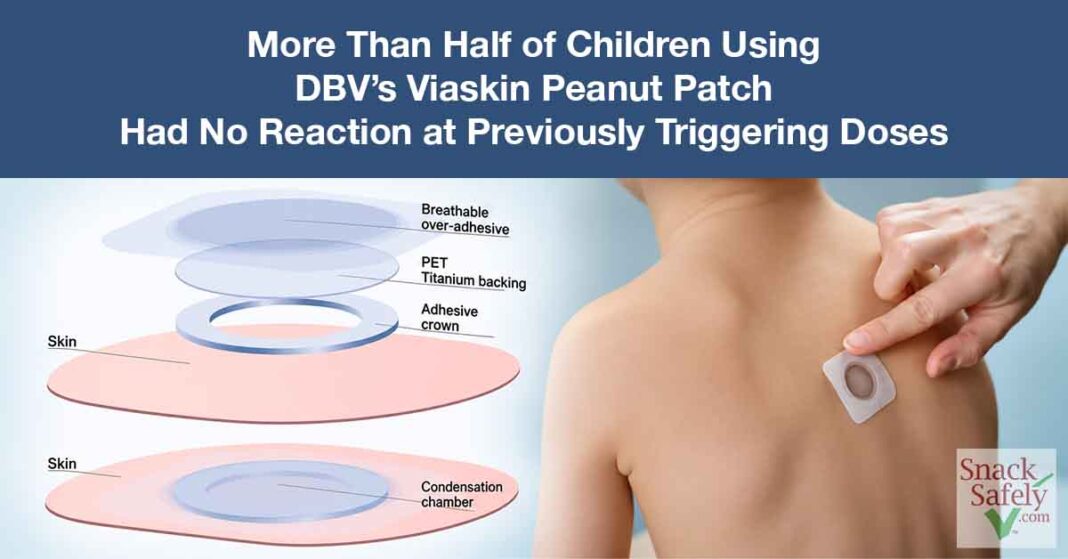
The skin patch designed to help young children tolerate peanuts is showing promising results in reducing the severity of allergic reactions. French biotechnology company DBV Technologies recently announced new findings from its Phase 3 VITESSE clinical trial, suggesting that a year of treatment with the experimental Viaskin Peanut Patch can reduce allergic symptoms during medically supervised peanut food challenges in children ages four through seven. Rather than requiring children to swallow peanut allergens, the patch delivers tiny amounts of peanut protein through healthy, intact skin, gradually training the immune system to become less reactive. The new findings were presented at the 2026 American College of Allergy, Asthma & Immunology (ACAAI) Annual Scientific Meeting in Phoenix, Arizona.
Video: How Viaskin Therapy Works
The results come at an important time for families awaiting additional treatment options. DBV Technologies submitted a Biologics License Application to the US Food and Drug Administration (FDA) in September 2026 and requested Priority Review, which could shorten the regulatory review process if granted. Unlike oral immunotherapy, which requires patients to consume carefully measured amounts of peanut protein and can increase the risk of allergic reactions and treatment discontinuation, the Viaskin patch delivers the allergen through the skin. Researchers hope this non-invasive approach could provide a more convenient treatment option with a favorable safety profile, although the patch has not been directly compared with oral immunotherapy in a clinical trial.
To evaluate how well the patch reduced allergic reactions, researchers conducted additional analyses of data from the 12-month VITESSE study. At the end of treatment, children underwent medically supervised peanut food challenges to determine how much peanut protein they could tolerate and how severely they reacted. The maximum severity of allergic symptoms was significantly lower among children receiving the active patch compared with those receiving a placebo. Severe reactions occurred in 8.4% of children treated with the Viaskin patch, compared with 12.5% of those receiving the placebo. Although these findings are encouraging, the study evaluated reactions under controlled medical supervision rather than accidental exposures in everyday life.
An especially encouraging finding emerged when researchers examined reactions at or below the amount of peanut protein that had triggered symptoms before treatment began. At these baseline levels, 52.7% of children using the Viaskin patch experienced no allergic symptoms, compared with just 19.2% of those receiving the placebo. Furthermore, only 14% of patch-treated children experienced moderate or severe reactions at these doses, compared with 50% of children in the placebo group. These findings suggest that the patch may help reduce the severity of reactions to small amounts of peanut, potentially offering additional protection against accidental exposures. However, whether these improvements translate into fewer severe allergic emergencies outside clinical settings remains to be established.
Laboratory testing provided additional evidence that the treatment was changing how children’s immune systems responded to peanuts. Children receiving the active patch showed increased levels of peanut-specific IgG4 antibodies, which are associated with immune tolerance, alongside reductions in peanut-specific IgE antibodies, which play a central role in allergic reactions. Researchers also observed smaller reactions during standard skin-prick testing. Treatment adherence was exceptionally high, averaging 96.1% in the active treatment group and 96.5% in the placebo group. The patch also appeared relatively easy to incorporate into daily routines: 83.4% of active patches were rated easy or very easy to remove, while 71.9% were rated painless to remove. Children could continue activities such as swimming, bathing, and playing sports during treatment.
The latest findings build upon the trial’s primary results, first announced in December 2025. VITESSE enrolled 654 children ages four through seven, randomly assigning them in a 2:1 ratio to receive either a daily patch containing 250 micrograms of peanut protein or a placebo for 12 months. At the end of treatment, 46.6% of children receiving the active patch met the study’s predefined criteria for improved peanut tolerance, compared with 14.8% of those receiving the placebo. Meeting these criteria demonstrated an increased ability to tolerate peanut protein during a supervised food challenge, not that children had outgrown their allergies or could safely consume peanuts without restrictions. According to DBV Technologies, the patch is designed to “desensitize by re-educating the immune system” through repeated exposure to small amounts of allergen delivered through intact skin.
If approved by the FDA, the Viaskin Peanut Patch would expand the growing range of treatments available to children with peanut allergies. Other experimental approaches are also advancing, including Aravax’s peptide-based peanut allergy treatment and ALK’s sublingual peanut immunotherapy tablet, both of which reported encouraging mid-stage clinical findings in November 2026. Together, these developments reflect growing efforts to provide families with more effective, convenient ways to manage food allergies and reduce the risks associated with accidental exposure.