
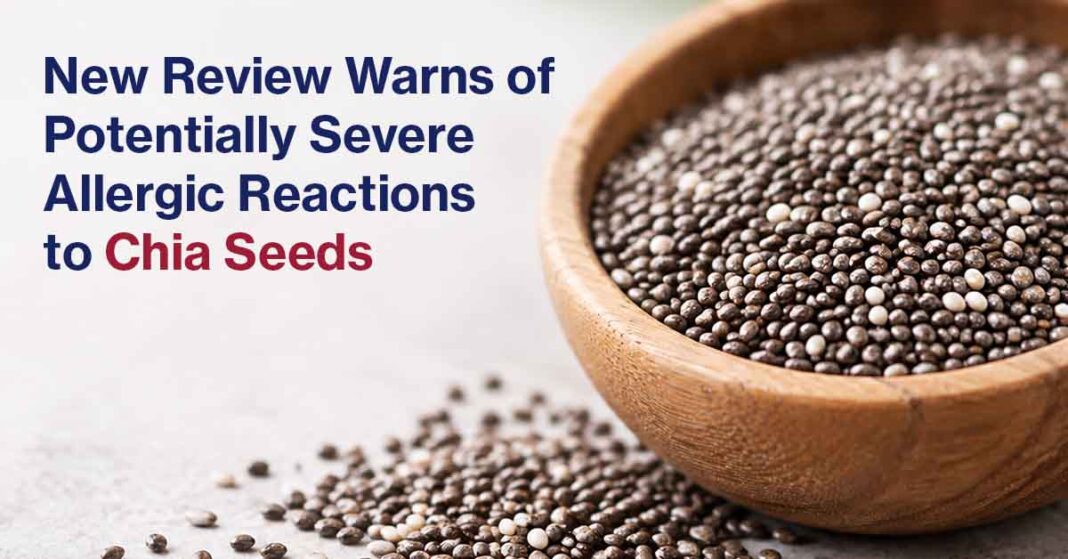
Chia seeds (Salvia hispanica) have skyrocketed from a niche health food into an everyday staple, appearing in everything from morning smoothies and artisanal breads to plant-based energy bars. Prized for their high fiber content, omega-3 fatty acids, and versatile binding properties, they have earned a reputation as a nutritional powerhouse. Yet, as a comprehensive review published in Nutrients points out, the rapid adoption of chia in modern diets has significantly outpaced our clinical understanding of its potential allergy risks.
While widely regarded as safe, chia seeds contain proteins capable of triggering allergic reactions in susceptible individuals. The researchers highlight a troubling disconnect: chia has become a widely consumed ingredient, potentially allergenic proteins have been identified, and severe reactions have been reported, yet clinical research remains remarkably limited. This gap makes chia an emerging concern in food allergy medicine.
To date, documented cases of chia allergy in medical literature remain scarce, consisting primarily of individual case reports, conference abstracts, and a small case series. The review identified six publications providing direct clinical evidence of chia allergy. Among them was a 2023 case series involving seven adults, two of whom experienced anaphylaxis. Six of the seven patients also showed sensitization to sesame, raising important questions about possible cross-reactivity. Reported reactions have ranged from immediate oral itching and widespread hives to severe, potentially life-threatening anaphylaxis. These cases provide evidence that chia can cause immunoglobulin E (IgE)-mediated food allergy, although the frequency of such reactions in the general population remains unknown.
At the molecular level, researchers have identified several potentially allergenic protein families within chia seeds, including 2S albumins, 7S vicilins, 11S legumins, and oleosins. Similar proteins are established allergens in sesame, peanuts, tree nuts, and other edible seeds. Their presence provides a plausible biological explanation for chia’s ability to trigger allergic reactions. However, researchers have not yet established which individual chia proteins are responsible for clinically significant reactions or how reliably laboratory findings predict their severity.
A central focus of the review is the potential for cross-reactivity, particularly with sesame. Laboratory experiments have demonstrated that IgE antibodies from some sesame-allergic individuals can recognize and bind to chia proteins, suggesting similarities between their allergenic structures. However, the researchers emphasize an important distinction: laboratory recognition does not necessarily mean a person will experience an allergic reaction when eating chia. Consequently, current evidence does not justify routinely advising everyone with sesame, peanut, or tree nut allergies to avoid chia. Decisions about avoidance should instead be guided by an individual’s clinical history and evaluation by an allergist.
The review also raises questions about the increasing use of concentrated chia proteins in processed and plant-based foods. Some laboratory studies have detected stronger IgE-binding signals in chia protein concentrates than in less-processed preparations. Although these findings warrant further investigation, they do not establish that concentrated chia ingredients are more likely to cause allergic reactions or produce more severe symptoms.
One of the largest hurdles facing patients and doctors is the lack of standardized diagnostic tools. Widely available, validated commercial skin-prick testing extracts, chia-specific IgE blood tests, and established diagnostic thresholds are lacking. Consequently, allergists may rely on a detailed clinical history alongside nonstandardized testing methods, including prick-to-prick testing with chia seeds. When appropriate, a medically supervised oral food challenge may help determine whether a patient is genuinely allergic, although standardized chia-specific challenge protocols have not yet been developed.
Compounding this diagnostic gap is the current regulatory landscape. Unlike sesame, peanuts, and tree nuts, chia is not classified among the nine major food allergens requiring special allergen labeling in the United States. Although chia generally must appear in ingredient lists when used in packaged foods, consumers cannot rely on prominent allergen warnings to identify its presence. As chia continues to appear in processed, gluten-free, vegan, and protein-enriched products, recognizing it as a potential allergen becomes increasingly important.
The researchers emphasize that the available evidence does not establish how common chia allergy is, whether its prevalence is increasing, or which individuals face the greatest risk. Larger prospective clinical studies are needed to identify the proteins responsible for allergic reactions, establish reliable diagnostic methods, determine reaction thresholds, and clarify the clinical significance of cross-reactivity with sesame and other foods.
For now, the review’s message is one of awareness rather than alarm. Chia remains a nutritious food that most people can consume without difficulty, but it should not be overlooked as a possible cause when unexplained allergic reactions occur after eating seed-containing foods. Individuals who suspect a chia allergy should seek evaluation from an allergist rather than attempting to confirm the allergy through unsupervised exposure.