

Dear Fellow Parent,
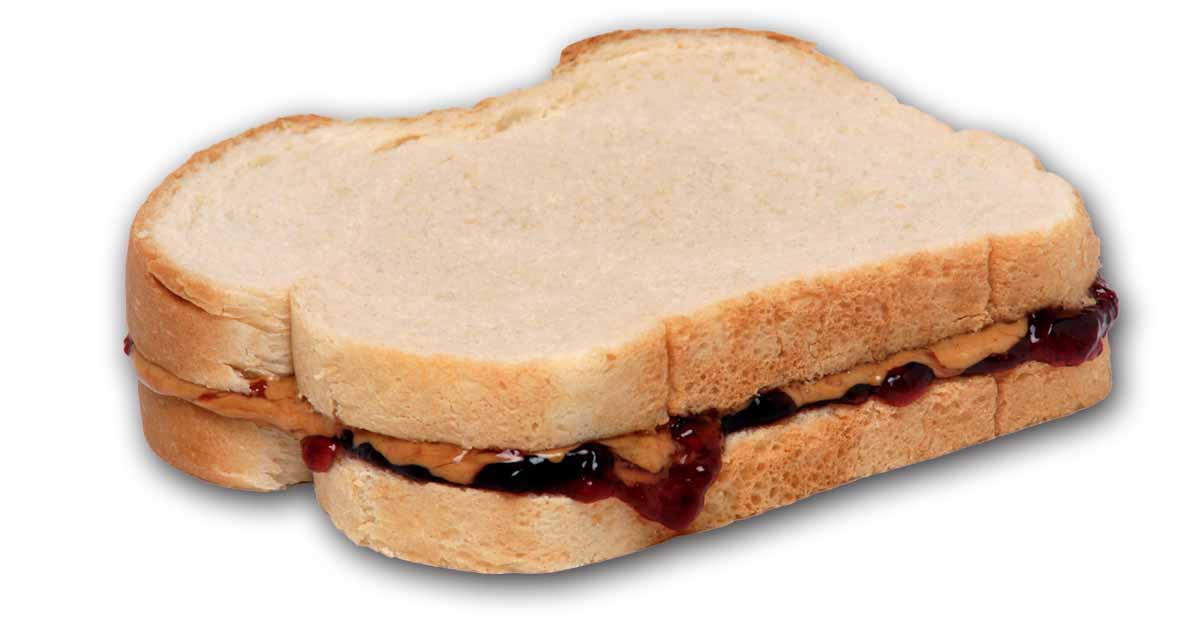
I understand your child will have to forgo peanut butter and jelly sandwiches at school in order to protect children with food allergies like mine. I realize this accommodation may seem extreme to you, especially since your child refuses to eat anything else but PB&J. Though I am sympathetic and can offer you a strategy for dealing with this, let me first explain why the school has adopted this rule.
It is estimated that over 5.9 million children aged 18 years and under have some kind of food allergy — an average of two in every classroom — and that number is rising. Though there are many theories as to why this is, no one knows for sure. What we do know is that allergic reactions can range anywhere from mild – with symptoms like redness and itchiness – to anaphylaxis, a life-threatening reaction that can include vomiting, difficulty breathing, and in extreme cases, death. To complicate matters, no one can predict with certainty which children are at risk for anaphylaxis, and worse, a child doesn’t need to eat a food they are allergic to have an anaphylactic reaction; contact with another child or an item that has been exposed to the allergen can sometimes be enough to trigger onset. Because of this, my child carries an epinephrine auto-injector — the treatment of choice should the unthinkable happen — and why foods containing peanuts are prohibited from our children’s classroom.
Some think that children with food allergies should go to private school or be homeschooled so as not to inconvenience the parents of “normal” children, but this is discriminatory thinking of days gone by. Thanks to Section 504 of the Rehabilitation Act of 1973, my child has the right to be accommodated any place that receives federal assistance, and that includes our school.
Let me say thanks in advance for your understanding and compliance with the peanut butter ban as I fully understand that your family is making an accommodation to ensure the safety of mine. In return, I offer the following advice to help you transition your child from peanut butter to an alternative that is safe, more healthful, and acceptable to our school’s policy.
Peanut butter derives much of its taste from the roasting process. There are a number of other spreads available at the supermarket that use a similar roasting process and taste remarkably similar to peanut butter. My child likes sunflower seed butter, but soy nut butter is another alternative.
Now similar does not mean exactly like, so you’ll need to ease your child into a peanut butter alternative behind the scenes so they won’t taste the difference. Here’s the secret: when your child has lunch at home, simply mix 3/4 peanut butter with 1/4 peanut butter alternative, and on successive days change the proportion to more and more of the alternative spread. In no time your child will be enjoying PBA&J (peanut butter alternative and jelly) sandwiches, and we’ll all breathe easier knowing our children are safe, secure, and happy.
Thanks again and please feel free to contact me if you have any questions.
Sincerely,
Concerned Parent
- Your rights Under Section 504 of the Rehabilitation Act — US Department of Health and Human Services
- Facts and Statistics — Food Allergy Research and Education
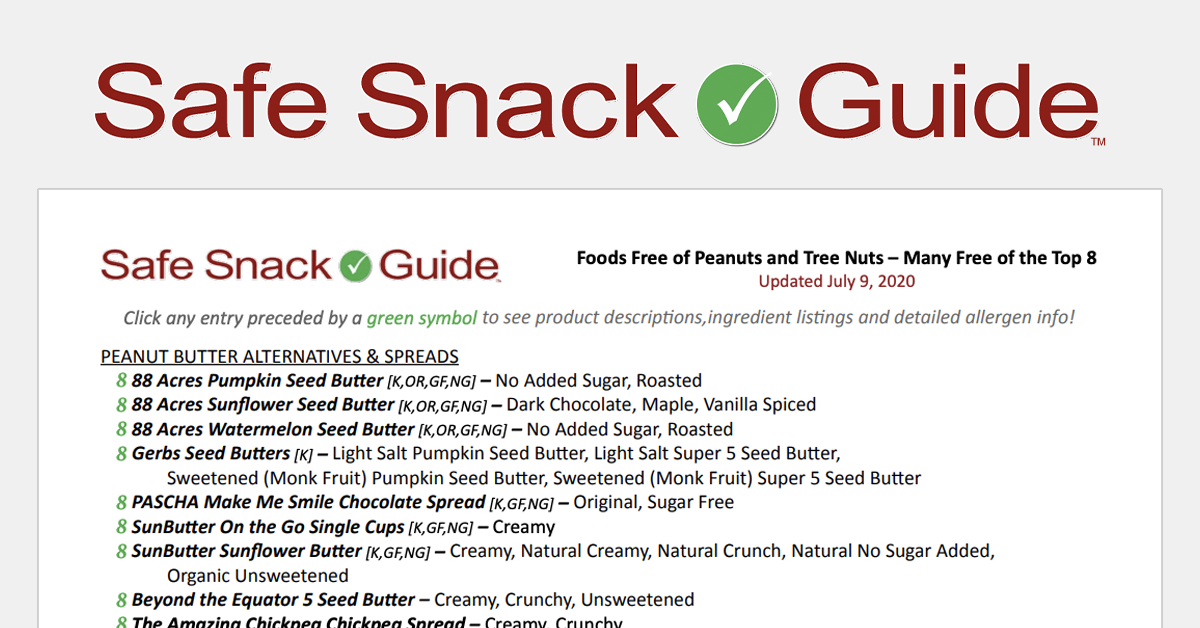
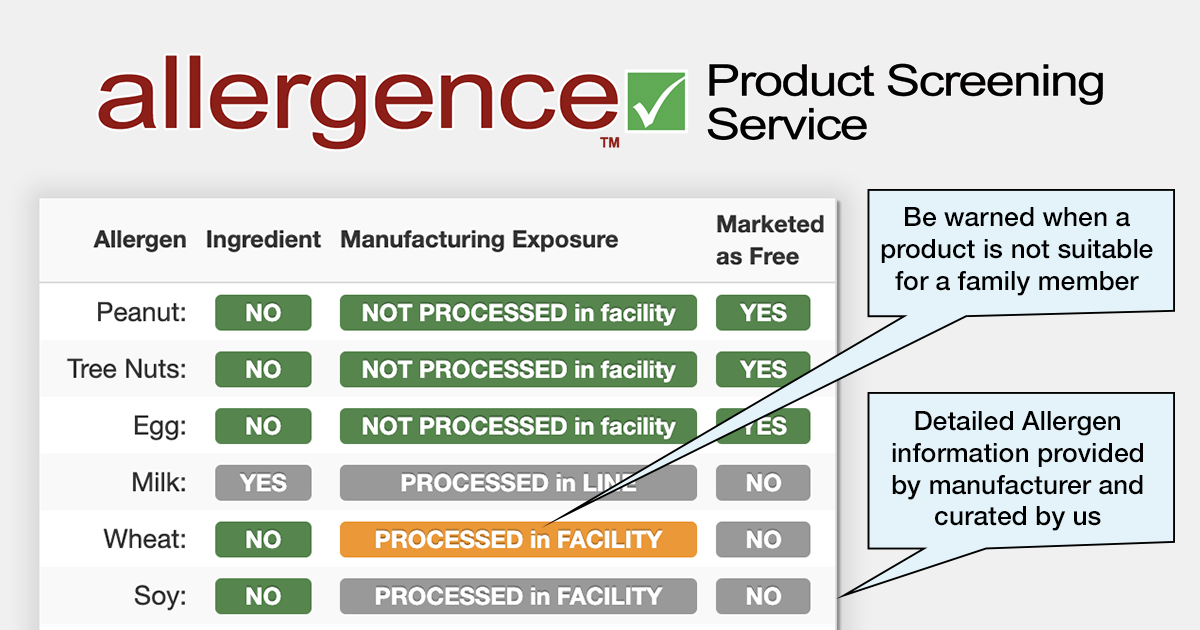
Safe Snack Guide




I do not have a child but…I was a teacher and I will say one thing. Lying to a child is an absolutely abominable way to handle the situation! There is nothing worse than deceit and that is what you are advocating!
While we do not at all advocate lying to your child, we also don’t see the need to worry your child needlessly that his favorite lunch (and possibly the only thing he’ll eat for lunch) will be taken away from him. Parents mix foods behind the scenes to transition their children all the time; we see this as no different from adding formula to a baby’s bottle to help wean her from breast milk, or adding pureed vegetables to spaghetti sauce to fortify a child’s diet. Families often agonize over their kids’ diets and the issue of banning peanut butter is a hot topic everywhere. We strongly believe this is an effective, low-stress solution for the parents and child.
Parents, please let us know how you feel about this issue by responding here. Do you believe that you are somehow being disingenuous to your child by slowly transitioning them from peanut butter to an alternative? Have you tried this method and has it worked for you? We value your feedback.
Marianne, no one endorses lying to a child. This is a process of weaning a child from one food to another. Personally, I don’t ask my child which brand of mustard, jam etc to purchase and making a peanut butter sandwich with peanut butter or an alternative is only a big deal if you make it one.
At my house, my daughter’s friends will get either Wow (soy butter) or SunButter (sunflower seed butter) depending on which was the best bargain when I was shopping. They like them equally and often request sandwiches!
At the last bake sale I attended, the allergen aware table offered free samples of Wow and 42 out of 44 liked it. Of the two dissenting tasters, one was a peanut butter gourmand who only eats freshly ground peanuts and the other has a peanut allergy and is distrustful of anything that resembles peanut butter.
The point is, there are alternatives out there.
I am VERY concerned about offering kids soy butter or sunflower seed butter without telling them what it is… “not peanuts” is NOT enough!
I am 44 years old and have food anaphylaxis to peanuts, tree nuts, and SOY… so your friendly alternative would KILL me just as fast as the peanuts!!
Please reconsider this practice. Many kids are allergic to soy, and some to sunflower seeds and sesame. Protecting your peanut-allergic kid shouldn’t involve killing the soy-allergic neighbor child.
Thanks for your consideration. Oh, and the alternatives at our house? Something completely different. We don’t use any sort of protein-butter-anything at our house, ever, and we get along just fine; 2 adults and 3 kids, including an almost-4 year old.
Julia, the substitution mentioned in the letter was a suggestion for parents feeding their own children. They would of course know if their own child has an allergy that would prevent substituting soy or sun nut butter for peanut butter. I do not think that the letter in any way endorses giving food to another child without knowing whether it was safe for them to eat. As a parent of a child with a food allergy, I am very aware when offering food to any child in my home and verify that they do not have any food allergies or restrictions. I would guess that anyone dealing with food issues on a daily basis is attuned to this as well and would not risk putting anyone’s health in danger.
I cannot appreciate your comment enough. Kudos to you for educating your child and their friends about the situation as well as communicating with other parents to know what is safe to provide their kids if visiting.
This makes the case for Peanut Butter being allowed in schools and thinking about it, I’m ok with that.
“Lying to a child is an absolutely abominable way to handle the situation! There is nothing worse than deceit and that is what you are advocating!”
Do you encourage the belief of Santa Claus, the Easter Bunny, the Tooth Fairy, etc.? Is it really deceitful when this substitute can save a child’s life? Life is full of sacrifices. If anything, that is what we are teaching our children.
Reactions like yours are part of the reason why parents of children with anaphylaxis are so scared to send their children to school–you’re nitpicking one little thing in the face of the numerous parents and teachers who actively bully allergic children and refuse to accommodate them despite the clear and present threat to their lives. I understand how in some cases, the ends do not justify the means, but I expect better critical thinking and reading skills out of those who call themselves educators. Nowhere did the author say to lie to the child, as in passing the alternative as peanut butter. It was simply suggested that a child could be weaned onto a peanut butter alternative by mixing it with real peanut butter until the child’s tastes have adjusted. You could tell the child, or simply not say anything, but in neither case are you lying.
I have a daughter with milk anaphalaxis. When she entered grade school I made the request that the school also provide for her the same care and concern they provided the other two students with peanut anaphylaxis. I was unequivocally denied my request. My experience in this debate is that not all allergies are treated with the equal respect even when the end result of exposure can have the same result: death. Why is it that tree nut/peanut trumps allergen any other allergen?
As a side note: When I realized that my daughter’s needs were not going to be met by the public school system that I still continue supporting through my taxes, I gave up a very lucrative career in the corporate world, down sized my life, moved to the country where I raise and milk goats, make goat based cheeses and soaps and learned how to homeschool my daughter.
At the end of the day it is up to each child’s parents to provide their offspring with best environment possible even if it means sacrificing and becoming someone who had never even conceived of becoming. In the my daughter’s life threatening allergy was a gift to both of us.
Gosh, I think your new lifestyle sounds way better than the corporate world. Honestly. But I do know such a move would require the savings/capital only a lucrative career in the corporate world would have provided for. However, as an educator in public schools (specifically where 97% of the population is eligible for free/reduced lunches-read here, extreme poverty), I also know that on a national level, your solution is not reasonable, nor is it a solution. In fact it’s a bit entitled. For some middle income allergic (kid) parents (myself included- you are aware that teaching is not lucrative?), staying put and fighting for our federally mandated rights is all we’ve got. For myself, I never conceived I would want to advocate for the rights of kids with food allergies, but here I am, figuring it out.
Happy that you were able to downsize and create a new life for yourself and your daughter. I wish I had a lifestyle from which I could voluntarily downsize to forge a new lifestyle.
And some people wish they could be selective at the food bank and only insist on the fancy nut butters instead of the peanut butter they were given.
Instead of licking your child up from life, perhaps you could teach your child to be cautious and watch what she eats? So by doing what your doing, do you ever let him/her out if the house? No other public places have restrictions on what is eaten. How do you take him/her to a grocery store where every type of food is stored. Where every hand has touched every buggy or has picked up a package or a fruit/vegetable has been handled and put back down. Going to the extreme you e gone is completely ludicrous and is not helping your child live in the adult world
Thank you!!! I was thinking the same. I would still send my kid with peanut butter. She shouldn’t have to change her lifestyle from how it will be in the real world, anywhere else that allergic kid is exposed.
Yes its a scary world for us parents with allergy kids. Just because you forgot to wash your hands and your dirty hands on something in a store our children could easily die.Its not always what they eat. You are the reason I have nightmares at night.
“absolutely abominable”
You are obviously letting your biased opinion rule-out your ability to be rational; really you are grasping with that comment. It is an absurd and emotionally charged statement – shame on you Marianne. If you do ever have a child, and they (God forbid) have a life threatening medical condition, you will hope for compassion from your fellow citizens, not the propagation of such unfair slander.
“There is nothing worse than deceit and that is what you are advocating!” Really? Nothing? If you had a child with a severe food allergy, I can guarantee you you’d be able to think of things worse than substituting sunflower butter for peanut butter.
OMG, These comments are golden. “We should be open, accepting, and accommodating to all kids with differences. Except if they have food allergies. I’d rather risk those kids lives than give up my kid’s right to eat a peanut for a few hours everyday.” All these people saying, “maybe you should teach your kids not to eat something that could kill them” should probably teach their kids to eat something other than peanut butter for a change. I mean, don’t you think you are a bad parent for not expanding your kid’s palate? Geez, I’m not really sure that the school should have to tolerate your child’s one-track eating habits.
a good way is to simply introduce the alternative to the kids 🙂 my daughter has a peanut allergy and LOVES sunbutter. I packed some in her lunch one day and one of the boys asked if she was eating peanut butter? (they have a peanut free classroom.) she of course reminded him she can’t have PB and told him it was her special sunbutter. (Asking the teacher first if it was okay) she offered him some of it to try… and he LOVED it. He said he was going to tell him Mom about it.
Now, this is just a scenario with 6 year olds mind you… but as a parent, it would be a good idea to bring in some to the class of the alternative kinds letting the kids try some – whether in a sandwich bite, cookie, or some fashion.
Just an idea. 🙂
Sun Butter is expensive. Not all families can afford it. It’s a good idea for families who can though.
Yes they can afford the Sunbutter. With the help of coupons.
Thank you for this letter. I think it does a good job of explaining what could happen if an allergic child were to come in contact with peanut butter; however, what is not mentioned and I had a hard time getting my daughters school to include in what”s not allowed in the classroom, is things that contain peanuts. Just saying peanut butter gives many parents the impression that other forms of peanuts are acceptable.
Also, many children are allergic to tree nuts (walnuts, cashews) as well, and while I am aware that your article deals with a peanut allergy, many schools fail to include the tree nut allergy when sending letters home to parents. Even reminding the teacher ahead of time, I’ve seen many letters come home for school parties “no peanut butter candy” or “no candy with peanuts.” Thankfully I went to all of her school parties, because it turned out they gave the entire class, including her, Snickers during the Halloween party in 1st and 2nd grade.
Mel, you are absolutely right about the open letter not mentioning other peanut-based foods. In this case we were specifically addressing the hot-button topic of peanut butter which has been in the news lately. We do encourage parents to use our letter as a template and edit it to fit their children’s specific allergies and circumstances.
Thank you very much for the letter describing why your child can not bring peanut butter to school. As a “nut” free preschool, we struggle with this issue frequently. I have taken the time to state our school policy in our handbook and on sign up sheets for special events. I specifically state to parents, “please do not send in items that contain peanuts or tree nuts or that have been processed on machinary that might contain these items”. I tell them to check the labels!!! I am simply amazed and dumbfounded when a parent will hand me a bag of Snickers, 3 Musketeers or Kit Kat bars when the label states quite clearly that the candy may be cross contimated with nuts! The best response from a parent just last week took the cake! She sent in a special treat for her son’s birthday that had a label that specifically said ‘may contain nuts’. This specific two year old classroom has a child with a life threatening allergy to peanuts and when we gave her back the snack, she was only concerned that her child was dissappointed that he didn’t get to have a special snack! The child who had the LIFE THREATENING allergy didn’t even faze her!
Asking parents to ‘substitute’ peanut butter with another alternative is perfectly fine. I advocate that highly to my parents when they say their child only eats PB & J for lunch. Thank you very much for your website. I will direct parents to use the information you have made available.
^^^ And THIS is why if one of my children had a severe allergy…I would not expect 100% compliance or understanding from other parents and children…even at a peanut-free school. It’s a false sense of security.
I don’t agree with the idea that everyone needs to replace peanut butter with sandwich fillings that look like peanut butter…because it was stated above that some parents could try to sneak in peanut butter…because they don’t have a clear understanding of how severe a peanut allergy reaction can be and that it can come from airborne peanut material. I wouldn’t be willing to out my child’s life on the line because of people like that.
Just because a parent does not fully understand a severe peanut allergy, does NOT mean that parent is without compassion or empathy. It means that other parent does not understand the effect of a severe peanut allergy reaction.
It’s really hard to expect ALL parents to prioritize someone else’s allergies the same as their own kids. That’s just the fact of life, especially when people are busy, juggling their own kids and just trying to keep their own heads above water. Just because it’s important to you it doesn’t mean that you also understand all of the problems and strains other people are dealing with. Are the parents sick and distracted? Is someone else taking care of the kids temporarily? Are the kids making lunches themselves? Look at how many people kill or hurt others with cars. Do you think people are doing that intentionally or they spaced out sometimes or were otherwise distracted? A random parent does not, unfortunately, get to dictate the importance of various things in other parents lives. Do you really, honestly, 100% care about every other random kid in your children’s school as much as your own kid?
Quite simply, yes. If I was informed that sending my child to school with a certain item could be deadly to another child simply by touching it, I wouldn’t send it. Period.
We’ve seen first hand the immediate reaction that occurs with trace amounts of peanut and tree nuts in our child’s cafeteria. Unseen residue from peanut butter on lunchroom tables, classroom items (books, art materials, pencils, desks) and rec equipment from children who “will only eat peanut butter” triggered immediate anaphalaxis within our daughter. Nothing is worse than realizing that your child’s school environment is unsafe, each and every day because of parents who fight NOT to have empathy or understanding within their hearts.
I am the mother of a first-grader with a peanut allergy and am experiencing problems with educating others, so welcome your letter and further discussions. I do have 2 points though that I am interested in hearing more views on:
1- The issue of a peanut butter substitute makes me very nervous. I am trying to teach my child what is dangerous/should be avoided and can’t see the sense in introducing a substitute product that many claim “looks the same”. How do you teach them to avoid one thing and yet say it’s OK to eat another when they appear the same? Aren’t you safer saying ‘Don’t eat anything that looks remotely like this’? What would stop your child from reaching out for peanut butter because they are thinking, ‘oh this OK, I have it at home’? Also, with the resistance from other parents that many have experienced, saying they can use a product for the school environment that is identical in appearance to a one that is banned is simply too hard to police. I worry the alternative product just gives us a false sense of security. I wouldn’t put it past a few parents to just use PB and think they can get away with it
2 – When trying to educate others about allergies, I find the term ‘allergies’ to be my worst enemy. The prevalence of seasonal allergies (and associated advertising) seems to have made us overfamiliar with the term allergies and we tend to think it only means a few sniffles etc. I find when you are educating others about a severe food allergy that results in anaphylaxis, you should call it just that – Food Anaphylaxis. I get a better response. I think it gives it the level of severity that it requires and helps stop other parents thinking their child can’t have PB&J because mine might get a runny nose.
Great points, Helen! I especially like your idea for stressing Food Anaphylaxis over allergies.
I sympathize with your concern that parents will try to circumvent peanut bans and send their kids to school with real PB in the guise of an alternative. In fact, some schools have banned anything looking like PB, but this is the exception, not the norm. My hope is that schools will make it as simple for parents to comply as possible, which is one of the reasons we founded this website.
As for teaching your child to avoid mistaking peanut butter for the alternative, I can only speak from our own experience. At a very early age we drummed into our daughter never to accept food that wasn’t either in her lunch box or the goody box we kept filled for her at school for celebrations. Even though the school uses our snack guide to keep allergens out of the classroom, we still insist she only eat foods that come from home.
This is America. They can ban whatever they like from the school, but they CAN NOT tell me what to pack for my child in his lunch. The government stops at my kitchen, and my son’s lunch box is an extension of my kitchen. I have had my kids harassed by staff for “banned” items, and a simple letter to the principal asserting my constitutional rights solved it. I’m guaranteed those in this country, and your rights end when they infringe on mine. You pack your own child’s lunch, that is all you can do, same as me. Then we all have our rights and no one is infringing.
Wow. How about your rights ending when they cause my child’s death?
Seriously? Heartless. You’re willing to let a child die because you want to pack a certain sandwich?
Your child is a minor and has a right to a healthy lunch. Your child’s “right” to have peanut butter does NOT Trump my child’s right to live!!! There are work places that if you can’t abide by the accommodations needed for a Co-worker’s allergy that you can be fired. So you, an adult and parent, are bullying a child who could die because you want to send your child peanut butter.
If you send your child to school with bread, you’ll kill a gluten allergic child. Solution, apparently, is to ban bread from schools.
Wow not able to think past yourself I pray you don’t ever have a child that have food allergies cuz you’d probably kill them. Because it’s your constitutional right
I agree 100% with Helen & Monica. At first, I thought Monica’s statement sounded harsh at the child sitting alone, but I’m sure they have a buddy that will join them. I still remember being a nervous mom with the thought of my child in the lunch room… what if a child next to my son, spilled his milk? And although I typed up a letter for the parents explaining the situation and even suggesting safe foods for snack time in the classroom, I don’t think I would have it in me to tell other moms what to feed their child in place of PB in the lunch room (if PB applied to us). My son is now 15. He does not have a peanut/tree nut allergy but ‘Food Anaphylaxis’ from milk and eggs. He is in high school now. I continue to pack his lunch every day as I have since the first grade as he will not trust the school cafeteria or staff. He’s mostly concerned about cross-contamination and I don’t blame him. I’m sure things have changed a lot in the grade schools since we’ve been there, but I am curious… Can’t there be ‘allergy free’ or ‘peanut free’ tables where the child can sit? I’m sure the allergic child has friends whose parent understands and respect the issue and will make them a peanut free lunch and can sit with him/her at lunch. As for the others, can a rule of hand washing be done in a disciplined manner immediately after lunch? Tables can be washed thoroughly and the child can bring his own placemat. I don’t mean to sound unsympathetic or ignorant, but perhaps understand why this plan could not work. Keep safe all you allergy families!
I failed to add: Can PB be banned from the classroom but perhaps allowed in the lunch room using the plan I mentioned above?
It’s the classrooms I’m most concerned about as well. I’m fine with my child sitting at a peanut-free table in the cafeteria. Don’t love it, but we’ll work through it. I wouldn’t ask for that to be changed.
But should my child really need to be worrying about food allergies in the classroom, while trying to learn? I’d love to not see food/treats be used as props for science experiments (Really? Do you need to burn a peanut to explain the concept of energy?), as rewards for a job well done, as something to share for each celebration and birthday?
Peanut free tables do exist; but it is hard for little ones to pick one friend to sit with them. Still, this is what we did for our daughter. She missed sitting with others; but, she prefers to be safe – as do we. However, my daughter, like many children with allergies, is allergic to more than just peanuts. So, the peanut free table was only so useful. Because the school refused to wash the table between classes, she ended up eating out of her lunch box and not allowing anything to touch the table for fear of a different allergen. This is hard; but, it is also good preparation for the “real” world and people like the gentleman above who feels that peanut butter is more important than a child’s life. There are many who don’t understand or who don’t really care; unfortunately, we have to teach our children to navigate in that world too.
I have a son with a life threatening peanut allergy and other food allergies. This is a good letter. He is in a school that does allow peanut butter and it is a constant struggle to ensure that the educators are aware and educated, without being the overbearing parent. I did not let my son eat the alternatives when he was young, it was important to me that he knew to avoid everything that looked like peanut butter. Now that he is 10 he has a good understanding and has tried some alternative, but doesn’t like them.
My 5 year old has eczema. Really bad eczema & when he eats certain foods he breaks out all over his body. Nothing seems to really help his itching & yes, we have tried about a hundred different creams, lotions, medications & home remedies. When he goes to school, I am very cautious about what I pack in his lunch. He does not eat the cafeteria food even though his teacher and nurse know what he can & can not have! However, I do not put the “responsibility” of what he eats onto other parents or students in his class. If a parent sends their children to school with something that my son is “allergic”too, my son is seated at the end of the table BY HIMSELF!!! I’m going to jump on my soapbox for a second & say that I should be able to send my child to school with whatever I chose to in his lunch box! Let the child who has the allergy be seated in a different section of the cafeteria! I love children and do not wish ANY child harm. So if a child has a life threatening issue they should be the ones who are isolated! Don’t care if I offend anyone but this is just one mother’s opinion. I don’t have a problem with my child having to sit separate from his classmates. It doesn’t hurt my child’s feelings either!
Just commenting on the severe eczema … we had this issue with our daughter, and nothing helped. I was researching something on the internet and found an article about how a natural (plant based) dye called annatto caused severe eczema. I took it out of her diet, and the severe eczema went away. If you are already reading labels – this will be easy for you to do. Most things – there were alternatives for. Example – orange goldfish have it – original or parmesan goldfish do not. yellow American cheese has it – white American does not. It’s also in some vanilla ice creams. Since it’s a natural dye – it’s in a TON of products labeled organic. it’s worth a try if you haven’t found anything to help yet.
I have a peanut allergic child who also has always been dealing with eczema. It has started on his face and I am having a hard time treating it. I am going to start looking to see if any of his foods contain annatto. I did not realize this could be the reason, but will definitely look into it. Thanks for the info!
Your child would not be harmed by someone else eating a particular food–there are kids out there who will DIE if your child’s peanuts are NEAR them, not eaten by them. There are airborne allergies and contact allergies that require no eating at all. But more than that, are you really willing to risk another child dying so your child could eat peanut butter (or whatever the anaphylaxis trigger)? You say you do not wish another child harm but that is exactly what we do when we disregard these warnings. It’s an inconvenience, even an aggravation for some, but this is life or death for these kids. I am a mother too, and I do not have an child with this condition or your child’s, but I understand your situation and have empathy–can you not understand theirs? Is it that hard not to wait for the peanuts/nuts/milk/whatever until your child gets home if it allows someone else to live? Can’t we put ourselves in others’ shoes for a moment and ask what would we do it this was our own child?
I am concerned about other allergies like milk or soy. Since we can’t forbid milk at schools, why do we feel the need to ban peanuts, tree nuts. It is much more effective to teach and establish baseline safety procedures to deal with the allergens. Aren’t we trying to teach our children how to learn and survive in the real world? Not remove all unsafe items from the world. We can’t do that in the real world or in the school environment. So shouldn’t we be more concerned with making things safe for all children with allergies. I am all for that.
No, not “remove all unsafe items from the world,” but removing unsafe things from a school is reasonable. Schools make accomodations for every child, whether their needs be behavioral, academic, emotional or medical. Denying food allergic children a safe environment is a slippery slope…what other students are we going to deny a safe environment to?
As parents, we all teach our children how to be safe in the world, but we also understand that it takes time, maturity, and experience before they are able to do it independently. We don’t entrust our children to keep themselves safe in life-threatening circumstances at a young age because that is not developmentally appropriate. Educators understand what is developmentally appropriate, which is why they believe in creating these safe environments for students with allergies. Children don’t truly enter the “real world” until they graduate and are adults themselves. Until then, they are under the protection of adults (be it parents, teachers, etc.) because it is not age appropriate to expect them to fully understand their needs or to fully understand how to keep themselves safe.
What a bunch of crap this is. My child is allergic to eggs and not once did I tell the school or other parents that anything with eggs should be banned. Eggs, like peanuts, sneak into many unexpected things…pancakes, ice cream, etc… The only “safe” things to do is teach my child what he can/cannot eat. And schools do not make accommodations for every child. I also have a child with behavior issues and she is booted out for every little infraction…clinking a pen, tapping her feet, not sitting still, etc. If she can’t sit quietly and pay attention like the “normal” kids, she’s out of class and in the office where she can’t be a distraction to others. And if you still think you’re right and I’m wrong, I have one more question…what if my child eats toast with PB on it in the morning? There might be traces their hands or clothes. Are you going to ban what I can serve at home too or maybe have freshly washed clothes available for them once the arrive at school. Sounds ridiculous doesn’t it.
You answered your question in your very same post.
“The only “safe” things to do is teach my child what he can/cannot eat.”
Yes. That is obviously the first and foremost thing a parent can do.
“I have one more question…what if my child eats toast with PB on it in the morning? There might be traces their hands or clothes.” That’s certainly possible. See why having peanut butter IN THE CLASSROOMS is all the more scary?
Peanut butter is sticky, gooey, hangs around for months on surfaces. The risk of cross-contamination is unique. Clearly you understand this, yet you think it’s “crap.”
So it sounds like your answer is yes, you would like to ban peanuts from everyone’s lives, school or home, because there might be tiny specks of remainders on the child or their clothing.
That’s quite reasonable for one child’s allergies to control an entire school’s worth of children’s lives and their families’ lives, right?
Schools do not make accommodations for every type of student. I remember being so bored by some of my classes that I would come home crying and asking why I was being punished and forced to “learn” so many things I already knew. Years later when I was no longer in elementary school, I was finally able to take “higher level” classes to better mentally stimulate me, but elementary school was pretty torturous at times because of this.
I also knew of various schools in my district that “specialized” on certain things that some kids needed help with. For example, sign language interpreters that would follow the student around and translate in real time, schools that had special programs for Autism and other sorts of programs (which from what I understand is more common than peanut allergies.) This was in one of the biggest cities in the U.S. and some kids had to come from a little distance away because the school systems knew it was TOO MUCH to ask of every single school to have the ideal environments and special staff on hand and instead it was more efficient for the students as well as the special staff to have these students concentrated in an area that they could be served more effectively.
Jodi…clearly you do not have a child that can die in two minutes from a peanut/ tree nut allergy. Consider yourself blessed. I am sorry that trying to keep our children ALIVE is getting on your nerves. Maybe you should really consider what can truly happen to our children. This is not just a rash we are talking about here!
If it is that deadly, I fail to see how you can trust others so easily. I think I would have a hard time letting my child out of my sight until they were sufficiently aware of their own safety.
Totally agree. I would homeschool my child, end of story.
Reason 1: A child (even adults fully capable of self care) can be sufficiently aware of his/her own safety & still be at risk on a daily basis because of the combative view that eating peanuts is a god given right, or something foolish, like that. Is it too much to ask that my child go to school like your child AND be alive at the end of the day? It’s not, it’s federal law.
JGirl: Yours is an entitled perspective if not just uninformed.You must have the means to home school, or bluffing from behind the anonymity & safety of your computer screen. Not every parent does. What you do not understand is that the federal government (thankfully not you) states that my child has a right to attend public schools and his needs for a safe environment be accommodated. It is only controversial for schools because the federal government signed a federal law (IDEA-Individuals with Disabilities Education Act) in 1990 (TWENTY THREE years ago) which says any educational institution accepting federal funding must provide a free and appropriate education for ALL children. That’s not the controversial part. It is controversial because so many people such as yourself are so uneducated and so unable to muster the motivation to do a little research, and have some decency and compassion. I am a teacher in public schools. If I had to stay home and home school my boy, who would teach your child not to be a bigot? IDEA is considered by the more well informed, to be the SECOND civil rights act this country has enacted into law. If you are annoyed by this particular federal law (which my taxes help fund), then perhaps you are the one who should home school. End of story
What’s “entitled” is expecting hundreds of people to alter their routines because of your kid. You’re putting the life of your child into the hands of literally hundreds of people (parents, students, teachers, etc.) That is irresponsible and impractical, in my opinion. I would never count on hundreds of strangers to keep my child safe as that’s MY job. If your kid can die from a whiff of PB, maybe they shouldn’t be in a public setting around hundreds of people who aren’t as conscientious of your child’s fragility as you are.
The law says “provide a free and appropriate education for ALL children”. It does not mean banning peanuts or whatever food group a child may be allergic to. Notice the law says EDUCATION. Eating lunch is an activity, if you don’t want your kid to be exposed to peanuts you can pick them up for lunch.
I have no problem if a school choose to ban all food from the classroom. Because classroom is where education is provided.
REALLY? If your kid so so sensitive, then they need to be educated on their allergy from the second you figure out, and carry an epi-pen with them at all times. I’m deathly allergic to bees; my mom didn’t write a letter to rest of the kids’ parents and expect THEM to do anything about it, or tell the school they needed to set out bee traps and kill any bee that flew on campus. Instead she explained to me that it could kill me if I continued to poke bees’ nests with sticks. I was five at the time. So, explain to your very allergic child that eating peanut butter will make them very sick, and that they will have to get a shot if they do. Shots are an extremely effective motivator, particularly if your kid doesn’t quite understand that dead means gone forever.
Celia, while I respect your opinion, the comparison of your circumstances as a child with those of food allergic kids today misses the mark. A better comparison would play out like this: Suppose the parents of your fellow classmates had a choice to send their children to school with a peanut butter alternative or live bees. Would it have been too much of an imposition to ask them to choose the alternative in deference to your life threatening allergy, even if live bees was their favorite snack? Peanuts are just as dangerous in the classroom and accidental contact just as unpredictable as the possibility of a random bee sting.
Every parent of a food allergic child spends a great deal of time educating (read ‘training’) their child to avoid allergens, but that’s only half the story; accidental contact is much harder to prevent.
And why so indignant? Is the prospect of sending your child to school with an alternative so onerous to you that you would forgo another child’s safety?
They can ask but shouldn’t be told what to do. It is up to the parent of a child with an allergy to deal with this. Not me. Nor should that childs allergies/disablities be imposed on children with out a disability. I am a mother with a disabled child and we have never imposed anything on another child with out it.
You really think so? I don’t know what your child’s disability is, but if a child is in a public school (and has an IEP), consider whether the per-pupil cost of that child is the same as a non-classified student. Truth is, federal law mandates accommodation of students with disabilities, but the federal government has been unable to fully fund their allocation toward the mandates (which has put the burden on the local districts as a result). So while we may not be imposing anything personally (which is arguably subjective), from a public systems standpoint, institutions and departments have responsibility to bear (either financial or otherwise), regardless of whether we as individuals agree with it.
I can tell you with certainty that my 5 year old won’t be poking at or instigating another student with a stick or anything else. He knows what he cannot eat. What I am concerned about is your child eating a PBJ and then poking at my kid with unwashed hands.
I think you misunderstood me. I am an (public school) elementary educator with a child with nut allergies (therefore, my child will NOT be eating a PBJ and poking your child with unwashed hands). My point is, as a public school employee, i understand that ANY accommodation the system has to make (academically, socially, health-wise or other) has an impact on that system, financially and policy-wise. But that is what we are well-paid to do: uphold the RESPONSIBILITY TO THE PUBLIC WE SERVE by implementing accommodations to the best of our ability with whatever means we have. And by virtue of being a PUBLIC program, I do not look at any child’s disability as an imposition, but as a consideration I need to take in in serving their needs, academic or otherwise. While that may seem like too much for the public community to understand or be willing to accept, considering the alternative would not only be unsafe, but potentially illegal.
“So, explain to your very allergic child that eating peanut butter will make them very sick, and that they will have to get a shot if they do.” Oh, wow. Thanks. Never occurred to me to explain to my peanut allergic kid that they can’t eat peanuts. Problem solved. Who knew it was that simple!
I think this is a wonderful letter. I am both a parent of a 2 year old who has became allergic to tree nuts, and to three other children ( 19, 17, and 12 ) who do not suffer from any food allegies. I had the same “but why” attitude. Until it hit home. Please just be resepectful. Don’t send [peanut butter to school]. With all the alternatives out there, it is just cruel and wrong to fight against the very protection of a child’s life. When/If it is your own child, you WILL see this subject through a different heart.
It should be up to the parents of the child with an allergy to teach their child rather than lay it on everyone else. The argument of why wouldn’t someone show empathy and prevent their child from dying seems unreasonable. It is up to the parents to let school administrators know and properly prepare their child for what they can and cannot be exposed to. There should be separate areas for kids that have allergies. Forcing everyone else to alter their life over a few seems fairly selfish. Make everyone aware that little Suzie has an allergy to peanuts, so do not come near her in the lunchroom or until your hands are washed when done eating.
Seems like the way of the world today. I have a special circumstance now everyone must cater to my needs. If I don’t get my way, I get a lawyer and fight until everyone does things the way I want them to get done. Disagree? You are a racist monster that wants innocents to die. There is no in between. You have to adapt to what I want!!
As a school professional, I can clarify that part of the federal mandates for public education are that schools, do, infact have to “cater to the needs” of its students. The parents of a food allergic child pay taxes, like everyone else, in part so that their children can benefit from a SAFE and accessible education. Parents of food allergic children are not asking for a nationwide ban on peanuts or any other food in all public locations.
I have to question whether bringing a peanut butter sandwich to school is truly a hugely altered life. Unless peanut butter is what your life is centered around… This argument is akin to thinking that it’s wrong for non-smokers to want no smoking policies in malls and restaurants.
While pointing the finger at parents who appreciate others making adjustments to their lunchtime routines (which, if we are honest, is really a quite trivial adjustment) for being self centered, we could perhaps be looking at the parents who hold on to their peanut butter with white knuckles, refusing to make ANY adjustment that would so greatly improve the safety and well-being of other children. What is wrong with compassion and acts of generosity?
You should also understand that parents of food allergic children are not asking for you to do anything about things we “want.” We all want our children to go to school and come back alive. That’s not such a selfish request. Feel free to refuse to help with that, but let’s call it what it is. A complete lack of desire to do anything to help anyone but yourself.
It’s quite obvious that “Concerned Citizen” has never seen their child turn blue, not be able to breath, and entire body swell up in hives before. They also don’t have to live with the fear of it happening again to their child. We’re not asking you or your child to alter your life to help our child – if your child washing their hands after eating peanut butter is such a horrible thing to avoid the chance of another child ending up in the hospital with an anaphylaxis reaction, then I’m sorry. It’s not about everyone catering to us – it’s about being a decent human being.
First off, you don’t know anything about me. My son does have an allergy. I have seen his eye swell shut and have heard him wheeze as his throat has closed. My wife and I did our job, as his parents, to prepare him for what he can and cannot be around. My issue is with a small percentage expecting a large majority to change their behavior because they have an allergy. I don’t expect special treatment for my son and I don’t want him growing up expecting others to adapt to his needs. By failing to properly prepare him and just decreeing that everyone should change their behavior is setting him up for a disaster. Not everyone will comply. Not because they are evil or cold blooded, but because people are fallible. Better that my son learns to look out for himself. It is safer that way.
I offered the solution of having separate eating areas and making sure everyone thoroughly washes their hands if eating peanut butter before they come into contact with someone with a peanut allergy. But still I find nasty replies stating that I am selfish. It is a bigger issue than eating peanut butter and jelly. It is the constant pressure to conform and do what the few determine is the best for everyone else. Disagree and you are close-minded. Never mind that they disagree with you. They know what is right and that’s that.
Just sit back in judgment. That is so much easier than teaching your kids about responsibility and accountability. Better to teach them that everyone else is to blame.
Before you attack and judge, maybe you should have re-read your first post to see how you were coming across. We are not sitting back in judgment. We don’t teach our daughter everyone else is to blame. We have taught our daughter responsibility and accountability. That’s how she was able to get through Kindergarten and let other teachers know when one of her art teachers kept putting her health in jeopardy. We have properly prepared her. Not that I need to defend myself to you, but you don’t know me nor do I know you. I was going off the basis of your first post, and since you say others “attack” as well, maybe that should tell you how you are coming across. If you would have explained things like you just did in your reply back to me, people wouldn’t take your posts the wrong way. I’m not looking to attack you back, just saying that when we are obviously on the same side since we both have children with a severe allergy, we shouldn’t be attacking each other when there are enough people that are attacking us/our children.
I’ve met many parents of allergic children and I have seen a broad spectrum of opinions from them regarding the level of responsibility that others ought to have in protecting allergic children. I have heard everything from ‘ban XXX from the school’ to ‘separate tables and a solid action plan are all we need…my child knows to stay away from xxx’. In all of the latter cases though, there is an overwhelming sense of empathy for parents who wish they could eliminate the presence of the allergen altogether. This is the kind of understanding that comes from watching an innocent child nearly die or simply having an education on how little allergen might be needed and how rapid anaphylaxis can be. Your tone simply is not consistent with my experience when it comes to parents of allergic children. IMHO a person with an allergic child who held your opinion might have started out by saying “As the parent of… I understand the desire to…” and continued with.. “I was never comfortable imposing change on others and feel it is the sole responsibility”… You however are clearly calling out parents of allergic children as being part of another group when in your second sentence you say “….teach their child..” Your tone IMHO is consistent with the typical parent who feels their child is suffering if they can’t eat xxx for lunch. In summary, I for one suspect that you (“Concerned Citizen’) do not in fact have a child with an allergy, and certainly not with a history of anaphylaxis. I believe that to be a weak attempt at humanity after the tone of your initial post… I could be wrong but I’d say odds are strongly in my favor.
Such a great comment, Concerned Citizen. I COMPLETELY agree. Where has personal accountability gone in this country? There’s such an attitude of entitlement and dependency in America these days. No one is responsible for your child’s health but yourself. If you want to politely request that kids find alternatives to protect your kids, I’m okay with that. I would be receptive to it. If you want to request a special seating area for your food-allergic child, I completely support that. It seems to be the safest solution. However, DEMANDING that I alter my life to accommodate you wins little points with me. Forcing hundreds of people to adapt to your child’s fragility is insane. Some are liable to forget. If your kid can REALLY die from just smelling peanut butter breath, maybe they’re too weak to be in a public setting. It’s irresponsible to bet your child’s safety and life on the conscientiousness of others. Most people forget things in the course of their day. If their forgetfulness can kill your kid, you shouldn’t have them in a public setting. That’s the harsh truth.
AMEN… we need to teach our children who have special need how to navigate a world of potential health/life threatening situations. so when he/she gets older and are not in a semi-sheltered environment as a single classroom he or she knows what needs to do to protect their-self. And learn that it is their condition and the world does not always accommodate for all special needs for various reasons. The sooner they learn protective strategies and consistently use them particularly if it is life/death situation. the better he/she will be in living in the world. When I grew up if we had a special need allergy etc. We learn to stay away from potential danger. We learned it was our responsibility to avoid possible situations that could harm us. If in doubt don’t! Yes she miss out on some of the thing other kids could do. Or there were times we could go on specific field trips. But we learn to come to terms with the reality that this is life our life and it is our responsibility to manage it. not everyone else around us. We learned personal responsibility. We didn’t have epi-pens, or a lot of alternatives back then like we have today; so yes we lost out but learned not to be victims but survivors. Being a victim is here the responsibility is placed on others. being a survivor is learning to use the discernment and resources to rise above and beyond a situation. By making all the above spoken accommodations we are providing a false sense of safety and entitlement as they grow older. I also taught special needs children and teens for 44 year. Yes, as a teacher I had many children over the years who are/were food allergic. My job is to teach and care for children regardless of their disabilities…and create the least restrictive environment in order to allow each child to learn and grow. But if we create a unrealistic environment compare to the real world we truly are not preparing the child to be able to protect him/or self. In reality the best any school system can do is provide “reasonable accommodations” which means they are provided an alternative safe environment to eat in etc. Lunched may be kept/stored away from students til lunch time. Hands are washed before and after lunch etc. Yes we are sometimes singled out but that is reality for us who have food or other type of allergies. There needs to be understanding to help the child not feel like a freak yet not to live in pity of grow up having an entitlement complex.
Very well said. I believe the kids with food allergies need to be accommodated and not isolated from other children. It is bad enough for them that they have the condition and are different trying to fit in. And I guess until you are in another’s shoes you don’t know what they may go through. And to “Concerned Citizen”, What did happen to simple kindness and compassion to another life? Seriously.
OK, but what next? There will be an endless list of situations to “accomodate”. Our public schools are already drowning in regulation and actual academic learning is pushed out so much. You can’t be all things to all people, you just end up doing a poor job of everything. I have a PA child in my family. But seriously, schools cannot and should not cater to each and every disability/allergy/behavioral problem. Send those kids to special schools where their needs can be better served. Regular schools for mainstream kids. Sorry, but the nanny state is not a good idea.
As a parent of a peanut-allergic child and a public school elementary teacher, I understand both sides of the issue. But if students (like my son) should be attending special schools, what alternatives are there to these:
1) The student attends private school: Aren’t these supposed to be an alternative to public schools to those who choose (and can afford) them? My tax money -and the law- creates access to public education, and yes, this can lead to an inordinate amount of regulations that may affect the quality of education you deem satisfactory. But as an educator once said, “Public does not necessarily mean quality. And if you don’t agree, consider the percent of the time you use your public transportation system.” If one is not satisfied with the regulations and demands placed on the public education system, shouldn’t they be the one considering that their child attend a private institution?
2) Put the students in “special schools”: And provided the number of students potentially qualifying under this status (as low as it can be, particularly in rural areas), who is to be providing the funding to the building and maintaining of these facilities? To suggest the creation of these programs runs counter to point the system is already “drowning in regulation”.
3) Students are home-schooled: The argument here seems to be if the child is an inconvenience to the public and its systems, exclude them from those affected parts of society. Does this mentality sound familiar to anyone other than me?
Again, I understand both sides of the issue, and am certainly biased having a child with allergies. I wonder whether a lot of the issues would be resolved differently if we could actually attach faces and personalities to them. I know my son struggles with so many of the sacrifices he has to make with things many people –including myself- take for granted (i.e., going to restaurants, eating Halloween candy he receives, and simply SHARING snacks with his friends). I wonder what he would say to the notion that there are adults who don’t want him attending their schools as well…
Show me the “special school” my “non mainstream” kid can go to, and I’m all good. And let me have my federal tax dollars going toward the “regular school” back.
I am responding to this because I agree with your mission and support it wholeheartedly. I have read the other responses and see both sides of the coin, but realize that “my kid will get a rash from…”, and “my kid might die from…” are certainly two different playing fields!
A quick note about myself, my second daughter showed signs of food allergies as an infant. She reacted (swelling and hives) to over 50 percent of the foods we introduced her to (which I began homemaking from organic fruits and vegetables) which prompted our pediatrician to prescribe an Epipen which we still carry on us at all times. Yet it seems we are lucky; at 18 months she appears to have “grown out” of these issues. I feel this gives me the unique vantage point of truly understanding both sides of the coin.
Again, I am writing this because I believe in your mission and want it to succeed. I believe your letter is flawed- it is condescending to parents of non-allergic kids. Either attempt to appeal to these parents’ empathy, or try to educate them, but not both simultaneously. My suggestion is appeal to their empathy, and include links or website addresses (for non-electronic versions) for educational purposes. Do not tell a parent that you are trying to convince to stop putting pb&j’s in their child’s lunch that they are serving their kids unhealthy foods. (Which by the way, I may be ignorant to the idiosyncrasies of the different spreads, but I fail to see how sunflower butter is any healthier than organic peanut butter.)
Regardless, I feel that this letter will be far more successful if it simply appeals to parents’ empathy. Most parents do not comprehend their child’s health and safety in something as simple and fleeting as something in a child’s lunchbox sitting next to their own. Figure out how to relate it to them (i.e. their own child’s health and safety) and I think you may receive more understanding, and less defensiveness.
Good luck, I hope the best for your organization and its mission.
Thanks for your thoughtful response, Meagin.
As parents of a food allergic child, we struggled with ways of informing others about the dangers of anaphylaxis and our need to safeguard our daughter at the expense of a few liberties related to food in the classroom. We wanted to let the parents of her schoolmates know that we appreciated their sacrifice and to give them an effective strategy for helping them comply.
The letter proved so successful for us that we decided to share it with others, encouraging them to adapt it to their specific circumstances in order to open a similar dialog within their respective communities. Judging from the response, it has been favorably received and is being redistributed by parents, teachers and school nurses across the country.
It was certainly not our intent to be at all condescending; we leave it up to you and our other readers to decide if we indeed struck that chord.
The reference to peanut butter alternatives being more healthful refers to the saturated fat content of the respective spreads. Many of the alternatives are lower is saturated fat and have a higher proportion of monounsaturated fats than peanut butter.
I know I’m late to the conversation but I just need to ask Concerned Citizen how exactly I am to teach my five year old child how to detect and avoid the miniscule amount of oil from a peanut that it would take for my child to have an anaphylactic reaction? Because believe me, if I knew how to do this, I would much rather address it through my own child than through others.
And while we’re at it, a teacher friend of mine recently had to send a 5th grade child off in an ambulance because his friends at school thought that a good way to play would be to dare him to eat some of their pb and j. Can you teach me how to prevent kids from being kids? And can you teach me how to council the students who had to stand there and watch their fellow classmate turn blue and writhe around on the floor as they wondered if they were actually watching one of their friends die?
Quite honestly, I’m a shy people pleaser type, and asking people to make accommodations for my son and calling attention to our family is sometimes almost physically painful so the insinuation that I am asking people to alter their behavior just because I “feel” like it just makes me crazy.
I don’t complain because of the accommodations for people w/disabilities that my tax dollars pay for so how is this so different?
Please tell me, as I am needing to find a solution to this PB problem.
Will Nutela akahazelnut butter present an issue with anti-PB students?
Thank the lord my son does not suffer this allergic issue, but We all want to avoid a nightmare for the anti PB parents.
Sunflower and Soy are out for us. We have a Soybean allergy in our home.
Thanks for your input.
Wow. Is this what I am going to come up against once my son starts school?! I would never have imagined that ANY parent or teacher would have such strong resistance against something so simple to ensure a child’s life is safe guarded. Even before I had children, let alone ones with anaphylaxis, I would have done anything asked to prevent the risk of a child dying. I am saddened by some of the responses here and hope that with the coming years schools and all parents will have greater understanding. It’s very simple. Would anyone want a child to have to walk a tightrope without a safety harness every day to get to school? no.
I agree with another poster, this letter does come across condescending. I am happy to make adjustments to the types of lunch and snacks I send my daughter to school in the interest of protecting her classmate, I’m even careful that my baby does not have peanut butter before I bring him to pick her up, but receiving a letter that suggests to me that we are benefitting due to healthier options than PB (lunch meat? Gag) when I believe cheetos and doritos are included on the safe list just rubs me the wrong way. It was a letter that appealed to my compassion that worked for us.
I am shocked and saddened by many of the responses I have just read. I am a parent of a child who is SEVERLY allergic to peanuts- yes life threatening- along with Tree Nuts, Milk, Eggs, Cats, Dogs, Shellfish, Cats and Dogs and Asthma. If exposed to Peanuts, he would probably only have minutes. He is literally off the charts and his annual Ige tests do not show any improvement. We have taught him (he is almost 5) what he is allergic to and to recognize foods that he can’t have. He knows to ask an adult if it is peanut safe. We have done everything to educate him. However, I can’t expect another 5 year old who does not have food issues to realize that if they had a peanut butter sandwich and then touched my son or a toy that he plays with to realize that it will possibly kill him. THAT IS WHY WE ASK THE HELP OF OTHER PARENTS, TEACHERS, FRIENDS AND ANY ADULT WHO IS THERE TO HELP! I don’t want the entire world altered for my son, however I do expect others around him who I have notified of his allergies to be aware and help.
Here are two comparisons that I have used with “difficult” people who are ignorant to the severity of the situation.
1. How would you feel if I gave your child a gun loaded with one bullet and let them play with it? (harsh I know but sometimes that is what it takes)
2. Your child will live without peanut butter, my child can’t live with it.
I have written the letter that goes home to parents explaining the situation. The one above is not worded well. I get what they are saying but it could have been communicated a little better.
We are not asking for world peace we are simply asking to help keep kids who have this situation safe.
Sorry, but if your child has that severe of an allergy he/she should be homeschooled until he/she is old enough to navigate the school situation.
When is old enough? Adolescents, teens, and adults die while navigating LIFE. It’s not that simple.
It’s not other people’s responsibility to protect your children. It’s YOUR responsibility. If just smelling such a ubiquitous food as a peanut could kill them, then I question the logic of allowing them to go to school. It seems very reckless to me. You expect hundreds of people to remember your child’s fragility over the course of many years? People are just not that conscientious. Some are liable to forget.
Not a good comparison with the gun. Nobody is putting deadly food in your child’s hand to play with it. There is a middle ground by having for eg. nut free tables, monitoring, hand washing, cleaning surfaces etc.
I just found this site and find it very interesting. My child has a life threatening peanut/tree nut allergy, so I pack her lunch every day. The classroom is a peanut free zone, but the lunchroom is not. She sits at the no peanut table, every day, alone. She is not allowed to have friends sit with her at all. How sad is that? It’s not her fault she can’t have that stuff. The other kids can have it and then go play outside, sit at the art tables, computers etc. We all know kids don’t wash their hands. Perhaps I should make her carry Clorox wipes with her everywhere and wipe things down before she touches it? Maybe living in a bubble would be good.
This is ridiculous to even suggest this in public school. I have just recently moved to a school that forbids peanut butter for the 1st/k. Here lies my problem. First is takes away the rights of other non-“disabled” childrens right to eat what they want. Second wear does it end! I am a parent with a disabled child. Never have any rights of other children in our school have been violated to accomodate my child. NO he doesn’t have a food allergy but I would feel the same way if he did.
This is the problem I have with my school. Telling us to not send in snacks for the WHOLE class with out peanuts is a reasonable request because I am potentialy feeding that child with the allergy. Now at lunch that is a different story. My school only forbids it for 1st/k and they have a peanut free table. Well they forbid it at lunch because they don’t want that child to be excluded. (Well BOOHOO! Your child will be excluded for the rest of his/her life. Lets not sugar coat things. Stand up and be a parent and tell them sorry life isn’t fair! It ISN’T!)
Now you are going to argue that not all kids wash thier hands and could spread it to your child. Well my school still allows older grades to have PB. Guess what they may still come in contact for that same reason through out the halls. The school on the other hand should be vigilant on making ALL the children clean up/wash hands before leaving the lunch room.
If you are so worried about your child then they should never be taken out of the house. Teach your kid what a peanut reaction is like so they know what to do. You can’t keep them in a bubble. GET A LIFE!
Also I do feel your pain and I would feel it if any of my children/grandchildren had the same issue. My community I left had a parent with a child with a peanut allergy. Instead of inflicting a peanut free zone for everyone else she started a school for her son and other children like hers.
I think all of us, on both sides of the argument, fear the thought of sharing a school community with someone like you.
The shear anger of your email speaks volumes about your character. Yes, go ahead and say “BOOHOO” to a kindergartener or 1st grader. Great! Do you treat your own child the same? BOOHOO, you have a disability. Too bad, life isn’t fair, don’t complain when there is no ramp or elevator. And when there is, well, never think about all of the taxes that were paid to have them installed. It’s always very CONVENIENT for people to pay taxes. Is this what you tell YOUR child?
This is a terrible way to raise a child.
If you’ve ever watched little ones eat you will know that one kid’s food is everyone’s food. There are not neat. It gets everywhere. Maybe we need to tell all the other little ones – too bad, you will have manners when you eat. Yeah, right.
I actually don’t support peanut free schools. They create a false sense of security. And as the nurse stated above, there are many other food allergies and we can not remove all of them. There are other ways to keep kids safe in school. My child has had contact anaphylaxis to peanut butter and I still don’t support this.
But your hateful attitude is appalling and your reasoning is very simple-minded. Food allergies are the only known disability that require other people to do something different. It’s just a fact of life. Maybe you’re the one who needs to learn to deal with reality – you know, the advice you gave to the 5, 6, and 7-year-olds, you should try taking yourself. BOOHOO to you!
You had me at “takes away the rights of other non-”disabled” childrens right to eat what they want”. THERE IS NO SUCH THING AS A RIGHT TO EAT A PEANUT. Lets be clear and rational here – my kids right to LIVE kind of outweighs your childs right to eat a peanut. When we walk out the front door each morning there are certain societal norms and standards that we all adhere to, courtesy, understanding, tolerance and inclusion to name a few. Learn it, live it.
Actually, there IS a right to eat a peanut. It’s implied in the Constitution. You can argue that there’s no right to eat a peanut at a school. However, there’s no debate that ALL Americans have the right to eat what they please. Semantics? Yes, but it’s an important distinction.
Actually, no, the constitution does not contain a right to eat what you want. There is no right to eat. If there was a right to eat, then we wouldn’t have any people who went hungry in this country.
Take a look at the constitution. There is absolutely no right to eat, or eat what you want, in the constitution.
Telling people what they cannot eat in a school is perfectly legal. The Supreme Court ruled years ago that schools can make decisions and rules that take away a student’s freedom of expression if it impacts the learning environment or safety of others.
Jamie-
Karma might bite you in the bite some day for your BOOHOO remark!!
I’m disgusted with this comment.
Your school has a wishy washy policy, likely because the bureaucrats that made that policy are as uninformed as you. Rather than wasting your time spewing uneducated vitriol as you have here, go read something and then work with your school to create a more sound and less confusing policy. If you had any clue as to the nature & severity of peanut reactions specifically, you would know “where it ends”…at peanuts. You will still have a right (tee hee hee on that one) to send the other 7 high allergen foods as per FDA law.
On another note, it is impossible to say BOOHOO and GET A LIFE and and “I feel your pain” in the same message…& not be accused of being perhaps a little special, yourself.
Finally, as a special education teacher, I wish your disabled child good luck. If I may infer based on your message here, he/she has an incredibly sub par parent/advocate in their corner.
Are we teaching our children compassion or ignorance? Life threatening is exactly that! Do you want you child to ever witness the death of another child? How will you live with yourself knowing that you could have saved a child’s life instead of sayin boo hoo! Many children are far more compassionate and understanding when they learn about anaphylactic reactions. Maybe, teaching your child compassion might make this world a better place. It’s a sad day when people value peanuts over a child’s life!!! I feel so sorry for you!
I was on a different website before finding this, and was shocked to see that this debate is nearly split 50/50 for and against banning peanuts in school systems.
So many of these folks probably against never used a daycare either, where most commercially run facilities not only ban peanut products but also ban powdered products (powdered baby formula). It is no great crisis to have to read a food label before you pack that item in your child’s lunchbox.
While toy guns don’t kill anyone, kids will be kids and point and shoot at people. So, in public school no one seems to really complain and feel so put out that toys of mass destruction are prohibited and they don’t pose any direct harm in school.
We also have varying dress codes that are enforced to protect children for various reasons.
All this banter back and forth about tree nut/peanut allergies, these children are Americans with Disabilities, and those against it seem to feel its okay to discriminate-somehow these kids don’t deserve a public education. Let’s go back to the times before civil rights, where equality was just for the white man, because the white man didn’t want to change his position even though they could see it wasn’t right. After all one of the most famous documents of our government state “we the people” not “we the white man”….this argument also sounds selfish and destructive.
I can’t understand why this issue is so emotionally charged from parents who don’t support banning tree nuts/peanuts from public school systems. It seems that it may have to go to a federal level and ban it from all schools receiving federal aid because some people are so reckless in their thinking and don’t want to change. To some, this is a toxic substance – yes it kills 200+ children a year with an allergy to peanuts. Do you want to be the parent that sent in the snack or whose son ate this product while sitting next to the kid that died that day in front of him? Really? I’ve worked in school systems and summer camps where things can be more loose and all the kids eat in the cafeteria at the same time and they get out of their seat and run around. It is a mine field people to try to protect these children. I watch teachers who are supposed to “police” lunch time, yet they clump together with many a back turned to the kids, because they treat lunch time like it is a social hour. I’m not making accusations, just stating that this does happen and its too much to ask of schools.
When children are adults and the kids with the disability are adults, its a different matter, because those with the allergies that are fortunate to become adults will still face challenges in staying safe but will have better control of their environment and not encourage the lessons of discrimination and bullying because of a major health condition. Peanut allergies can kill, soy allergies and gluten don’t have the same acute threat of death. Continuing to allow peanuts in schools puts a lot of undo stress on the administration, teachers, and shrinking number of aides to educate and keep children SAFE by not allowing this product to be banned. It is not that hard to read a label and determine if it is safe to send in for a class snack, unless of course you are illiterate. In fact, more and more manufacturers are putting the ingredients and warnings of facilities manufacturing products on contaminated equipment in bold, making it increasingly more difficult to miss or make a mistake.
Proudly I am a mother of a perfectly healthy 7 year old who has taught her son to be empathetic and concerned for his friends with medical conditions/disabilities, whose child would never consider packing a PB&J sandwich and always asks if the snacks I packed are safe so he can sit next to his best friend at lunch, on a field trip, or anywhere else. Parents with children with allergies could breath a sigh of relief if they could count on people feeling that they too cannot spare any children in this world and act accordingly.
I have to agree with the nurse comment above yours. I am a parent that has a child with tree nut, peanut, and sesame allergies and I feel that asking for complete bans is a bit excessive. If your child is so allergic to something that they could die by being exposed, why on earth would you trust anyone else to care for them all day long? That seems irresponsible to me. If we start banning all foods that can cause allergic reactions, we will be left with few kids that have any lunch at all. Is it a challenge to read a food label before sending a snack or lunch item in to class? NO. However, as a parent I don’t trust that other parents will be fully aware of what they are reading. For example, in our case sesame can be listed as a hidden ingredient. Which is why I, as a parent, must accept responsibility for my own child’s health issues and ensure her safety myself.
This issue isn’t about discriminating against kids with allergies, it is about common sense. You are a fool to think that other people should have that much responsibility for your child’s safety in regards to what they eat or come in contact with. That’s a big liability for anyone and I’m shocked that people hold those expectations of school officials, other CHILDREN, and other parents. Again, this is coming from a person that has a child with food allergies. I’d be an idiot to think that an entire school system should hold such large responsibility.
Again, I agree with the nurse’s comment. There are other alternatives that could be executed to keep kids from being exposed to severe allergens. The school systems have set up special needs classrooms for several years for kids with other ‘disabilities’.
If at that point you still feel your child is not safe at school, you should probably take the time as a parent to home-school or make other accommodations for YOUR child.
I get it, we all think our child is more important than the other kid or they have greater needs, but the fact of the matter is, that once they leave our care, they are not. They are just another kid in a room that only deserves equal treatment, not special treatment. Which means, your child’s dietary needs do not trump mine or anyone else’s child’s dietary needs. Yes, I understand they have an allergy and I certainly would never want anything to happen to them. When a kid is at risk of possible death from those allergies, it is your job as a responsible parent to remove them from the potential risk.
I too tend to favor the opinions of the school nurse & yours as well. My son is allergic to peanuts (class 5), all tree nuts, egg, and soy & I also believe it is a crazy complicated world & I cannot protect him from EVERYTHING. However, as an educator, I get a little irked when people defend their position by offering solutions in school settings or scenarios without much real background knowledge.
1. Schools did at one time set up special classrooms to hide the disabled kids away, but since IDEA was signed into federal law in 1990, schools have done a complete about face & no longer tuck away the “high needs” child. One might go ahead and consider the time before IDEA as the dark ages of educating children with disabilities. Mainstreaming and inclusion are the jargon of the day & even severely disabled kids are integrated into the classroom if not all day, then at least some portion that is appropriate for their education. There are still units for emotionally disturbed students or severely autistic children who may cause harm to self or others (hmmm sounds familiar-infringements on the rights of others to have a safe learning environment -like say, a peanut might) & of course medically fragile children do still remain separate. Although food allergies can be life threatening, it is not even in the ballpark of the needs of a medically fragile child.
2. Generally, the tone & articulation of your comment implies perhaps an educated and financially sound household. Not true for every allergic family. The idea that every parent can just “decide” to home school, or have enough social capital to find an alternative is absurd. Low SES (socio economic status) children are being fed free breakfast, lunch & summer meals, provided all school supplies, and offered free/reduced after school childcare by the federal government. Quitting work (likely multiple low paying jobs) & staying at home & picking up a packaged curriculum at the teacher store is just not an option for a large portion of American parents.
Like I said, I agree with your moderate views, but your arguments do not stand up to the facts.
Thank you Susan! Very well stated.
As a parent of of a child who is anaphylactic to eggs and tree nuts my husband and I were terrified when she was due to start kindergarten. We had the luxury of not sending her to daycare because I had a well paying job so he could stay home with her. Before school started we met with her teacher to discuss her allergy. After approximately an hour long meeting where we went over what she couldn’t eat, what to look for in labels, checking for shared equipment and in a facility, what foods have egg that you might not realize, checking every label, every time because what might be safe this time might not be safe the next time especially around holidays when candy makers ramp up production in facilities they don’t normally make that product in, and letting her know she needs to clear any food she is giving to the class with us first we thought we were good. As we are walking out the door the teacher hands our daughter a goody bag she put together for her students with mini-candy bars in it. Luckily we had our child trained and she immediately handed the candy to us to check. The teacher then proceeded to completely lose our daughter for a half an hour on the first day of school and didn’t realize she was even missing until I arrived to pick her up. That did not help our confidence level. The whole year was nerve wracking with me taking off work to be present any time there would be food in the classroom and being the official party planner. My husband couldn’t do it because he was so angry that he was no longer allowed to communicate directly with the teacher (he sent some emails that the teacher felt were abusive).
First grade was even worse. The teacher was actively adversarial to planning food related events with foods our daughter could eat. We would just show up any time there was a party to oversee what our child ate. On one occasion they had a Thanksgiving party with all the first grade classes in the hallway. We watched an adult try to force our daughter to take vegetables and ranch dip (contains egg) even after she declined. This woman wouldn’t give up until my husband intervened. Then we overheard two little girls making mean comments about our daughter’s food allergies. We got very assertive and demanded a 504 plan after that. It didn’t help much and tensions remained high until the teacher discovered our daughter was gifted in math and was raising the testing average in her class. Suddenly she was much more accommodating and started inviting me to participate in party planning.
We met with her second grade teacher, the nurse, counselor, and principal prior to school starting to update the 504 plan and we’re delighted to find this teacher got it. She was empathetic and asked us what worked for us, what to watch for in terms of a reaction, checked whether we were comfortable with her doing a chick hatching she usually does in the spring, said she would use non-food rewards and include us in all food related activities. I love this woman!
We are lucky to have had the luxury of me taking time off to deal with the school and socio economic status to instill fear of a possible lawyer. As a child my family went through some very tough times and I can’t imagine my parents having to deal with this kind of thing.
I have a few thoughts. The first is totally serious. The second is a combo of serious and a bit of histrionics.
1. Any time you end up in the ER with your child take pictures. These will come in handy for showing to the careless or hostile adults in your child’s life. A picture really is worth a thousand words.
2. Service dogs! Have peanut/tree nut free classrooms, allow students to bring whatever they want for lunch as long as the accommodation is allowing highly sensitive kids to have an allergen sniffing dog at school. Oh and make sure that medical insurance, including Medicaid has to cover all the costs associated with this medically necessary intervention. You know like dog food, vet bills, the dog and specialized training, pet friendly housing assistance. You get the picture. Then when your kid has something on them my kid is allergic to the dog can protect her from your indifference or hostility. Feed them whatever you want. Send them to school with it in their lunch. But my kid gets to sit at whatever table she wants and if the dog doesn’t like what your kid is eating then it won’t let them near her. Even if it has to bite your kid. Your kid should be taught not to mess with an angry dog anyway. Oh, you need to be delighted with the extra taxes for 1 in 13 kids getting a service dog to take to school so that you can send your kid to school with a peanut butter sandwich.
I realize this is an old post but am just reading today. THANK YOU for being human!
Teaching children to be empathetic and caring human beings is something that is lost on many these days, in such a self- centered society. I remember teachers refusing to hand out anything in school if there wasn’t enough for everyone, yet these days, my son has sat in a classroom several times while watching his classmates enjoy a delicious, mouth -watering cupcake because no-one thought it important enough for him to be included. The responsibility is ours, parents and guardians (not just of allergic children), to keep all children safe. Why is it so easy for parents to exclude children as a matter of convenience. Laziness, selfishness, uncaring nature…….there is no other answer. There is a noticeable difference in the way children act, respond and interact with others when they are able to be included and treated the same. This can only happen in an environment where they can feel and be safe……and it is very possible. Awareness is key and self-advocating is a must but it doesn’t end there. I am all for banning life-threatening allergens from schools and this can be evaluated every year according to enrollment, but in the meantime, instead of separating allergic children from others,why not have individuals who choose to bring allergen containing foods required to eat in a specific area so as they are the ones choosing to do so. They have the choice, allergic children don’t. They should be required to wash their hands before leaving the area and the area should be supervised and sanitized. I bet more and more children would either bring in allergen-containing foods a lot less frequently or at the very least,learn what it feels like to be instrumental in helping to protect others. What can be wrong with empowering children to do for others so they will grow up to be compassionate adults?
As a school nurse with prior experience in the asthma/allergy specialty, and personal history with anaphylaxis, I understand the pros and cons to both sides of this issue. On one hand, we must be allergy-aware as a school and community and keep students with food allergies safe. On the other hand, it is not reasonable to prohibit children from bringing all foods to which students are allergic to. In my schools, this would eliminate: All dairy, egg, peanuts, tree nuts, wheat, shellfish, kiwi, and pineapple, to name a few. For some students (such as those with sensory integration issues, etc), they may only eat a few select foods. You cannot penalize them for their special need either by prohibiting their lunch or demanding an alternate food. That would also serve as discrimination under Section 504.
In a day and age where inclusion and awareness is the key, there are plenty of ways to accommodate (as Section 504 says) students with food allergies – without providing a false sense of security.
1. Provide a nut-free classroom. Ask students to eat foods with nuts OUTSIDE of the classroom.
2. Provide a cafeteria which does NOT serve nuts and which lists ingredients/allergens.
3. Provide an opportunity for students with allergies to have a “designated” seat (or table) in the cafeteria, which is cleaned in between lunches.
4. Empower students with allergies to be self-advocates and teach them to read labels and not share any food.
Awareness – not elimination is the key. 20-25% of first time life threatening allergies occur at school (in those students/adults who were not previously diagnosed). We need to be aware of symptoms of anaphylaxis as a community, provide reasonable accommodations, and not set up a false sense of security.
Before I read this, I had no idea that peanut allergies can be triggered by peanut-stuff that is airborne.
I don’t have children with peanut allergies…if I did, I would NOT rely on others for their well-being and safety! Not everyone is going to be well educated about this. The parents of a child with a peanut allergy are the most informed of all.
Worst case scenerios: Kids are going to have peanut butter for breakfast and get some on their clothes and then go to school with it still on their clothes. They may still have peanut butter on their hands and play on the same playground as a peanut allergy sufferer. A child’s parent, who doesn’t fully comprehend all the ramifications of what a peanut allergy sufferer might go through…is going to pack something that has been manufactured in a plant that has had peanuts in it and airborne particles could get free and affect a peanut allergy sufferer.
I would never expect 100% compliance in an entire school being peanut free, especially with those who may have opposition to this and/or may not understand the seriousness of a severe allergic reaction!
Instead, I would want my child in a strictly dedicated peanut-free environment. But I wouldn’t expect every single school to be peanut free.
I would opt for a peanut-free school to be established in a school district, where students with peanut allergies could attend. The students without peanut allergies, who don’t want to and may not be able to fully appreciate the ramifications of their actions around peanut allergy sufferers…can go to a different school that allows peanuts.
Expecting others to be fully informed about and giving each person at a school the responsibility to care for your child is incredulous.
This nurse above me is very reasonable and has actionable ideas, as well.
Our son is in a special needs program that only exists in one school in our school district, so we appreciate this and with gratitude, I drive him to school and back home every day. It’s one of the furthest schools from our house.
I cannot believe that some people manage to sound so hateful. Whether your child has the allergy or your child is is in the class with the allergic child, is it that big of a deal to make this accommodation? If your kid eats nothing but peanut butter and jelly you have some work to do. How did they reach kindergarten age and only eat one food for lunch? My kids eat peanut butter and jelly at home but there are plenty of other things they can take to school for lunch.
While I don’t disagree with your point, I do want to say that one way a 5 year old starts school with limited food choices is texture issues. My son would live on PB&J if he could. Thankfully it is not the only thing he will eat, but it is one of the few foods he will. Since his K class is 2.5 hours it isn’t a big deal, but when 1st grade hits it might make for a difficult transition. I agree, there are other things I can send to school with him, or have him have hot lunch at school, but I know he will be coming home hungry because he can’t handle the texture of many foods. Still my concern lays more with the kid who can die if he is exposed, so of course my son won’t be bringing anything with nuts to school. I’m only responding because you sound either ill informed or maybe judgmental in regards to food sensitivities that are not allergen related. My son might not have an allergy, but he will throw up if something with a texture he can’t handle touches his tongue.
Would you rather have to worry about your child eating peanut butter and maybe dying than not eating peanut butter and letting one more child live. Please try to understand and have compassion for the other children who lives this may effect tragically.
I would suggest that you have compassion and understanding for autistic children. Going hungry for the entire school day is very unhealthy for a child. You seem to be laboring under the impression that kids with peanut allergies take precedence over autistic children. There is compromise here. It’s called having an allergy-free lunch area.
“…If your kid eats nothing but peanut butter and jelly you have some work to do. How did they reach kindergarten age and only eat one food for lunch?…”
In our case, it’s called autism. Eating only one or two foods is a feature of many children on the autism spectrum. Even our developmental pediatrician said that this is the norm for autistic kids, and “don’t stress about it Mom. They grow.”
Of course, I am sympathetic to parents of children with a life-threatening allergy. I came on this website to
get more information to protect my friends and family members who have nut allergies. However, please try to come up with a solution that accommodates the children with autism and sensory needs.
I’m just wondering if your autistic child will die from not eating a peanut butter & jelly sandwich? There are other healthy alternatives then peanut butter!!!( Like wowbutter or sun butter.)Sorry to be straight forward but kids with food allergies have life threatening disabilities!!!
While the children with extreme food allergies do have a disability that could kill them (Which just blows chunks-wish there was a cure for food allergies.) Children with autism that will only eat one or two foods (Peanut Butter and Jelly sandwiches for example) can be so picky that they would rather starve than eat something they don’t like. This is one of the sensory issues many autistic children have their entire life.
Getting a child with autism to try something new can take a VERY long time. Due to their disability, they are VERY fixated on routine, and if their lunches change suddenly because of a peanut ban at their school, they can react badly and sometimes violently. One or two days is not enough for some autistic children, they need a few weeks notice at least so they will not be surprised by a change in their routine.
Well, I’m surprised to read that a parent of a child with special needs (autism)would be so carefree to think it is ok for their child to be accommodated at school, but not the child of another with a different type of special need…a life-threatening allergy.
I am a high school student and I agree completely though at my school we have several autistic and learning disabled kids who receive special care, as well as a majority of one elementary grade with peanut allergies. my school has been able to reach compromises between the two groups without much incident.
here, here!
An autistic child being given PB sandwiches by their parents, are not forcing the entire school to accommodate their children’s dietary requirements. This is the exact opposite of parents who demand schools accommodate their children’s requirements for fear of allergic reactions.
Your argument in the above comment is flawed
I was wondering when someone was going to bring this up. It’s not “going hungry for an hour” either. It’s a minimum of seven hours during which food is important to ensure proper growth, among other things. It’s not okay for a child to simply “go hungry”. And autism and sensory issues are not a “parenting fail that needs to be addressed with compassion for the peanut allergy group.” We have MULTIPLE life threatening allergies in this house. I know how it all works. I know the fear. I also know the feeling of having my husband lose his job and having to send my kid to school WITH NO FOOD because they decided to go peanut free midterm and I was still waiting for the free lunch program. I told the peanut free mom to her face what it was doing to my child and she sure as hell didn’t offer to buy my kid something to eat that didn’t set off her kid’s allergies.
I know both sides of this battle, all too well, and I don’t know WHAT the answer is. But it is definitely NOT “starve the autistic and poor children.”
BOTH sides here need to have compassion.
Marianne,
While my children are blessedly not allergic to foods, I am. I won’t even list the food categories that are involved, but I can tell you that there is not a day that I don’t wonder if I will come in contact with some that has been cross contaminated or otherwise polluted with foods to which I am allergic. Parents of children with multiple food allergies read labels, find alternatives, search hours for recipes that will safely feed their children, and experiment with odd concoctions hoping to mimic foods everyone else takes for granted. Lying to a child does not work, so for those who have been asked to leave the PB&J at home, I would suggest that you do find an alternative (Nutella works in a lot of cases) that you children can eat at home. It isn’t the end of the world if PB&J becomes the afternoon snack.
Before anyone gets on the I teach therefore train, I want it known that I teach and carry an Epi pen everywhere I go. I have had many children over the years who are/were food allergic, and I am always shocked by the insensitive statements made by under-informed parents, and under-informed teachers. Our job is to care for children regardless of their disabilities, to create the least restrictive environment in order to allow every child into the public school system and every child to learn and grow. By being selfish, and instead of creating the least restrictive environment these children need, we give the a potential death sentence every day. So, visible or invisible, choose to lie to your children or not, the point is still the same: be respectful of the children with whom we are charged and be respectful about having to change a few things so children can be safe.
I wonder what every one did 20yrs ago when they didn’t have these type of pointless bans. Oh that’s right people took responsibility for there own kids and didn’t rely on everyone else. I never went to a peanut free school but yet I’m sure peanut allegies existed. But parents acually took time to teach there kids teachers paid attention and not every kid was raised to be a self centered baby. If your kid have peanut allergies deal with it cause its not going to go away
My niece has been in a coma for over a month and may never recover normally. Will it take your child or someone you know to understand the severity of what they have to deal with everyday. It could be considered a weapon if someone wanted to hurt them. Please have compassion for the people and their families who have to deal with this everyday. Its a silent killer.
Please contact me about your neice if that’s ok. I run a program called flowers for anaphylaxis and would like to send a get well card to your family on behalf of support groups across the nation and mexico.
It looks to me you don’t live with our problem but you’re annoyed by it. I take full responsibility for my child and I have to have complete resolve when it comes to it. I never asked my sons school to ban anything but I do expect them to keep him safe. So, when someone was too lazy to read a label walks thru the school going “No its safe” there are ” no nuts in it” and then tries try to feed him a kit kat and M&M’s at a party. Which both products are clearly label as having nut allergens.
He comes home screaming “They are trying to kill me” What would you do?? I taught my son to stand up for himself and his allergy and thats why he came home on the bus and not in a herse.
I’ll ask you Put your child in that spot, Could you take a wheezing ,gagging desperate for air 7 yr old and jab a 3 in needle in his thigh. If you do that and your opinion might change. How my self centered baby lives
Feel free to contact me unlike you I sign my name to this, not just spit hate on a blog
Rich Johnson Johnson42498@verizon.net
I have to respond to this. Being a PA parent, and also a pediatric RN, I can tell you that MY child knows his allergy. He knows at 5 years of age what he can have and can not have. He gets picked on in school almost every day. A few children think it’s funny to say things to him such as ‘i am going to smear peanut butter on you,’ etc…I bet you would condone this kind of behavior, wouldn’t you? My son is too afraid to eat snacks in the classroom, for fear that his throat will close over and that he will die. I pack his own snacks to take to class, as well as his lunch. Don’t you dare say that all PA children are self centered and that the parents don’t take responsibility of our children. This infuriates me. Who do you think that you are? I never ask other children’s parents to do anything crazy-just help to keep my child safe. Wow what a concept. I would do the same for your child.
I will say that if I EVER heard of any child doing that to a food-allergic child, I would be speaking to the teacher and principal post-haste. Regardless of whether or not it was my child who was involved. That kind of behavior should be reported immediately, and all of my children have been taught to report it as bullying to their teacher and principal – and that was *before* we knew that our youngest had allergies to cashews and walnuts, too. It’s not acceptable.
Banning the allergen from the school is ineffective simply because preschool and elementary school kids are messy, do not wash their hands and faces, and you have no way of knowing what they ate at home before they came to school. Hand and face washing as they enter class and banning the allergen from the classroom? Sure, that’s an excellent way of handling it. Probably the best thing a school can do. But you’re also dealing with the psychology of children – how many times have elementary kids brought weapons to school just to show their friends? A peanut butter sandwich or cracker doesn’t show up on a metal detector…and it’s virtually impossible to find or prove once it’s been eaten.
Now, I’m one of “those parents” who insists that my son’s teacher be trained in administering an epipen AND that the epipen be available *in the classroom* at all times. Because I am fully cognizant of the fact that once my son joins a bunch of other kids, I have no way of making sure he’s not exposed to his allergens. And I don’t trust other kids to make sure their hands are completely clean because, well…they’re KIDS.
I think the difference between banning peanuts, and the argument as to “we have not requested they ban eggs, milk, bees, etc” is that peanut oil is exposed and gets into the air as an inhalent, as opposed to other allergens. The peanut oil, when inhaled, can cause a serious reaction to those who are sensitive. Although the allergen child may be aware of their allergy and act as their own advocate, that would not protect him/her against the oil in the air that can be inadvertently consumed. Similiar to second hand smoke, banning that practice was not to inihibit the rights of smokers, but to promote the rights of all to have operate in a safe environment. Peanut oil in the air can be controlled by restricting its availibility in closed settings.
I just found out my baby has a peanut allergy. I am just devestated to read some of these comments and what my son will be up against when he goes to school. Not only will he already feel excluded by checking what is in everything that is offered to him to eat, but he will hear the whispers of others who just wish he were home schooled or stopped being a baby.
Until you have a child with such a severe and difficult to control (as in difficult to control the exposure) allergy, you will not know what it is like laying awake at night wondering when that first phone call will come, advising you to meet him at the hospital. I never in my life thought I would be here.
First off, for all the families with children who have severe, life threatening food allergies, hopefully nothing bad happens to your kids. Hopefully one day a cure for these allergies will be found.
Second, I went into my local store today to compare prices of peanut-free products to those products that either have nuts in them or have the “May contain peanuts” warning on the label. The peanut free products often cost more than the peanut products.
Peanut Butter is a cheap and surprisingly healthy staple for many families around the world. Things like the Wow Butter and Sunflower Seed Butter are very expensive, and many families cannot afford these products. Some families in America can barely afford to put food on the table, which is why they turn to Peanut Butter in the first place.
Up until a certain point, peanut bans are more reasonable for kids who are day care/preschool aged up until maybe Grade 3 at the latest, cannot be expected to be responsible enough to handle their food allergy on their own. Grade 4 and beyond, and especially in High School and College/University a child should be able to handle their allergy and their fellow students should not have to bend over backwards, and, in the case of some families, going well beyond what they can afford for food to accomodate ONE child who could die from trace amounts of peanuts.
When it comes to Peanut Butter bans, what about the kids whose parents may not be able to afford all this peanut-free stuff? What if these kids can’t come home everyday for lunch? Should those kids have to go hungry just to make sure the kid with the peanut allergy doesn’t die?
Also, if your child is so allergic to peanuts they’ll die from a simple sniff, then they NEED to be in a special environment. No school can be truly peanut free, that’s been tried with very negative results.
Just a few responses…
“No school can be truly peanut free, that’s been tried with very negative results.”
– Really? What negative results? Please elaborate. Which schools? How long?
“Should these kids go hungry just to make sure the kid with the peanut allergy doesn’t die?”
– Um…. Do you want me to answer this? Yes, I think it would be better that a child who refuses to eat ANYTHING BUT peanut butter go hungry for an hour or two than a CHILD DIE. Yes. Bratty hunger over forced death.
Peanut butter is about $4 a jar. Sunbutter is about $6 a jar. Are you really saying that $2 a jar is going to push families into financial ruin? No one is asking that you eat peanut-free at home. Just that one sandwich at school.
Peanuts floating in the air, peanut butter smeared on a table, and peanut residue can cause DEATH to a child with a peanut allergy. DEATH. Other allergens (wheat, eggs, dairy etc.) are much less likely to be life threatening, but peanuts are a special case.
When my son was first diagnosed with food allergies at six months I spent $300/month on special formula and baby food for him. Now that cost has come down considerably, but I do understand how expensive this can be.
I understand that it is my job to protect my child from food that may harm him. I just wish I didn’t have to protect him from bullies and people without compassion and understanding as well.
Amen to all the above. I often feel it selfish and inconsiderate of others to be put out because of our precious cargo. If the shoe were on the other foot, and it has been I happily comply.
Yes alternative forms of ‘peanut’ butter are slightly more expensive. If a parent cannot afford the extra cost give me a call, I will gladly buy you a jar of alternative ‘peanut’ butter in order to keep a child safe at school. I think it is much more traumatic to a child to have a classmate die then to be denied a peanut butter sandwich or peanut treat at school.
Amen Andrea, amen.
This is an honest question and not meant to be snarky. If your child is so allergic to a common substance (like peanuts) that they could die if someone else in the school eats it, how do you ever go anywhere? I mean, you might be able to control the environment at school, but people could have eaten nuts and then touched things at the library or the gas station or the mall, or wherever. Not to mention the grocery store where they actually sell those things. Again, I’m sincerely not trying to be a jerk, I’m just wondering what other coping strategies are used.
We wipe down things like restaurant tables and shopping carts with handi wipes, and we strongly encourage our children not to put their hands in their mouths or touch their eyes when we are out, and we wipe or wash hands when we have been in a questionable situation, and we remind, remind, remind our kids that peanuts or peanut residue could be anywhere, and we worry, worry, worry.
The fact is, there is no other environment where there is as high of a concentration of peanut products as there is in schools. As the parent of a child who has life-threatening allergies, I didn’t really understand this concept until a couple of weeks ago when I accompanied my kindergartner on a field trip to the zoo. I’ve taken my kids to that same zoo multiple times every year (we even have a family membership there), and have never encountered the stress that I encountered when we were there with my son’s classroom.
In all of our other trips to the zoo independently, we have always eaten lunch and/or snacks while we are there. While there MAY be a child *over there somewhere* eating a peanut butter sandwich, it has never been a real concern, because I had our environment at OUR table (or on our blanket) pretty well protected, and chances are good that there aren’t that many children running around with peanut butter sandwiches in their hands. Additionally, the entire population of children at the zoo isn’t gathered around sitting with us while we eat, so it’s not a huge deal (although there is always some risk involved with eating in a public place, so I wipe everything down extra well before we sit down).
Different story while there with my son’s class. Lunchtime came and my son was the first to grab his lunch and find a cozy spot to sit and enjoy. I didn’t think anything of it when other kids grabbed their lunch sacks and started gathering around where my son had chosen to sit, until the bags were opened and all of a sudden there was a sea a peanut butter sandwiches surrounding my child who has literally gone anaphylactic when someone was eating peanut butter on the lower level in our home while he was playing upstairs! One of my son’s classmates with us on the field trip was even “playing airplane” with his sandwich as a glop of peanut butter fell and landed less than an inch from my son’s leg. I was HORRIFIED! No “peanut free” tables or zones that day!
For an adult with peanut allergies, it is still challenging to manage those allergies, but think about it. How many of your adult co-workers cart peanut butter to work for lunch every day? How many of your co-workers do you actually sit down and eat with? In a school environment ALL of the children in the entire school are confined to one room to eat, and they sit together to eat, because that’s the only space provided.
In the “real world” peanuts aren’t in as high concentration as they are in the “school world”. That’s just a fact. Stating that making peanut free lunch rooms isn’t “real world friendly” makes no sense, if you think about it.
Families with food allergies of any kind are well aware that alternative non-allergenic foods are more expensive because we have to buy them as well. In our school district, and most likely yours, the families who are at such a financial hardship that they might only be able to afford peanut butter for their children are offered free or reduced lunches and breakfasts that are supported through my tax dollars.
So what if a family that already can barely afford to put food on the table has a child that is diagnosed with a severe, life-threatening PB allergy??? What does that family do? Starve? Have you even read the list on this web site of peanut/treenut/egg free snacks. THERE ARE SO MANY CHOICES! I really can’t believe the ignorance. Not just you. I’ve been reading through these comments for a while now. It’s simply mind boggling how ignorant you all are!
I am sorry that your child has some perceived illness or allergy. If your kid is that fragile you need to keep them at home. My child is not a whiner and enjoys peanut products daily. I should have to make him miss out on a PB&J or a Reese’s Cup because your kid can’t have them. Some of this individualism has went too far and you and your child are prime examples. If you don’t like the way things are then stay at home.
I cannot tell you how disturbed I am by this comment. “Perceived illness”??? A peanut allergy is life threatening and could literally kill a child! Is a mild sacrifice like not eating peanut butter of Reese’s peanut butter cups going to kill your child? Ponder that for a monent? What if the shoe were on the other foot. What if your precious child, your pride and joy and the love of your life had a peanut allergy that could literally kill him/her? Would you not want to do anything to protect them? Would you not hope that other parents would have some consideration for the severity of your child’s situation enough to be sensitive and make a very small sacrifice of avoiding peanut butter/peanut snacks to protect your child? I really don’t get the sentiments on this board of parents who think it is too much to ask to have their kids avoid peanut butter? And to say that if you don’t like it, have your kids stay home?? WHAT??? Are you truly suggesting that kids who have peanut allergies should not be allowed to go to school?? LUDACRIS and completely ignorant! I am really apalled that there are really people in this world who think this way. Food allergies are not “perceived illnesses,” they are not mild rashes, etc. They are life threatening allergies that are beyond our children’s control. I would only hope that if your child had a severe food allergy, that other parents would be more sensitive to your child than what you are advocating here!
I hope you never have to hold your half dead child in your arms. Your response has literally made me sick to my stomach. Hopefully your childs teacher will teach them empathy something you are clearly lacking.
I agree. The same thing can happen to children will all sorts of allergies. So do we ban everything that can cause some sort of allregic reaction?? What about children with allergies to bees? Do they ban everyone from being able to have outdoor recess because a handful of children MAY get stung?
That is the most insane response I have ever read, Constance Lane. Do you think an anaphylactic response is the equivalent of whining?
I pray for you and for your child. I pray that he/she never has a life threatening allergy to food like my sweet 5 year old boy does. I live in fear every day. I have seen him struggle to breathe. My son loves life and loves everyone that he encounters, and I am so proud of him for that. He, unlike you and your children are not lacking in basic compassion for others. I just hope that you never have to find out what this is like…and btw, allergies can just happen regardless of age-anytime. Just something to think about.
I don’t know about other schools, but our school system, and many others in my county that I know of, already ban certain foods. They can’t have potato chips, cookies, candy, cake, juice, or any other high sugar and/or high fat products in the classroom for snacks. Why aren’t you up in arms about that?????? Huh? Those things are banned because they are “unhealthy” and there is a rising rate of obesity among children in this country. But that’s ok? My child could DIE if exposed to peanuts or tree nuts!!!! Yours WON’T DIE w/o PB for a couple of hours. You disgust me. “Perceived illness”?! Are you serious?? Talk about individualism…if you don’t like it, then your kid should stay at home. Like it or not, food allergies are on the rise, and it’s not going to change. Adaptation to your surroundings is survival 101. So I suggest you learn to adapt. Besides your surroundings, the law is against you, no matter what you think. CONFORM YOU VILE PIG!!!
WOW! The name calling is totally uncalled for!!! Obviously we are all on here for the same reason, to educate ourselves on the subject. But the name calling is WAY out of line. If you don’t want to be in a ‘debate/conversation’ on the matter & hear what other people have to say, then don’t sign on! The people on here have valid points, on both sides of the conversation. But the name calling is just WRONG!!! Is this what you are teaching your children? That when somebody doesn’t agree with your opinion call them a nasty name? I agree and disagree with a lot of what is being said on here. I understand the concern of the parents who’s children have the allergy to nuts, and I also see the side of ‘where does it end’. My daughter’s class is a nut free class. I send her to school with a nut free lunch (which is more expensive to supply) but feel that I need to do my part to help these children. I’ve explained it to my daughter & she is perfectly OK with it. My issue is that now I am being turned away from being able to volunteer for fieldtrips with my daughter’s class because the the kids with nut allergies parents are given ‘special seating’ before anyone else. So on that note, my child is told that her parent(s) ‘CANT’ go on the fieldtrip but the others can. I can hear the comments coming in already….I’m just protecting my child. Well, my response to that is so am I. I feel I am doing my part to help these children, but should my child not be treated equally because she doesn’t have an allergy? I could see making sure 1 of these parents get special seating, but all 3? We all want our children safe, we all want to see tomorrow with our kids, we all want to be our children’s advocate…that’s our job as parents to make sure that their voice is heard, to teach them ‘life’. My point is, as the end of the day we all want the same thing…our children to grow up & be successful, contributing members of society. So to all of the people on here that can have the discussion with out being ‘nasty & mean’, bravo to you. To the ones that need to stoop to name calling & the ‘mean girl’ mentality…good luck, we don’t need more bullies in schools! If you want compassion from people on this matter, you need to learn to speak with a little more intellect and compassion yourselves! You know the saying, you will attract more bees with honey than vinegar… try it!
Constance Lane, I am digusted by your comment. Clearly you have never had a child with a life threatening allergy or have been a person with a life threatening allergy. Fortunately my child has not experience anaphylaxis from his peanut/tree nut allergy. Children with allergies are not whiners. It is not the child’s fault they have an allergy. My son was diagnosed at 11 months old with a peanut and tree nut allergy. He also had hives within minutes after eating strawberries. My daughter has no food allergies.
As parents of allergy kids, it is our responsibility to educate our kids on what they can and can’t have. As a parent, it is also our responsibility to teach our children compassion towards others. How much harm is it to tell your child they cannot have a product until they come home from school if it means keeping another child alive?
By the logic used by those complaining about having to make adaptations, we should be allowed to carry guns in school. My kid knows her gun safety and can handle herself and her weapon. It’s not my fault your wimpy dumb kid doesn’t know how to keep safe. Why should my kid suffer the inconvenience? PEANUTS KILL! Why wasn’t this an issue 20 years ago? Because the incidence of peanut allergies is on the rise at an alarming rate! Shame on those of you with autistic children ridiculing allergy parents. Don’t we make accommodations for your kid every day in our classrooms? We do, it’s the law and it’s the right thing to do- JUST LIKE IT IS FOR US! I don’t wish the horror of food allergies on anyone, but I dare you to just try one day of my life.
Just want to share my support to those going through peanut or any allergies with their kids. Anyone who hasn’t been there should try it for a week, or maybe a month, just to see what it is like. It’s not just a little problem, but can be all-encompassing and affect your whole day/life. Please have sympathy and respect for these poor parents who are doing the best that they can with a hard situation and be thankful you just have to give PB up during the school day, not forever.
I spent some time reading all the comments. I am surprised by some of the comments made. I am a teacher and at our school we have a ban on nut products as well as citrus. Both of the allergies are airborne sensitive. We put the safety of our students at fore front. For the most part our parents have been supportive. When there has been any disagreement about the “inconvenience” this puts on parents, we stand firm on our first priority being the safety of each and every one of our students, absolutely no exceptions. Our school is a small community school, where our families generally know each other. I do agree it takes adjustment at first, but then not packing those items for school just becomes routine. I am a parent as well as a teacher, and I would only hope that my school community would be compassionate and understanding if my child was faced with life threatening circumstances if exposed to something.
I am SOOOO glad you mentioned citrus! That is a common allergy too but it often is ignored.
I realize I’m late to this conversation, but my son was just recently diagnosed with a very severe peanut allergy. Some of the comments really sadden me. I fully intend to educate my child on his allergy and not to depend on anyone else; however, I don’t feel that the issues is banning vs. not banning peanuts.
For those of you who are against the banning, I agree with you, your child should not have to accommodate my child’s disability. I do, however, believe that it doesn’t hurt to educate your non-allergic child on how severe a food allergy can be for their friends. Knowledge is power and these kids need to start to work together and have compassion and empathy for each other. Should your kid be able to eat PB? Yes! But you could teach your child kindness and responsibility as well by telling them be careful when you eat it and wash your hands good when you’re done so you don’t cause harm or death to another child.
I can teach my child until he’s blue in the face and he can do everything he can to protect himself but the reality of it is he can’t control what other people/kids do.
I think we ALL need to educate ALL kids AND adults about food allergies an the world needs to learn to be respectful and considerate of other people. Is it really too much for those of us that eat peanut butter in public to wipe a table off and wash our hands when we are done so if the next person that sits there has a food allergy it’s already clean? I’m not saying we should have to, but what’s wrong with being kind and doing something nice?
I’m all for your kid eating peanut butter in school and I am willing to and will be teaching my child to protect himself, I’m just asking that you educate your kids too. Daring a classmate who has a peanut allergy to eat PB? I realize kids will be kids but that is the worst thing I have ever heard. That is just a prime example of how uneducated the kids in the school systems are.
Every school should be required to sit through a seminar that shows footage of a person going into anaphylactic shock so everyone knows what it looks like and kids can help each other instead of daring them to kill themselves in front of the entire school.
This is a very sad day for me. I cannot believe that the world has gotten so away from caring about people…
I used to think this way, until I realized that because of my daughter’s peanut and tree nut allergy that other children would bully her, tease her with their “peanut and tree nut” containing foods, that the school would be okay to contaminate her entire classroom not realizing that children who are elementary school age (no matter how good you teach them to wash their hands- never get them completely clean). They did the education with my daughter’s classrooms and they did this periodically to remind them, but it still doesn’t prevent my child from being exposed at school at least once or twice a year. Honestly, I didn’t think I would ever “expect” myself to want someone to accommodate my child’s allergy, but in this case where it has caused multiple trips to the ER because the school cannot accommodate it properly? That’s where there needs a line to be drawn. The educators and school system are responsible for the “safety” and “physical well being” of every child in that school- and if they need children to not bring peanut butter into the school then I am all for that. Our state has not gotten to the point where they have banned peanut products from the schools yet, but I do believe strongly that they need to do more to educate and keep our allergic children SAFE and healthy. If I could even count how many days that my child has had to miss from school just due to the immediate exposure and the aftermath of that exposure… and the amount of educational time she has missed, and has had to make up… it would astound people. If your child has been just diagnosed, yes, teaching them to advocate for themselves and read labels and keep themselves safe is important but please also be aware that not everyone else (including children) will be so considerate. It’s a rough life, but advocating for your child in the school system, especially when they cannot guarantee that your child “will not be exposed” is difficult. The truth is- banning the allergen is the answer because elementary school children cannot make the educated/empathetic responses that adults can and therefore will endanger your child without realizing it. Once you have had some time to adjust to how things work you will completely understand what other parents are saying here. We advocate to protect, not to hinder anyone else’s rights. Our children deserve the same right to a safe and appropriate education. You can’t have that when they are exposed to allergens that make them sick (or could potentially kill them) and make them miss school for sometimes days and/or weeks at a time once exposed. If you are lucky you will live in an area that will allow you to have a “peanut free” classroom at least. If you are even luckier, your state has banned peanut butter from the school to avoid exposure. (In cases like this it is because someone’s child had to die to set the example). Unfortunate, but this is the reality of our society… and until people become more considerate towards these things, banning peanut butter/tree nuts from school is the apparent and most logical answer. Fairness of accommodation can be argued on both sides, but it isn’t going to kill another child who isn’t allergic to not have a peanut butter and jelly sandwich in their lunch, where as, it could potentially kill mine.
I am the parent of a child with severe food allergies. I want my kid to live. I have taught him about his allergy, and he’s fairly knowledgeable for 3. That said, I firmly believe my child has the same rights as yours. The right to a safe and proper education. I don’t think asking someone to not eat nuts at lunch is extreme. Eat them for breakfast, eat them for supper, I don’t care.
Allergy parents are often making ALL of their food from scratch, and don’t buy much at the store. Everything is cross contaminated.
Also, parents who think their child can’t live without pb, they should. Even the reduced fat versions are full of fat, sugar, and calories. It’s killing your children too.
My 10 year old was just diagnosed with a severe peanut allergy–he got hit with a raw peanut in the eye. No previous issues. So now we know and have the Epipens. To those who are negative and complaining:
-Don’t be smug, because, quite frankly your child may have a hidden allergy that might cause their throat to close in minutes because of a smear of peanut butter (which can stay on a surface for 110 days!) or a few other allergies that are life threatening, not just a rash and hives. No one will help them because unless they have an Rx for an EpiPen no one can give them an injection. They’ll choke for air and die in front of the whole school.
-Your child could become part of the “disabled” crowd at any minute: they could be hit by a bus and need a wheelchair (gee, that would ruin everyone’s PE class, wouldn’t it?), get cancer and have everyone make accommodations so they don’t catch an illness with a compromised immune system. Your niece, grandchild, or cousin’s kid could get a life-threatening allergy any minute too….and on and on. Assuming your kids and those in your life stay perfect and smart is like egging on bad karma. Like many illnesses, it never seems real until it happens to YOU. You’d be the first one breaking down the doors and screaming about your “rights”. You’d homeschool? Snort.
-All this talk about “rights” is silly: your child doesn’t have the right to do whatever they want, whenever they want! They can’t bring a gun to school, or hit other kids, or bring over-the-counter meds to school. They can’t wear spaghetti straps or if there is a uniform they can’t just “wear what they love.” They can’t drink beer, or set up a toaster oven, or order pizza to the cafeteria, or bring a sharp knife in their lunchbox to slice their custom sushi. Peanut butter isn’t in the commandments or the constitution. I love peanut butter too, but refraining for a few hours a day OR learning to use wipes and hand-wash really shouldn’t be an issue. If it is, well, your kid is a rotten kid who’ll be a nasty adult. We all know them and know who they are.
–If you still think your kid “deserves” to have peanut butter, imagine this. A smear gets left on the table in the classroom (because of course your kid wouldn’t wipe it). The peanut allergic kid sits there for an art craft. 15 minutes later the teacher notices that the child is scratching their throat and has hives. They begin making noises because they can’t breathe. The teacher calls the nurse who makes her way to the classroom with the Epipen from her locked cabinet(you can’t move a child in distress). The whole class watches as the child turns blue. She dies within 20 minutes from the onset as the class watches.
Now, tell me the impact on YOUR kid’s perfect life. The WHOLE SCHOOL–the WHOLE community will know it was YOUR kid who insisted he must eat peanut butter. There will be an investigation. Perhaps you even ranted and picketed. How embarrassed would you be? How messed up would your kid be?? It would RUIN his life. Ruin it. Your family would be an outcast and your perfect kid will have mental issues for life. So go ahead, take that risk. How’s that PB & J taste??
If the kid has an allergy that bad, all of the school banning of the allergen in the world won’t do any good if one kid has a PB&J for breakfast and doesn’t wash his hands and face with soap after eating. They REALLY need to think this through logically here – I don’t know how many times my kids have smeared themselves with peanut butter when eating it, to the point where they’d need a full shower to be safe around someone who’s reaction is that severely anaphylactic. And I’m quite positive that they aren’t the only ones, because kids are messy. Even if they did wash their hands and face – are you sure they didn’t get some in their hair or on their shirt? Raising self-sufficient kids tends to be messy – teaching them how to make their own food tends to be messy too. Even if it’s just a sandwich.
That’s why these whole school bans don’t make sense. It doesn’t reduce the possibility of exposure any more than making just the classroom and and an area of the lunchroom an allergen-free area. Because kids eat at home too. And a whole-grain PB&J sandwich is a healthier meal for breakfast than most cereals on the market – it’s got more protein and less sugar, for one thing. (Well, it does if you buy proper peanut butter that has ONLY peanuts. Peanut butter should not have sugar added. Ever.)
I, for one, am perfectly OK with having a nut-free classroom for my nut-allergic child. That’s fine. An allergen-free table is nice too. If he’s going to public school, there’s a chance of exposure to his allergens. There is *no* way to avoid that. None. Any kid at school could have had cashews or walnuts in their snack or breakfast – they’re two of the most commonly used nuts. And I’ve no control and no desire to control what kids eat at their own homes – even though there’s a distinct possibility that the residue of their banana-walnut muffin breakfast or granola bar snack could cause an anaphylactic reaction in my son. I really don’t see a difference between a kid having residue from his breakfast on his hands and a kid having residue from his lunch on his hands – frankly, he’s MORE likely to wash his hands at school because the teachers in a classroom with an allergic child will generally be more careful about such things.
For that matter, even in a household that’s cashew and walnut free *because* of his allergies, there’s still a chance of exposure – he got exposed two days ago because some idiot thought it would be a good idea to add cashews to almond Rocky Road ice cream without warning. (He’s not allergic to almonds.) And he’s in preschool with learning disabilities – he doesn’t really understand the concept of allergies to certain foods very well yet.
Eliminating peanut butter is a minor inconvenience, but then how do you know that some kids won’t be allergic to sun flower butter or soy products? Where does it end?
My daughter used to eat soy butter then we found not only was she allergic to eggs, tree nuts and peanuts but also soy. She doesn’t care for anything like peanut butter anyway but if she did want to eat some now we would use sun butter. There are lots of options..just a little cooperation could save a life!!!
Most kids will not die if egg, soy, tree nuts, etc are just touched…most of these have to be ingested. Peanuts are the most toxic
To all those parents and care givers of “non allergic” children…when making your choices for your children’s snacks and lunches, just remember – your child won’t die from NOT having peanut butter.
It’s a small accommodation to make so that we can all breathe easier.
I don’t think it’s a huge deal for most to cooperate with the schools to ensure that all the children in the school are safe. However, I don’t think that’s what the parents with kids who don’t have allergies are trying to say. I think it’s more of a..If we continue down this path..where does it end? I’m severely allergic to stinging insects, Peanuts, Cherries etc.. They didn’t cut out recess or peanuts at my school and I’m still alive! My kids are severely allergic to Cinnamon and Ranch dressing among other things. Does that mean the schools in my area should ban the things that could potentially kill my children? No. There are tons of things that if anyone came into contact with it could potentially kill them. A bus for instance, you come into contact with a bus and you’re not walking away Scot free, but does that mean we ban buses from our city streets? No, we teach our kids not to run in front of buses. If we ban everything a child may be allergic to from our school, there will be nothing left safe to have. Personally, I don’t expect anyone else to help protect my children. I kept all three of mine at home in homeschooling until they were old enough to know how to manage their allergies. Guess what? None of them have ever come into contact with their allergens at school, because they are old enough now to know how to take the proper precautions. They are all three also 2 grades about their age group, yet another benefit of home-school. For the record, roll your eyes and huff at the parent who refuses to buy the alternative “peanut” butter to save YOUR child’s life, because they can’t “afford it” but in the end, you don’t know their situation and you’re a hypocrite for being just as judgmental and holier than thou as you claim they are. 😉
Nuts are a different beast from other allergies. It is much easier to contain milk and eggs, because they aren’t “dusty”. Nuts put off a fine dust that can float through the air. If a person that is highly sensitive breathes in that find nut dust, it can trigger an allergic response just like ingesting the nut would. This is why nuts allergies are the most dangerous. Other foods like milk, eggs, cherries, etc. aren’t as likely to go airborne.
Perfectly said SupersonicRawk. It is more about “where will it end” than not having compassion. Again as a mother on FA child with severe, life-threatening reactions (peanuts one of them) and one non-FA child, it is my responsibility to keep my child safe, not other parents. Schools can implement allergy-free tables or dining areas, no food in the classrooms period, hand washing, brushing teeth/rinsing mouths with water after lunch time, those are all good reasonable compromising alternatives to keep everyone healthy and happy. But if we start down this road of banning where does it stop?
This is so irritating to me! This is not real world philosophy. The real world doesn’t have tables where peanuts are not allowed, the real world doesn’t have peanut free buildings, and the real world doesn’t have other “nut butter” choices! Some food for thought (pardon the pun); do you know that the US has the highest rate of peanut allergies? Know why? Because for several years our government told our doctors to tell people to not expose their kids to peanut butter or peanuts until they were at least 5 because of fear of allergy! This in turn created the allergies! By exposing your child to peanuts early on this greatly reduces the risk for developing an allergy. I’m sorry that your child has a severe peanut allergy, really I am. However, instead of forcing MY child to conform why not change the way this whole thing is approached? Make special “peanut free tables” instead of having no peanut butter of any kind policies? Educate YOUR child on the fact that they should avoid peanuts and peanut butter instead of forcing the rest of the school to conform to a policy of no peanuts?!
I’m so glad you’re concerned about other children at your child’s school. Your child needs to learn compassion for people. If your child accidentally touches something at school after eating a PB sandwich, my child could die if she touches the PB and gets it in her eye or mouth. Your child with not die from not eating a PB sandwich for a few hours. A little compassion can go a long way.
So…do you plan to teach your child to be pro active about his/her allergy or will your child assume the whole world will make special accomodations? Will you demand movie theaters stop selling Reese’s pieces, that McDonalds stop putting nut topping on their sundaes? Where will it end? As the parent, you need to accomodate, not expect everyone else to. It is absurd that families cannot feed their children what they like and can afford because some people have an attitude of entitlement!!!
I cant believe the ignorant people in this world. My child can die just from the smell of peanuts.
she cant go to a movie, the fair, a restaurant that has any peanuts in it.
we are only asking to refrain from peanuts for a short period of time while they are in school. I don’t feel that is to much to ask so that my child can have some sort of life. By the way, peanut allergys are affecting more and more kids than ever. Hopefully not but what if one of your children are affected.
They do not know what causes allergies. There are many theories, but nothing is proven. Our allergist, the head of a top research University, is requesting we withhold peanuts from our second child until age 3 because the older one has a peanut allergy. If it was known that withholding causes allergies, I don’t think we would be requested to not give the second child nuts.
My child has a tree nut allergy….it has to be ingested…but I feel for the peanut parents. If your child eats pb and touches something, their kid could die. Have some compassion for God’s sake. You and your child are being asked to conform so another child will not DIE! Yes, as they get older, the challenges will become more difficult, but while they’re little, can’t we all help? Real world? Our world is changing daily. How will you feel if you’re responsible for a death? I doubt you’ll change…you sound like a “know it all”….BTW, my daughters allergist has been in practice for 40+ years. He was one of my drs…he used to see sick kids and allergy/asthma kids. Now he ONLY sees allergy/asthma kids and he is hard to get into. I did everything “right”…breastfed for the first year, gave unprocessed food, but at 9 months my baby girl was diagnosed with a life threatening tree nut allergy. Our allergist is baffled by the rise in allergies….what credentials do you possess to make remarks like, “do you know that the US has the highest rate of peanut allergies? Know why? Because for several years our government told our doctors to tell people to not expose their kids to peanut butter or peanuts until they were at least 5 because of fear of allergy! This in turn created the allergies! By exposing your child to peanuts early on this greatly reduces the risk for developing an allergy.”??
My daughter has been living with a life threatening allergy for 8 years. I have educated her…and I am thankful for the people who have shown true compassion for her and been vigilant about keeping her safe when I can’t be there.
Your comments are truly ignorant,lacking compassionate and heartless…..
My son was only 9 months when he had peanut butter and it almost killed him. So before you post information, check your facts. Delaying peanut butter isn’t causing allergies. People like you make me terrified to bring my son into public. He has had several reactions since then….all have been from contact exposure. And he is now only 2. You have no idea what it’s like to live in fear everyday. My son can’t go to baseball games, the circus, etc…he should at least be able to go to school.
do you want to know what’s so irritating, your ignorance! Avoiding PB earlier on in life is not going to make a difference in whether or not a child has a FA. I have one child with FA’s and one child without. Tried PB early on for the two of them, one reacted and the other didn’t. Get your facts straight before coming off like an arrogant know it all who sounds like she’s not about to make any compromises in life for anyone but themselves. Schools are for learning, maybe you should go back…just saying
I exposed my son to peanut butter at 11.5 mo and he had an immediate reactio ! Eyes swelled shut, hives head to toe and respiratory distress. I did not delay his exposure yet he has the allergy. He is now two…he does not understand his allergy and cannot self administer his Epi pen, will I teach him? Of course when he’s old enough to comprehend the severity. his daycare has banned ALL nuts and why shouldn’t they? I pay the same as the other parents to have him looked after and kept safe and no I do not think that’s asking too much…my child’s life vs yours childs favorite snack? How is that even up for questioning??
Wow, I am amazed at what I am reading. I have had to step away before I responded. First angry but now I realize how far we parents with FA kids have to go in educating people and the life-threatening conditions are children have. My 9 year old is anaphylactic to peanut, cashew, almond, milk and eggs.. yes.. go figure. And it’s not in my head, it was very real when she had an accidental exposure to milk and was in the ER with a team of doctors working on her, not breathing well, tubes everywhere.. I can assure you, that was very real. But.. the exposure happened at our home, not the school. No matter how careful we are, accidents happen. There is no school that can protect my child because of her multiple allergies. What do I do??? I educate the teachers/staff/nurses/kids and my own daughter. The school is not peanut free but the classroom is. She knows that she can’t eat it if I haven’t sent it. She hasn’t forgotten the ER visit and is VERY aware of what she can and can’t have.
If the school can go peanut free, I support that. It is more prevelant than any other food allergy. For the parents who are inconveninced, I am sorry for that but if they just paid attention to what is going on in the news with our children, the should realize, we are not over reacting, we are just trying to protect our kids and let them live a normal life. I don’t view this as a disability, I view this as I have a wonderful amazing 9 year old who happens to have food allergies. It doesn’t define her. (If she only knew the stress we parents go through!!) What it comes down to is that we have a long road ahead of educating the parents.. because to be honest, all the kids that know my daughter are just as protective of her as me (well almost).. it’s the parents that seem to be harder to get through to. I am blessed for my family, friends, neighbors and school.. because everyone is doing the best they can.. that is all I can ask.
Keep fighting parents to protect your kids, it’s all about awareness and education.. there is always going to be that one that we just can’t get through to.. so move on.. it’s not worth the anger.
Whoa!!! There are a handful of parents that seem to think that peanut butter police are going to come and take all peanut butter away from their homes and public places. They are frantically crying, “where does it end?! movie theaters?! Banks?!! Sidewalks?!! My own porch?!!” First…calm down. Deep breath. If a child with a life threatening food allergy is attending a public, (state funded) school, that school is required to accommodate that child’s disability as it would for any other child. If that means a peanut free classroom, that’s what they do. If the allergy is so severe that is means a peanut free school, that’s what it will be…BECAUSE it is a state funded institution that guarantees a free and equal education to all children. If other parents do not like that the school compassionately cares for the needs of its students, then it is their right to choose another school. If they do not have the means to change schools, perhaps they can use this as an opportunity to teach compassion for others. We DO teach our allergic children how to be safe in other institutions where there might be peanut products, such as restaurants and movie theaters. So calm down, you can still eat your nuts.
I totally feel for the parents of children whom have severe allergies. It is not an easy road, that is for sure. my husband is a teacher and he has at least 2 kids or more each year that has an allergy( peanuts is the biggest most common one). They Do Not ban peanut butter in the school though. I think there has to be several children in a school who have severe life threatening allergies to the peanuts in order for the school to pass a ban, otherwise they wont, not for just a couple kids. This does make it very hard for the kids and the parents of kids with allergies. Someone on here mentioned how there has been a huge rise in peanut and other allergies out there. This is because of GMO’s in the foods we eat. More and more people are also becoming unable to eat gluten ad wheat. This is also due to genetically modified wheat crops and such. Until they stop adding GMO’s and cross breeding our crops, allergies are only going to get worse I am afraid.
Jennifer, You nailed in on the head. When I was growing up there were no kids with peanut allergies. I am 37 now. But today it is everywhere and my kids have at least one kid with a food allergy in their classroom. It is because of the GMO’s. Until parents wake up and start fighting to get these GMO out of our foods it is only going to get worse. My middle has FA he can have a reaction from touching or eating something one time and break out. Then have a food challenge of the same product and be totally fine. So we have an Epi pen at all times. His school allows PB&J sandwich and they sit at a table with other kids who brought a peanut lunch. I am all for separating kids who have FA but I think to take it out all together is a bite much.
Not fair for the other kids as well. Peanut allergies are very bad in my family but they even wouldn’t want to take it away from other kids. They bring in their own snacks etc. When class parties or birthday parties I make sure I go to an Nut, gluten and egg free bakery so those kids can have fun just as much as their peers. I make sure to not leave them out. As a room mom I also make sure other kids are not touching them or near them until they wash their hands and even their lips. Because if they put a pen or pencil to their mouth it would be safe. Some class have kids brush their teeth too before enter class again. Their are different ways to handle this. But first lets get the GMOs out of are foods so this gets better then worse. We should all be mad that we have crap in our foods that are making us sick. When I was a kid it was REAL FOOD. Farm food wasn’t poisoned with chemicals. It was real food and no one around me or my school ever had food allergies. We only had seasonal allergies.. Even Asthma is bad now and my son has almost died from his asthma attacks. But I wouldn’t ask people to stop bathing in perfume soaps, stop wearing perfume or shampoos with perfume sent. My son knows and takes his inhaler… We can’t make this world a nut free place or perfume free place. BUT we can make this a GMO FREE country…
We just had to deal with the ‘allergic kid’ with my childs 4th grade class. Although we did not complain to the teacher, principal et. and we did read all our labels and such. Yes, it did cost more to accommodate this child, and was aggravating. I would never want to be the cause of a child getting hurt or worse, but reading some of the statements from the parents of FA children pisses me off. First off, I DONT owe you anything. Let me repeat that so you don’t misunderstand me….I DONT OWE YOU ANYTHING. It is not my job to do YOUR job. And to demand that I do something will get you even less in return. I love children and will do anything for them, it is the parents that get on my bad side. The entitlement you think you are owed is crazy. Telling me I have to conform, and there are alternative foods, telling me that I am the one that needs to be educated. Next time you say these things out loud please go stand in front of the mirror when you say it. Oh, and one more that FA parents love to use is the ‘My Child can use a gun but cant bring it to school’. Well no shit Sherlock. Not even a smart comparison. I have yet to see a blog that a parent is asking, why cant my child take a gun to school? Geesh, listen to yourself. I know I sound like an ass to you and very well may deserve that title. Just remember how you sound to us with some of your comments. While I do not agree with the WELL BOOHOO way of thinking, I have to admit he is part right. Life is tough and not fair and will only get worse as they get older. I try to teach my children this on a daily basis. My children have come home crying because they hated their teacher. The lesson they were taught is that is part of life. I have had bosses I hated but had to deal with it. I realize that home school may be out of the question for some parents due to finances, but just remember that when you tell others that the alternatives are only a couple bucks more, that may be more than they can afford. Just saying.
Wow what a hypocrite you are. You say you care about children but shouldn’t have to conform. Trust me parents with children that have FA take every precaution necessary to make sure their children are safe and know what they can and cannot eat or touch or even breathe. But we as parents of children with food allergies cannot watch your child that goes to school with his/her peanut butter sandwich gets it on their hands and then touches our children. That is why more and more schools are banning peanut products in their schools. More and more companies are moving away from any kind of peanuts in their facilities. It is one of the fastest growing allergies among children. 1 in every 13 children in the US has a food allergy that is roughly 2 in every classroom. Since 1997 the number of children with food allergies has increased 18 percent if those numbers hold true down the road children with no food allergies will be in the minority.
I understand. I used to be you. Then I had a child with allergies, and everything changed. When you are not the one who has picked up your child off the floor blue and lifeless, only to later find out it’s because of a new food you tried, it doesn’t have the same urgency. It’s just an inconvenience to have to deal with “someone else’s problem”. I hate to admit it, but I truly did feel exactly the same as you before my child was born.
I’m not sure if this will help put things into perspective, but instead of thinking of peanuts (or whatever the allergen is) as allergies… look at them as toxins. You wouldn’t let your child drink bleach, or eat rat poison, or stay in a classroom and breathe the air if there were a gas leak. Those are toxins for everyone. Unfortunately, for those with anaphylactic allergies, peanuts (or again, whatever the allergen is) are TOXINS. The simple act of sitting and breathing in the same room where a peanut exists is enough to send some into anaphylaxis. For those that don’t know what that looks like, a person in anaphylaxis is likely to have swelling and closure of the airways, and even cardiac arrest, within minutes of exposure. If you have to use an epi-pen, you very well may be too late. And Epi-pen is not a guarantee that a life will be spared, and is NOT a substitute for prevention.
In a perfect world there would be no allergies. Until that is the case, unfortunately, that old saying that “It takes a village” truly hits home when keeping the lives of other children safe.
http://www.cnn.com/2012/11/29/opinion/gupta-allergies-in-school/index.html
Perfectly stated Erika! I too, didn’t fully get it until it was my child with fa. The comparison to toxins is perfect. I know its hard and as some put it above that we feel “entitled” to a support from our village. To me its not a matter of entitlement but rather shock that others really feel a pb & j sandwich is that important. It could cost a child their life so consider not bring that toxin into our schools not because we are “entitled” but rather because you are compassionate.
We are vegans. We haven’t eaten nuts or nut products since our child was diagnosed with an allergy after an anaphylactic reaction last year following an incident with pistachios at school. He now reads labels, never shares food, removes himself from places where nuts are eaten, and washes his hands with soap and water before eating anything anywhere, particularly at school. But the risks of accidental exposure mostly at school are frightening. The idea that he may live with this potential danger throughout his life is almost paralyzing, especially given the careless, indifferent attitudes of people who just don’t get it or don’t want to. Toby, eating peanut butter is a choice. Potentially fatal food allergies, which are increasing across the population, are not. And they can develop at any age, at any time, and initial reactions can be anaphylactic. No one is asking you to conform, but care and cooperate. That’s all you have to do. Remember this if you or someone you love ever ends up in an ER with your throat swelling shut, panicked and truly afraid you may die.
Just because your child does not have food allergies doesn’t mean that one day your grandchildren won’t. What goes around comes around. Food allergies don’t discriminate.
Please count your blessings as you live in ignorance. These parents are not trying to inconvenience you they are trying to keep their children safe. I’m sure you would be willing to play the odds if this was your child’s life?? I have a feeling your suck it up attitude would change if your 5 year old was given the unreasonable task of keeping himself safe from often unseen issues like nut oilS left behind on a desk or keyboard. I hope you never have to deal with this, but a dose of others’ realities might do you wonders.
My child is not even 2 but has no food allergy. But I’ve a parent telling me that her daughter is allergic to almost all kinds of nuts, then another parent telling me that her daughter has severely allergic to egg, then another parent told me that her child can’t take milk nor gluten, then another told me that her child is allergic to cats. I know these are the people that I won’t invite to my house because it’s too troublesome for me to remember & to cater to each of them.
There’re 2 sides of me. If my child has food allergy, especially if it’s life threatening, I would have my child wear a plain white T-shirt with big prints that tells her allergy. That if the school isn’t peanut/egg/milk/gluten/etc free. And I know I’ll appreciate it a whole lot if the school & the parents/students decides to accommodate by banning those food.
But the other side of me as a parent to a child who isn’t allergic to any food, is pretty upset that I can’t simply let my child take whatever food she would like to have to school, I feel being forced to accommodate. But what can I do if the school enforced it? Well, I can only serve it at breakfast before my child goes to school. I hope they don’t ban my child from entering the class just because they can smell it on the clothes / in the mouth / etc. At least I won’t purposely cover the peanut butter with jam & let my child bring to school.
As a mom of a child with a life-threatening FA (egg) I am not shocked by above comments from parents who have never personally dealt with this health concern. I do understand where those who do not have children with FAs are coming from to a certain extent. It is frustrating and daunting to try and find 1.) snacks/foods your child will eat in the first place and 2.) to meet guidelines set within schools with regard to foods that are not a problem for your child. My day job is being a dietitian and I was well versed in the “science” of food allergies before my FA child came along but that knowledge didn’t mean as much until I had to live day in and out with FAs. It is a steep learning curve and no environment, beyond your own home, can be fully trusted. I promise all of you out there that do not have FA kids that those kids with FAs are being educated FROM THE MOMENT AN ALLERGY IS DISCOVERED as to how to keep themselves safe. I hear over and over “kids need to learn not to eat things, how to take care of it themselves, etc”. There are limitations, however, that cannot be controlled or eliminated many times due to age/environment. FA kids cannot control 1.) what other kids eat and then touch that they may come into contact with in schools (shared supplies, books, keyboards) 2.) carrying an epipen in the early years due to safety not just for themselves but also for ALL OTHER STUDENTS. Anyone know what happens if an epipen is used when it isn’t needed??? Cardiac arrest. So do you, as a FA parent or non FA parent, want such a device so readily available to small children where your kid could be unnecessarily affected? Makes no sense. It isn’t always about eating the offending allergen, the concern is through airborne particles or skin contact. While this may sound overboard, there are children who are so highly allergic that this could cost their life. I know I personally do not expect other parents to accommodate beyond being a compassionate human being. We send his lunch, we send his snacks, he knows to read food labels, he doesn’t accept food from anyone unless pre-approved but unfortunately there are kids, who have parents at home that have taught them “it’s not our problem” and these kids will then intentionally bring allergenic foods and even go so far at times as to taunt and try to rub the allergen on him. Good parenting folks.
I have to say too I think these concerns go beyond peanut allergies. There are many different allergens and they can all, in different kids, produce anaphylaxis. So I tend to disagree with “peanut” free environments but rather no food in classrooms period and safe areas and guidelines for schools and cafeterias. There is no easy answer but for any person with a FA child,if you are not already aware, they are protected under the Americans with Disabilities Act and as one mom mentioned she was denied accommodations for her daughter with a milk allergy schools cannot legally do this. You need to have a 504 plan in place and an individual health care plan on file with the school nurse. Food allergies are legally considered “hidden” disabilities and you have legal recourse if denied these civil rights. No one wants it to come to that situation but obviously if you don’t look out for your child’s well-being you can’t expect many others to because it seems good will no longer commonly exists.
Epinephrine does not cause cardiac arrest if given by accident!!!
Shelley, glad you’ve never witnessed this. It is a risk. When it is not needed this can happen.
Epinephrine will speed up the heart rate, but does not cause cardiac arrest in all cases! This is a rare side effect!! My son has injected his brother’s epipen twice-not needed, and has been fine.
I too have a child with FA; but unlike many of you, I don’t expect other parents to make changes to their own kids lunches just so mine can have a better quality of life. The way I see it is if the majority is asked to conform to the minority then we are discriminating against the majority if food banning is the case. Federal funding (which is tax payer money) does not equate entitlement. Food banning only gives a false sense of security. I teach my kid that hand-washing with soap and water (not wipes) and keeping hands (or pens/pencils) away from the face, and recognizing the symptoms are the best deterrents to a full-blown attack. It’s ridiculous to expect the public sector to accommodate some kids while discriminating against others. Children should be allowed to eat what they want and I as a parent have the responsibility to teach and educate my child and not others about food allergies.
Teaching your child is good. I’m sure we all do that. I know I have taught my five-year-old with multiple food allergies the same things you’ve taught yours. He is his own best advocate, and I’m proud of him. That does not negate the fact that if he breaths in some peanut dust, or gets some peanut butter anywhere near his face he will go into anaphylaxis within a few minutes. It’s great that YOUR child isn’t so allergic that you have to worry about such things, but many children are.
Additionally, food allergies are on the rise. The CDC recently published a report showing that since 1997 the percentages of life-threatening food allergies among children have DOUBLED. If we continue with that current trend for much longer, allergies won’t necessarily be “a minority”. There are SIX children in my son’s Kindergarten class this year with anaphylactic allergis. SIX out of 24. That’s a significant percentage of the population. I know there are several in the Pre-K class and the other Kindergarten class, as well. In fact, when I visited our school’s office on the first day of school to drop off my son’s epi-pens, I was astounded at the number of epi-pens lining the top of filing cabinets at the back of the room. They were stacked THREE FEET HIGH, across eight filing cabinets.
Safety is every child’s right. If it means slapping turkey or Sunbutter on bread instead of peanut butter in order to keep a child safe, is that really too much to ask?
http://www.cdc.gov/nchs/data/databriefs/db121.htm
Thank you, I am truly sorry that your child has to deal with this and I really appreciate you realizing that it just doesn’t work to stop everyone from eating what they can when some cannot.
I agree with you Sandy. I teach my children to wash their hands before and after they eat. It is a wonder if teachers even make children wash their hands at all.
Thankyou Sandy your comment is mature unselfish and you are able to see things from both sides. My children don’t have allergies, but I have educated them in moving away from and washing hands etc.
What a practical and sensible comment. I applaud you. It’s nice to see personal responsibility these days. It’s become so rare.
Ok so what is the number of kids that die, each year, from peanut butter at school? Where is the data? I am waiting. I have a better chance of getting hit crossing the street than seeing a kid with a food allergy going into some serious health condition. This is what happens when you have all these Socialist Progressives making up rules because they think the population is just plain stupid. These stupid Utopians need to be called on it.
Not the case. My son is 5 and has a class VI allergy to peanuts. That is the worst. He has had anaphalaxis-once almost costing him his life, and this being from being close to the mouth of someone that just ate a PB&J sandwich.
If he’s THAT sensitive, it seems dangerous to allow him to go to school. Not everyone will remember to not eat peanut butter. Why would you risk your kid’s safety like that? If just the smell of PB on someone’s breath can kill him, it sounds like it’s dangerous for him to even leave the house. Your betting your kid’s life on the conscientiousness of other people. People are forgetful. I wouldn’t take that chance if he really is that sensitive. It seems that people like you just want to prove a point and in doing so, you’re endangering your own kid. It’s YOUR responsibility, not anyone else’s, to protect your child.
I’ve picked up my son blue and not breathing SEVEN TIMES in his life – from anaphylaxis. He has even gone anaphylactic from someone eating a peanut butter sandwich downstairs while he was playing upstairs. He’s only five years old. Sorry you’re so bitter about this subject, but the problem is real. I understand how inconvenient it is to come up with nut alternatives, but trust me, the parent of an allergic child is move inconvenienced… they have to avoid the offending allergen ALL of the time, not just when sending their child off to school. In addition, parents with an allergic child have to worry about what is in everyone else’s snack, and not just their own childs… the life of their child depends on such diligence.
Here are some statistics for you from the Food Allergy Research and Education Foundation.
http://www.foodallergy.org/document.doc?id=194
Finally, here is another article, from the perspective of a parent who does NOT have a child with life-threatening food allergies:
http://www.huffingtonpost.ca/babypost/allergies-in-schools_b_3909013.html?utm_hp_ref=fb&src=sp&comm_ref=false
My child is DEATHLY allergic to citrus, wheat, pasta, meat and most vegetables. You MUST NOT allow your child to eat these things in his presence if you have any sort of compassion for your fellow man!
Wow, that’s a whole lot of ignorance falling out of your fingertips. How about going to the FARE website and educating yourself. Or their are websites that cater to less intelligent people and you may be able to get your statistics you are crying about over there.
My concern really is that with increased rates of unemployment and poverty rising pbj is actually a fairly healthy cost saving food for sooooooooooo many families. I will say that some schools have compromised here in Philadelphia and there is cafeteria space for children with allergies (all kinds, peanut butter included) and that is where they get to enjoy there lunch and the children without allergies get to enjoy there’s in another part of the cafeteria. It seems a little discriminatory, but banning the food altogether also seems rather discriminatory. I think it’s a matter of reasonable precautions and reasonable accommodations
Agreed. “Discriminatory” is a word that gets denigrated a lot too. We discriminate all the time. When you choose to buy organic over conventional, you’re discriminating. When you avoid a dangerous part of town, you’re discriminating. The idea of allergy-free tables is a practical form of discrimination meant to protect children. If I had a kid with a severe FA, I would not want to bet my kid’s safety on the conscientiousness of other parents. People are forgetful, especially when it comes to things that they normally don’t have to worry about. I wouldn’t chance it. I’d want my kid in a “safe zone” just to be sure. It is discriminatory against the other 99% of kids to tell them they can’t eat nuts because one or two kids can’t eat them. It’s not PRACTICAL though. It’s far more practical and safe to just separate where they eat lunch. It’s a simple solution. Parent with children with FA who complain that it’s unfair to their kids are being unfair to 99% of other children. Some kids will only eat peanut butter sandwiches. If your kid has a FA, it’s YOUR responsibility to ensure their safety, not the responsibility of everyone else. Take the practical option given, which is having your kids sit in a allergy-free safe zone. It’s a lot better than depending on hundreds of parents to remember your kids’ allergies everyday of the school year.
That is a great idea. It prepares the students for what might happen in the real world too! I’m glad that your school is not discriminating against the kids who have little to eat except peanut butter due to health issues and religious diets!
My kids do not have food allergies. My kids love PB&J. So far, my kids are allowed nut items at lunch but not as classroom snacks or birthday treats. If that changes, we’ll adapt because we will not endanger someone.
My kindergartener has requested to go peanut free at lunch because she wants to sit at the peanut free table with her allergic friend.
Kids are more accommodating than parents.
Awww! What a sweet kid! Good job Barb, you’re raising them right 🙂
wow- Many of you need to get a life. I am fortunate to have sons with only banana, and wheat allergies. Mild thank God. It is annoying to me to try to make peanut free lunches for my boys, and I do complain and comply, but when you really think of Why you cant send in your peanut butter sandwich, it has little to do with some of these off the wall comments and ideas some of you are posting… Your stupid sandwich can kill someone else’s child!! would you send your kid in with a loaded gun? No, right? why not, cause your child could kill someone- even by mistake? well its the same thing. the chances of your child pointing the gun and pulling the trigger are small, but there is still a chance, and if your child is the one dead, then even a 1% chance is too high. Get over it, get a life and allow these parents some small piece of mind that their love of their life, their children, can go to school and be safe. its a scary world out there, they don’t have to be terrorized in school. and by the way, all the political BS, about your rights to eat peanut butter, and the opposing side to take peanut butter off the shelves is ridiculous, common sense please.
Here is what I taught my children when nuts were banned from their school several years ago:
For kids who have an allergy to peanuts or other nuts, it is an extremely dangerous, possibly fatal, reaction. It goes way beyond many other, less harmful allergies. For a very small inconvenience to us, switching from peanut butter to other foods, we help protect and maybe save the life of other children. Of course we will do it, and there’s nothing to complain about. My kids accepted that, and didn’t complain about it. I repeated that to other parents who complained about the no-nuts ban. I think adults have to gain a reasonable perspective on the serious risk to other kids, and teach their kids that it’s not a big deal to cooperate to help their friends.
Thank you for this!
Everyone who does not have a child who has a severe life threatening reactions to peanuts should be thankful. These parents live in fear for their childs life and some of you are griping about having to accommodate these kids and parents. Let your child sit at a table by themselves for a few weeks and then ask them how they like it. You can’t give up your peanuts?
My kids do not have allergies to food, and while I can easily wait to have my kids eat their peanut butter at home, other foods have peanuts in them that I may not be aware of. Should I also read all of the ingredients to make sure that not even a trace of peanuts are in it? What about kids with other allergies? Should I have to restrict many other foods as well to accomodate all food allergies? Where does it end?
There’s nothing wrong with having a food allergy table. If it will keep your child safe, what’s the issue? I used to eat lunch alone all the time as a kid. It’s just a fact of life that people with severe food allergies will have to come to terms with as they move into adulthood. The fact that you expect hundreds of parents to remember to accommodate your child every single day is a little absurd. The harsh reality is that it’s not their problem. I have sympathy for kids with food allergies. I really do. However, you have to be reasonable. If my kid could die from exposure to something so ubiquitous, I’m not sure I would be willing to trust other people with his life. People are absent-minded, they forget to do things all the time. Especially, when it comes to things that they normally don’t have to worry about. It’s not the responsibility of other parents to protect your child. If you really want to protect your child, you have to take the options available. Inconveniencing an entire school of children is not the best recourse. An allergy-free table is an excellent idea. Also, teaching the children who don’t have FA to wash their hands after lunch is a great idea. You expect parents to alter their children’s diets for you, but you’re unwilling to do anything yourself (i.e. having your child sit at an allergy-free table). Do you not see how you’re being selfish? Instead of having your kid sit alone for 10-15 minutes, you’d rather require that hundreds of parents alter their children’s diets around your child? That is the definition of selfish behavior. The reality is that it’s your responsibility, not theirs.
I have noticed something very wrong with this forum. NONE OF THESE COMMENTS ARE FROM A CHILDS POINT OF VEIW, yet this takes place in a school setting. I’m a vegetarian, and my main source of protein is peanut butter. Before I continue with this, I’m 12. This is my first year of Middle school, and this was on my old elementary school’s homepage. Considering parents think that us kids are dumb enough to not tell the difference between soy butter and peanut butter, there is a clear issue here… You even said it in the letter “But the trick is” So you honestly want to trick your own child so that a minority can have a better lunch? It is safe, and they could die, I get that! I am allergic to penicillin, octocrylene, (A popular ingredient in sunscreen dangerous to kids in quantities over 10%) and have seasonal allergies. I hate to say it but soy butter has no taste and is really gross. It tastes terrible. I would like the adults on this forum to taste it for themselves… EWWWW. Even a kindergartener can tell the difference! More often than not, kids throw away their soy butter sandwiches, choosing to be hungry rather then eat the mud-like substance on the bread. When the parents see the sandwich is gone, they make another. Anyway, my old school has a peanut free table, and the kids at the table were fine. They had fun! I sat with them on days I bought lunch. Same as every other table! When I diligently eat my plain peanut butter sandwich, it bothers no one.
I have never heard of a case of anaphalaxis at my school.
Nicole,
First, Please remember you are vegetarian by choice. My son did not choose his allergy.
Second, yes this issue occurs at school, but remember many students will start kindergarten at just 4 years old (like my son). He is not mature enough at 4 to know what is dangerous to him and what is not.
Third, you may understand this topic when you are old enough to be a parent or become a parent one day.
Fourth, I don’t think the parent that wrote this meant “to trick your child” when he wrote “the trick is”. And here is why… When a child is weened off formula or breastmilk the pediatrician will tell parents to make the bottle 3/4 formula and 1/4 whole milk and gradually increase the whole milk while decreasing the formula. A year later when i wanted to get my kids off of whole milk and onto skim milk I did the same thing. The point is not to trick the child, the point is to trick the taste buds (the entire families taste buds, not just the child). If you do it gradually you forget what the old food tasted like and accept the new. If you where a parent you would get this.
Personnally I don’t feel schools should be peanut or nut free even though my son is allergic to both of these. This excludes any student with any other allergy and leaves them thinking the nut allergies are more important than their other food allergy. but some understanding is needed by all. Many schools choose the nut free over other allergies because statistics show that the fatal allergic reactions are most often to peanuts.
Read the FACTS and STATs page on FARE
Wow, Jean, you are really full of hatred. Vegetarianism is a protected religious right, and you are now allowed to discriminate against people because of it. Now you go read some FACTS.
While I do understand the point of view of the parents of children with allergies, I do have a question. What happens when they grow up? What happens when they are out in the world and there are people everywhere eating all of these things? I was very protective of my children and still am to this day, but when it came to things that they would have to deal with their whole life I felt that education and giving them a voice was way more important than running ahead of them and trying to knock down every obstacle so that they were confused by hurdles later in on. Better to teach them all that is known about their allergy and help them talk to others about it, take the precautions you can, try to be prepared for the worst, and hope for the best. That is all that any of us can do… especially when preparing for life.
My husband has a pn/tn allergy and we raised one child with a pn/tn allergy. Teaching a child to be safe while protecting them from a deadly reaction at the same time are not exclusive of each other. OF COURSE we teach FA kids how to avoid their allergens, what not to eat, why they can’t share food with their friends, and how to say “No, thank you” when they really want to take the cookie some random adult is trying to feed them. Other adults who don’t understand food allergies, or just don’t care, are actually a huge part of why we as parents have to be so protective. My child’s kindergarten teacher gave her a muffin with walnuts. A friends mom gave her a peanut butter cookie that was “safe and didn’t have peanuts in it” because she’d used creamy peanut butter and couldn’t see chunks of peanuts. The problem is that these FA kids are children and no child is going to know 100% of the time what is safe to eat and what can kill them.
It only takes a trace amount of an allergen to cause a deadly reaction. If you were to cover your hands in glitter then go about your day as normal, you would be able to see how glitter would be left on everything you touched. Imagine the glitter is peanut butter residue or dust from a can of cashews. Touching that residue can be enough to cause a severe allergic reaction for someone with allergies.
You seem to be saying that if we “knock down their hurdles” as a child, they won’t know how to deal with the allergy as an adult. Unfortunately, the FA kids learn the hard way by going into anaphylactic shock. While respiratory distress and cardiac failure would be something that a child would never forget (assuming they live through it), it’s not the best way to teach a lesson. We are not preventing them from learning to deal with their allergies, we are just trying to keep them alive long enough for that to happen.
To answer your question, “What happens when they grow up?” They learn to manage their allergies. They avoid places that are unsafe, like bakeries and ice cream shops. They find restaurants that understand cross-contamination and how to avoid it, and they ask for the allergen list when they get their menus. They will drive 1,300 miles(each way) to meet their first grandchild because being in a small plane filled with peanut dust is not an option. They look for friends who are compassionate and care enough to want to have a real understanding of what Food Allergy families go through. They understand that any child they have is more likely than other children to have a life threatening allergy because they have one. If they do have a child with a food allergy, most play dates are at their house, or with a very special few friend’s parents who they literally trust with their child’s life. And when these kids grow up, they always carry an epi-pen and know how to use it, because sooner or later, no matter how careful they are, an accidental exposure to their allergen will probably happen.
It’s the parents’ job to protect their own children. If a child’s allergies to common everyday things are so severe that they can cause death, I feel it is irresponsible of you to put him/her in an environment that endangers him.
Do you ever go to restaurants? Do you go to grocery stores or group socials where there could be foods with the allergens? Do you want to make criminals of people that want to eat peanuts? Expecting the whole population to accommodate your child’s allergies is extremely controlling. You should be taking responsibility to start allergy treatments, or any other way to help your child, and stop shifting responsibility onto all the rest of us.
That’s great for normal everyday life lessons, but not when children are young and it’s life threatening. I don’t have food allergies, but my daughter developed one as an adult and my other children have friends who have them. As children get older you can teach them to advocate for themselves. Until then you have to protect them. Teaching parents and other children awareness is what this parent is trying to do. This is the best way he knows to protect his child.
The problem with society as a whole anymore is everyone feels they’re desires are more important than the needs of others.
Wow, lots of comments. I will read them all, eventually. I have 2 boys, 5yrs and 1yr, both allergic to peanut, tree nuts, eggs, wheat, soy, oat, barley, lentils, beans, fish, shellfish.
Last week I was daring enough to let them have Saseme (Saseme crunch). The 5yr old kept throwing up 15 minutes after eating it, while the 1yr old started to sneeze, got covered in hives, then started to cough, then wheeze heavily. Gave benedryl to the 5yr old, got them both in the car, shot 1 yr old with epipen, drove to the ER.
My 1yr old is so sensitive that he breaks out in hives if we eat his allergen and then touch him.
While it’s a big inconvenience to accommodate kids with food allergies, some kids’ life depend on the cooperation from everyone around them. I used to keep a low profile about my son’s allergies until my second child was born with more severe allergies and a very sensitive skin. Now I ask people to wash their hands with soap when they approach to touch my baby. For me it really takes a village to raise these 2 kids.
By the way, anyone can develop food allergies at any age. I ate peanuts all my life until I had a cookie with hazelnut and ended up in the ER. I am allergic to tree nuts that I didn’t know of and was asked to avoid peanuts, then 5 years later found positive to peanuts on a blood test.
I don’t expect every school and every place we go to be free of my kids allergens, that would be close to impossible. But people who don’t deal with food allergies should know about the seriousness, so when I ask you to wash your hands you don’t get offended.
You don’t owe me anything, but it’s my job to keep my kids safe.
It is discriminatory and unfair to allow anyone to have peanut butter when there exists a small minority that cannot enjoy it. We need to think liberal and progressive. Minority rule.
I say, we shouldn’t only ban peanuts in schools. Ban them all-together. No peanuts on airplanes. No peanuts at the circus. I think farmers who grow peanuts should be given one month to raze their crops. Any peanut farmers continuing to operate should be sent to federal prison.
Reading through the comments here breaks my heart. I wish their was a simple way to demonstrate how just smelling something in the air or accidentally touching a product which contains (or was contaminated by) an allergen results in the death of your child. If you could just think about that for a minute…your child died because they were exposed to something in the air that could have been prevented. Would you view this issue differently? Unfortunately, this is not as rare as you might think. It is happening and we can all help to stop it. I like the taste of these foods too but do you really want to choose that over someone else’s life?
While I understand the concern, truly, I also feel there is a lot of hysteria around this issue. My daughter is about to enter kindergarten and I am preparing her and myself for what is to be a major event in her life. Sadly, this also means no more peanut butter sandwiches (a staple for years). I knew this was an issue for many parents and that schools had started to outright ban ANY nut product from their grounds. Being curious, I did some research.
I was amazed that in the first page of a Google search I was met with opinion pieces, such as this one, but no medical or scientifically backed sites. After reading some alarming cautionary tales about parents claiming their children can go into anaphylactic shock from simply touching “a single atom of peanut butter”, I decided I needed to get a qualified medical opinion.
Here are the facts that I found. Anywhere from as high as 4% to as low as 1% of the population suffers from a peanut allergy (not necessarily a mortal one, just an allergic reaction). Mortal reactions to peanuts are extremely rare. Your child CAN NOT have a deadly reaction from breathing in peanut aroma or simply touching it. The smell simply doesn’t have the chemicals that can trigger an immune response. At worst they may have skin irritation from touching it, but nothing that should warrant an emergency room visit. There are equal to more numbers of children with allergies to milk, soy, wheat, whey, eggs, and other things, yet MOST if not all of these products are sold readily in all schools and certainly not banned outright. The deference is that with those products children are expected to not consume them. So, why is it different for peanut products?
I would urge anyone who doubts any of this to go to WebMD and search “Peanut Butter and Food Allergies: What’s Reasonable?” Also, do some research that has verifiable medical data behind it. Many of the personal stories that I’ve read are impassioned, but lacking in realism or scientific data. I know this is a hot-button issue, but I think if people were reasonable about the issue my daughter could be enjoying her peanut butter sandwiches and not harming anyone.
Oh Mark. It’s parents like you that have me worried for when my 4 year old enters the public school system. I URGE YOU to speak to a real doctor on this topic, your daughter’s pediatrician or an allergist and get educated properly, not from the internet. My daughter not only has a peanut allergy but she’s also allergic to soy and sesame. Her choices are even more limited but she knows what she can and can’t eat already and does not mind eating something different from her classmates in pre-school. The last time we took her to the allergist she tested mild. Her doctor explained though that the peanut allergy is the riskiest of all food allergies in the fact that her reaction can change at anytime. Do you really think as a parent I’d want to test the theory whether or not her reaction has changed to severe while she’s at school? The fact is there ARE children out there with severe peanut allergies and the risk is there for them. If your child was the one with this type of food allergy I think your view on this topic would be different. As a parent to one child with and one child without, I’ve educated both children about peanut allergies. I am proud to say that my son who just graduated kindergarten and doesn’t have any food allergies, patiently waits to eat his peanut butter sandwich at home. It’s really no big deal for him and I don’t think it will be a big deal for your daughter. You should turn your focus on learning to have compassion for others.
Jen, did you read the article on WebMD? Have you looked at any other allergy related content, other than the ones advocating for your position?
This is NOT a case of my callousness or willful lack of understanding. I had a real curiosity about this topic BECAUSE I was genuinely concerned about children like your daughter. What I found, when looked at with an open mind, painted a much less alarming image than many would choose to believe.
While I haven’t spoken directly to a doctor face to face, I do believe that reading articles written BY doctors is learning someone’s medical opinion (though the next time I go to my daughter’s pediatrician I WILL be asking the question). I understand what your allergist told you. However, as you said “she tested mild”, and while this may seem alarming does it REALLY warrant a total ban in all schools?
I also learned that in the U.S. 151 people on average die from food allergies per year. This includes adults and children, and is not restricted to the ones related to nuts. I also found that 21 children die yearly in school bus accidents. When extrapolated, these figures are extremely close and yet no one is calling for the absolute banning of school buses. All that is to say. I care for the safety of my child and for everyone’s child. However, there needs to be an honest assessment of the facts and a little less heated conjecture or demonizing of the other point of view.
I have four children. My youngest unfortunately has a severe peanut allergy. It only takes a crumb size piece of nuts or a peanut. Im talking the tinest infatile size you could image. Within a minute of her putting it on her tongue, her mouth itches her lips swell up like a horror flick. She begins to droll and salivate and wheeze. Then after about an hour she begins to projectile vomit while trying to stay awake because it also causes lethargy.
I to was one of those blaise parents that thought the peanut thing was bs. Until I thought my little girl would die. So have some perspective. Just the smell of peanut butter causes her to dry heave and get swollen eyes. Just because WebMD says so doesn’t mean its true. Just means there been no research, because honestly what parent would want to take the risk on using their kid on that type of research. Not all allergies are alike.
Mark,
I truly hope you never have to learn the hard way the error of your thoughts. It is midnight and I am sitting in the hospital room of my 6 year old who is alive at this moment because of an epi-pen, paramedics, and a wonderful hospital staff. He had an anaphalactic reaction today at lunch. He continued to go into anaphactic shock even in the hospital. We don’t know what he ate that triggered this. I was with him and the food was “safe”. Perhaps someone had a little bit of peanut butter on their hands as they prepared his “safe” food. (We drove through a restaurant that says they take great care in preparing food for allergic people.)The articles you read online may make you feel that your child should have peanut butter around my child but please put yourself in my shoes for a moment. Just a tiny bit of peanut butter– so small you may not even notice it– that gets in my child’s mouth can kill him.
I should add that from the time my son said he didn’t feel good until the time he was almost unconscious was less than 5 minutes. I had just enough time to pull off the freeway (I was in heavy traffic in a construction zone with no emergency lanes) before I jumped in the back seat and gave him the epi-pen. He is sleeping now with IV meds, heart monitors, and constant medical personal. I am wide awake and thanking my God that I still have a 6 year old son tonight.
That doesn’t mean your child became sick because he was breathed on by someone who ate peanuts.
Just so everyone here is aware. I am allergic to fragrance. It is a severe allergy and can cause pain so bad in my head that I vomit. It is dangerous to have that kind of pressure in your head so I am asking all of you to please stop wearing fragrance in public places. You just might run into someone with the same allergy I have. Thank you. I am trying to bring awareness to everyone and this seems like a good place with people that understand about allergies. I would also advise you not to take your children to the grocery store, movie theater or amusement parks where peanuts are in abidance. We must keep each other safe.
Mark, my child has allergies this severely. It’s not fabricated in my head just so our family can be different or a victim. it is diagnosed by 4 doctors. I was looking for a misdiagnosis but didn’t find it. I’m trying to keep my child safe just like you protect yours. Only 21 people die each year – tell that to one of those families that “thank god ONLY your family member is a statistic.” What If your child was in a coffin among the 21 dead at the hands of a careless person. If my child is among the 21 and you caused it by your doubt that they truly have severe allergies – then fear a mom’s wrath.
My son was recently hospitalized after encountering an open snickers bar. He didn’t ingest it, he just touched it and then touched his face. He needed 3 epi pens along with other medications. His face, hand and arms were swollen, he developed a rash and he had difficulty breathing. But hey I’m sure you know more about the subject matter simply because you read about it and have no actual experience with it.
There is a huge middle ground between no reaction at all and a reaction causing death. Peanut bans aren’t just about saving lives. They also save allergic students from ER trips and all students from wasting instruction time to deal with reactions. I’ll give you an example.
Kids are messy and don’t always practice proper hygiene. You have a group of elementary kids eating peanut butter. It gets on their hands, face, clothes and wherever they were eating. You try to clean them up but it’s impossible to get it all so there is residue everywhere peanut butter has touched. An allergic student comes into contact with that residue. Maybe it’s where they are eating their lunch. Maybe they touched another surface like a hand rail before rubbing their eyes or blowing their nose. A few minutes later in the classroom they start sneezing and develop hives on their face. Two symptoms so the teacher stops whatever she was doing to use the child’s epi pen and call for help. She then has to attend to that child while waiting for help. That child is then taken to the ER by EMTs where they spend at least the next several hours there.
The allergic child has had to deal with a reaction, needle pricks and EMTs with an audience. They then have to deal with more medical intervention at the hospital and medications for at least the next few days. Even for insured families this could easily cost 1k out of pocket between the ambulance, ER visit, and replacement epi pens. Even if you don’t care because it’s their problem, your non-allergic child has lost at least 30 minutes of instruction time while this was actually happening in addition the rest of the time that they will lose that day because they are still thinking about what happened instead of their school work. All of this happened because parents insist that their child can’t go without peanut butter for a few hours a day. While a child dying from an allergic reaction at school might be extremely rare, this situation is not.
We were told at our son’s diagnosis that airborne or contact reactions were rare, he has since suffered both reactions. While yes he is in the minority of peanut allergic people, it is a constant worry of what he touches and what is around him when we are not at home. We know what a hassle it is to find safe foods, that is a daily battle and reality for our family. We always appreciate when others do what they can to keep him safe.
My sons’ preschool tried to institute a nut ban. I kindly informed them that at $5 grand a month per kid I expected them to monitor what each kid was eating, that each kid washed his hands, and that the eating area was cleaned before and after meals. Problem solved.
In public schools policies and education are pegged to the lowest common denominator, and parents have little to no leverage. The US has long ago decided that the “rights” of the minority, any minority, to feel (the illusion of) safety trump the freedom of the majority. The only recourse to ridiculous nanny state policies is to vote with your wallet; pull your kids from the cesspools of mediocrity called public schools and enroll them is a quality private institution.
Im English, and yes, we also have rules in schools, no peanuts or food containing peanuts. As I read so many of your responses, I am slightly bemused.Here, kids have cheese , ham, turkey , spready cheese, tuna, and many other fillings in their sandwiches.Yes, kids here sometimes have peanut butter ones, obviously, not in school. Many of you seem to feed your kids fattening peanut butter sandwiches all the time. Would it hurt to feed them something slightly more healthy and give them a peanut butter sandwich as a home snack/ treat? Its like you are saying that your kids MUST eat them or there will be all hell on??Who is the parent? Arent parents the ones who explain things to their kids, teach them how to be kind, considerate, caring? If you did this, then surely, having explained the reasons WHY the peanut butter sandwich cant go to school, the child would understand and be ok with sacrificing the ONE thing that could KILL one of yheir classmates??? Its called parenting, and done correctly, it creates fabulous adults!!
While I do agree that this idea of catering to a child’s palate is ludicrous and largely dependent on how willing you are to tussle with a toddlers tantrums (let’s face it, that’s where it starts), plenty of kids won’t eat those things. I can honestly tell you I wouldn’t have as a child; cold salads and lunch meats are largely repugnant to me, still.
My mom would have shrugged and said, guess you’ll eat when you’re home.
These parents lack empathy in the extreme and are trolls, that’s it. Now, I’m harsh and firmly in the camp of most allergies being a product of too clean environments setting the immune system against itself, laughing that people wail about how ten years ago this wasn’t happening and WE DON’T KNOW WHY, but seriously, don’t sabotage a kid.
Smelling peanut butter on the breath of someone who has eaten it WILL NOT cause a fatal reaction in someone with a peanut allergy. Yes, if the person is extremely sensitive they may cough or sneeze, or otherwise become uncomfortable. I have the same reaction when I’m near someone who has marinated in cologne, and yet no one will ban that. I must move away and you should teach your child to do the same. We have become absurdly PC in this country. They do not serve peanut butter sandwiches in some public schools (they don’t at the one where I currently work, but did at the one I worked at before) but I’ve never heard of a ban on students bringing a peanut butter sandwich from home. Certainly children bring all manner of candy bars and other crap that has been prepared in facilities where tree nuts are processed, and which could be fatal if consumed by a child with a peanut allergy.
You are a moron. I have a severe peanut allergy and if I breathe in peanut butter or smell someone baking with it, I WILL stop breathing. It just happened to me this week. I had to go to the hospital wheremy pulse ox was 76 and where I had to get epi, pred, Zantac, and fluids. I want to physically harm people of such enormous ignorance like you. I hope you develop the worst type of allergic reaction possible to everything out there.
While the most obvious and dangerous route for an allergic individual is unintentional ingestion, some reactions are possible through external exposure. Airborne particles in a farm- or factory-scale shelling or crushing environment, or from cooking, can produce respiratory effects in exposed allergic individuals.[26] Empirical testing has discredited some reports of this type and shown some to be exaggerated. Residue on surfaces has been known to cause minor skin rashes, though not anaphylaxis. In The Peanut Allergy Answer Book, Harvard pediatrician Michael Young characterizes this secondary contact risk to allergic individuals as rare and limited to minor symptoms.[26] Some reactions have been noted to be psychogenic in nature, the result of conditioning and belief rather than a true chemical reaction. Blinded, placebo-controlled studies by Sicherer et al. were unable to produce any reactions using the odor of peanut butter or its mere proximity.
My son is in 6th grade and since he entered public school I have inwardly cringed every year that a notice has come home saying no peanut snacks or lunches allowed, how dreadfully inconvenient for me. I have been relieved the years that his class did not have a peanut allergy child in it,so much easier for me!
One week ago my 11 year old son was diagnosed with a peanut allergy. About 6 months ago he asked me to stop making him PB&J sandwiches for school lunch because it made him feel blah. Since he is 11 and never had a food allergy, I didn’t think much of it other than his already picky eating style was getting even pickier (if that is a word)!
Last week, he was over our neighbors house and had a peanut butter cookie, his lips blew up and became numb. Needless to say, a night at the Dr’s confirmed that at 11 he has developed a peanut allergy. The 3 additional Dr’s we consulted with all said that with each future exposure his reaction could worsen. We have spent the week learning what foods he can and can’t have, researching recipes and educating ourselves and our son on the topic as well as how and when to use an epi pen. I spoke to my sons school nurse and a letter was sent to my sons classes that there is a student with peanut allergies and to please refrain from sending in classroom snacks with peanuts. His school cafeteria has a peanut free table for students that need it. At this point we do not know if he will react to peanuts/peanut butter touching his skin, I am not willing to test it out. I do know this, my nephew who has a severe egg allergy had a substance containing egg splash onto his arm, he went into severe shock and luckily the epi pen and ER saved his life.
Again, I am not willing to test this out on my son.
Now I sit here as a parent on the other side of this and realize how ignorant I was. I am ashamed on so many levels. This isn’t a case of parents with peanut allergy or any other food allergy being overly sensitive or feeling “enititled” (as i have seen it written in responses on this forum) or babying their children and not preparing them for the real world. This is a very real and scary potentially life threatening concern. As I have learned this past week, kids can develop these allergies, each exposure can and might have a reaction that gets worse each time. I swear to you, no parent wants their child to have this and each and every parent whose child does, they’d much rather be lucky enough to not be the ones causing you your inconvenience.
Just for a moment, before feeling put out or aggravated (as I did many times), put yourself in these other parents shoes. How would you feel if your child was the one with this kind of allergy? Would you tell them to suck it up, head to school with no safeguards in place to protect them, and just wing it because maybe nothing will happen if they are exposed to these allergens? Would you be comfortable sending your child, no matter what age, out of the house each day like this and not worry? Is it really too much to ask, from one parent to another, to rethink your
non allergic child’s lunch choices 5 days a week? You are not being asked to do so because someone is offended by peanuts or have personal opinions that peanuts aren’t a healthy choice, it’s a potential life threatening situation. Is your child’s lunch or your aggravation at being inconvenienced worth the risk of hurting or potentially killing someone else’s child? I know the answer to this, 11 years into being a parent. I have always considered myself compassionate in so many ways but to this topic I was blind. I apologize, to each parent of a child with a food allergy, for my ignorance for the past 11 years.
PS: To the woman who stated that the only way to get around these “stupid public school policies” of protecting these allergic students is to spend $5,000 a month and put your child in private school (her’s is in preschool). As she stated “when we pay $5,000 a month for school they can’t force these ridiculous restrictions on us”. I can afford to send my kids to any private school, it’s people like you that is the reason I don’t. Being exposed to your kind of entitlement mentality and flat out nastiness is far worse to my children then any public health threat. I pray that you don’t ever have to experience what this is like as a parent, that your kids stay healthy, and that, even with you as their example, they become kind and compassionate adults. Good luck to them
Thank you so much for this. A fellow mother who was previously on one side and now on another. My child with a nut and sesame allergy is 2 years old and has no way of knowing all the dangers around him or how to self-treat.
Right on, Jenn! Thank you.
I am absolutely horrified by the reaction of some of these parents! I know of a beautiful young woman who has a peanut allergy. She is English. She went on a weekend away to Hungry. Went to a restaurant with a card written in Hungarian stating her allery only to be told “no nuts used here”. She had one mouthful of chicken and rice and had a major reaction. She used epipens twice, swallowed antihistermines then had a cardiac arrest. She wasn’t breathing for about 6 minutes. She has been in a coma for nearly 10 months now. Her food was cooked in peanut oil. These people are the most selfish, unbelievable people that exist. Your children can live without peanut butter at school. Will this lovely girl live another year? We just hope for a miracle
If my kid can’t bring peanut butter to school, why can some kids bring preventable diseases? I ask this of the anti-vaccination people in favor of the peanut ban.
I agree with you jim, but it’s also sad that scientists can’t come up with a cure for those children that have the peanut allergy
Really? Gosh isn’t it sad scientists haven’t come up with the cure for every single disease yet? Gosh.
This whole thing is ridiculous. I cannot believe we live in a world where I cannot pack my child a peanut butter and jelly sandwich to school! My child is allergic to grass- does that mean yours can’t go play outside????? Probrably not. And soy peanut butter tastes awful. You eat it.
ARE YOU KIDDING ME? If I even get on a plane with someone with a peanut, I need an epipen! Have some consideration for some people. A grass allergy is not severe.
If your child could die from a small blade of grass, I am certain you would ask people to go out of their way to ensure they have none on them if they come into contact with your kid. That’s all these parents are asking.
I have a coconut allergy that causes anaphylaxis. I have a child with a peanut allergy that has caused anaphylaxis–3 times. I am also a masters prepared nurse who works at Johns Hopkins pediatric immunology. I am appalled on both sides of this convo. There are several independently funded, doubled blind, peer-reviewed studies that support anaphylaxis from ingestion but disprove the “my child was in the same stratosphere” reaction. If a child has a life threatening allergy and is not of an age where they can appropriately self monitor <7, the allergen should be removed from THEIR classroom and they should have access to Safe zones in shared areas where the allergen could be present. Proper handwashing should be taught irregardless. There are too many preventive problems, both allergen and bacterial/viral, that proper handwashing can eliminate. These are reasonable accommodations for a child with special health needs. However, to assume that it is the responsibility of everyone around you or your child to go outside of reasonable accommodations is ridiculous. Furthermore, many parents may lack the financial, cognitive or physical ability to monitor their contribution to exposure. I don't believe anyone would intentionally hurt myself or my daughter, but accidents and misunderstandings happen. It does take a village, but the level of responsibility that exists on the peripheral members of the village must be realistic. I am terrified EVERYDAY that my child walks out the door, like any parent, but ultimately it is my job to teach my daughter, who is 7, how to manage her allergy in real life.
Well written, and intelligently thought out — thanks!
Here are some facts:
The number of people in the U.S. (approximately): 318,900,000.
The number of people (kids and adults) who have nut allergies in the U.S.: About 0.9%
Number of people who die each year from nut allergies in the U.S.: 0.00002% – 0.000037 (Source: The Mayo-Clinic)
The Top 10 Causes of Death in Children 5-9 Years Old.
This list is pretty similar for kids 1-14; the order of the top 10 just changes a bit. (Data Source: National Vital Statistics System, National Center for Health Statistics, CDC. Produced by: National Center for Injury Prevention and Control, CDC using WISQARS
1. Unintentional injury (accidents)
2. Malignant Neoplasm (cancer/tumors)
3. Congenital Anomalies (birth defects)
4. Homicide
5. Chronic Lower Respiratory Disease (Emphysema or bronchitis)
6. Heart disease
7. Influenza and Pneumonia
8. Cerebro-vascular disease (blood circulation to the brain — emoblism, aneurysm)
9.Septicimia (Sepsis; blood poisoning)
10. Benign Neoplasms (benign tumors)
SO… do I think that food products need to be labeled very carefully in supermarkets and in restaurants? Absolutely!
Should tools like epi pens be readily available in places such as schools where a child might be affected? Sure!
As a community do we need to watch out for young children who might not understand how dangerous it could be to contact nuts if they have a nut allergy? Of course!
Do I think we should ban nuts from schools and summer camp? Nope. No more than I think we should ban swimming pools (a MUCH higher cause of death in children).
For goodness sake, if YOUR child has a nut allergy speak up — we’re all there for you. If you can’t be there we’ll make sure they stay away from the peanut butter cookies at lunchtime. But to make the entire population change based on the ridiculously low numbers above? Naw…
Wow, what a selfish “me first” culture you seem to have in the US.
Throughout the western world we have a varied enough diet that means we don’t have to just give our kids PB&J every single day.
Giving your kids something else might even do your kids a health favour, whilst also teaching them to care enough for others so that eating an unhealthy sandwich is seen as a lesser priority than helping prevent a classmates death.
I don’t think you fully grasp what ‘selfish’ means. If one single child suffers from a peanut allergy, then banning peanuts for all other children at the same school is a selfish act. You can’t expect everyone to live like you want them to, which is exactly what you’re asking for.
Some children have health requirements that involve eating meat alternatives, are picky eaters, and don’t eat certain foods due to religious reasons. These children should be moved to a class that can ACCOMMODATE THEM TOO, rather than jeopardizing their health!
Wow. I am horrified at the comments section on this article. I can’t believe we are surrounded by such selfish people. A child’s “right to eat peanuts” doesn’t trump a child’s health/wellness on any planet. Get a grip. Besides, I never heard of anyone suffering/dying from peanut withdrawl!
A child’s right to eat peanuts does indeed trump your right!We don’t make rules to cow tow to 2% of the population, if you do not like it then go to a private school or home school
I agree. My son is vegan for religious reasons and on a special diet due to being low weight, so he has to eat a lot of PB. if he was in a nut-free classroom I would press to have him moved to a different classroom or sue the school district for discrimination.
Right I have a question. I would like to state a few facts first, I am Irish. I have never been to America. Our schools have lunch policies that encourage varied and healthy eating.
That said my question is: do people really feed their kids pb&j sandwiches every day?
I thought that was a stereotypical image we had of America. I just dont understand the big deal? There are thousands of other sandwich fillers that are far healthier. My nieces school wouldnt allow pb&j sandwiches every day just based on the sugar content alone. They provide microwave access so they can have soup or something else healthy and warm in winter.
I do not expect my sons entire school to go peanut free when my son is old enough to attend but i have found the mums in his preschool extremely accommodating when it comes to his allergy. Maybe it’s down to cultural differences?
I absolutely respect the nut ban at my son’s school, but please leave your PB judgment at home in Ireland! We are vegetarians and love our nut butters, including PB (unsweetened, unsalted and with no jelly, thank you very much). As a veggie, there aren’t many “far healthier alternatives” than nut butters (hummus with its sesame is also out and my son won’t touch it at 2 anyway).
Yes, some parents do. My 8 year old is autistic and will hardly eat anything. Def nothing from school ever and he won’t eat lunch meat so he eats a peanut butter sandwich every day with a variation of snacks. He won’t eat jelly. Thanks to the advice of a friend who has a son with a severe peanut allergy we now use wowbutter and it taste nearly identical to peanut butter.
My son is 4 and has a severe peanut allergy and before he was diagnosed I definitely didn’t get it, but for all those haters out there here are a few things to consider:
1. Many of you cite the fact deaths are rare as reason we don’t need a peanut ban- I personally think this is only be of the vigilence of parents and things like the nut bans. You probably think we’re overprotective and over the top but believe me if your child could die from it you’d be the same way too….
2. Many of you think it’s not fair to ban nuts and I certainly don’t think they should be banned everywhere and yes I am teaching my son to take care of himself BUT do I think elementary schools should be nut free – YES! Because a 5 year old kindergartener can’t fully take care of themselves – my son doesn’t know everything that could contain nuts that he should avoid and at that young age can’t protect himself so it’s our job as adults to protect them until they can protect themselves. When they are older it’s a little different, but when they are young we need to be more careful.
I hope those of you with non allergic children can find it in your hearts to show compassion and understanding for my son and children like him bc believe me if something could kill your child I would have absolutely no problem making accommodations for you.
I don’t think it’s fair to ban peanuts at school. Safe zones are probably a better solution. I have 3 girls. One is allergic to gluten, dairy, citrus, and some seeds. However, it’s MY responsibility to teach my kid what she can and can’t eat. I don’t expect the whole school to become gluten free and not have sandwiches just because my kid can’t eat bread. I send her what she can have and teach her to not get into anything she can’t. Sure it’d be nice to get rid of everyone’s sandwiches and milk and orange smiles but realistic? NO!
I agree. This is the responsibility of the parent to teach their children NOT to eat foods that they are allergic too instead of going to the extreme and banning PB&J from school. Our school banned them, I still send them to school with the children. The principle called me in for a meeting and we found out legally that they could not keep our children from school for it. Its not my responsibility to make sure your children know what and what not to eat. Only my own.
Though I understand the caition, especially because there are children who have extreme allergies, I know that there are some kids who’s family can’t afford much else other than cheap peanut butter (which is pretty filling, and goes a long way) and they should not have to be segregates, laughed at and alone because of it.
No problem, mama! I will gladly send my kiddos to school with peanut substitutes to protect other kids with those severe allergies. My son is on the Autism spectrum, and we work with the school to provide special accommodations for him. I don’t mind returning the favor for other people. We’re all in this together. It takes a village!
Please stop the madness that has taken over this world!!! This seems like an article that people read often and continue to comment on even though it’s a couple of years old. However, I became frustrated today because I received a letter from my children’s school notifying me about “precautions my children and I should take because another student may have serious allergic reactions to peanuts/tree nuts in the classroom”. At first, I felt sorry for the child who has the allergy, its not their fault and if it’s serious enough it could cause a trip to the hospital or worse; but after mulling it over a break at work, I became frustrated and angered. On what planet do I live on that ever ALLOWED STUDENTS TO EAT FOOD IN THE CLASSROOM????? I went to public schools in Ohio, and they were ran like prisons…. No food, drinks, snacks, gum, candy, or water (you had to politely ask permission and be granted approval to excuse yourself from the classroom to get a drink of water from the fountain in hallway serving warm metallic mineral tasting water (from lead pipes probably, who knows)). We were only allowed to eat in the CAFETERIA where the tables were soaked in a bleach solution before and after anyone ate from them. One learned early on not to dare look underneath the table to see what lurks beneath. So why am I so mad… My children and I love anything to do with peanuts… Crunchy PB&J Sandwiches, Chewy granola bars (a convenient, healthy, and tasty snack), anything Reese’s (cereal, snacks, candybars, ice cream, etc). A classroom should not be a place where children eat food, a controlled environment like a cafeteria in which it was designed for the consumption of food to take place. I am severely allergic to shellfish (shrimp in particular) and no one warned me when a dish contained shrimp or crabmeat as an ingredient, in restaurants or while I served in the military… it was only when I ran a fever and threw up blood that I knew I must’ve eaten shrimp. I am not a cold hearted hater of people who have food allergies because I am one myself. However, to ask hundreds of families to change their lifestyles to accommodate a single child is completely wrong. If my oldest son has a protein deficiency, can he have his own microwave that only he can use in the classroom to heat up some pulled pork that I have been smoking in applewood chips in my smoker for 9 hours, or to cook up some bacon and eggs or biscuits and sausage gravy for breakfast? Sounds absurd, right? It is because it is. Hell, I would personally enjoy taking my sons out of school during “snack time” for some barbeque in the parking lot and some sodas or fruit juice. I am pissed because the school has made a blanket policy and my kids have to conform to someone’s lesser plan of a solution to a real problem than what is reasonable. My sons are severely allergic to cats; do I make the school vacuum the clothes and backpacks of students who own cats so my kids don’t have a reaction or make it a requirement to do so??? Hell no, I give my kids the proper medication if needed and teach them good hygiene. The coddled and weak never survive…
Why do people always suggest Soy as an alternative to peanuts? My daughter and I both have anaphylaxis in response to soy products. It’s the only food allergy we have but it’s in everything now!!!
I wish people were more aware of of the high percentage of soy allergy.
My daughter has severe allergies to sunflower seeds and can go into anaphylactic shock from contact with them, so please refrain from suggesting sunflower seed butter as an alternative.
Selfish arrogant narrow minded people. I’m just glad I am raising my children to be thoughtful and kind. My children would happily give up eating a food around a child with food allergies because they’ve been raised correctly! For those who are getting cross because their spoilt little brats could not possibly forgo a peanut butter sandwich at school, perhaps you should have taught them better! I’m presuming you’ve explained it could kill their classmate? Probably not!
Complete utter nonsense, ban one food group to accommodate even one child! Got it the children that are allergic deserve to be accommodated, but not at the expense of others. All food groups should be banned if this is going to be fair and equitable to all. Just don’t feed the kids at all! Really, so who knows what food another student is allergic to. Are you going to ban children from a peanut butter sandwich at a public park for a birthday party where other kids are present, or take it off the shelves at the grocery store where a kid might somehow gain access to it? This is not the solution, what if my child is allergic to hotdogs, are we going to ban it from the menu at the cafeteria or does it require a percentage of those allergic based on statistics to determine a ban is appropriate. Wow, this has gone to far!
One alibi,
I truly believe every parent in this forum is here because they love their children and want to keep them safe.
I completely agree that any threat to the safety of a child is unacceptable, and will always seek to ensure every child is safe. I think that education is truly the key to this, and any other potentially dangerous scenario that our children may face. Just wanted to clarify that I am not in any way stating that the safety of the children should be second to the exposure to dangerous food groups for them. I am just stating that banning is not the solution. There are hazards everywhere. I personally was corrected for opening the janitors closet as a child where dangerous chemicals were stored. I never made that mistake again, but I can honestly say that education and vigilance by parents and school faculties members is of the upmost importance. Does it not make sense since the entire reason the children are even at school is to learn?
I think the author was trying her best to accommodate children without food allergies, and make sure they are able to enjoy their favorite meal; if it happens to be PB and J. Certainly there are many food allergies to be taken into consideration. My child has Dairy and Soy Protein Allergies…. And I can guarantee there will never be a classroom ban on these items. With a background in Early Childhood education, i can assure you Children with allergies are incredibly educated on what they can eat and come in contact with. The problem with items including but not limited to; Peanut and Fish allergies are the oils in the foods that contain these allergens. So a child with peanut allergies will know not mow down on anything that resembles peanut butter. But, it’s contact with the desk/tables or other items like toys, writing utensils etc… After a child who consumes an allergen and doesn’t fully clean off the residue (oils) and then contaminates everything. It is a matter of life and death for these kids. A child should not be denied education because of something out of their control. No they do not need home schooling. Yes there are less fortunate families who cannot afford something other than PB and J… but there has to be something available on the market that these kids can eat for the same cost?
What about kids who have milk allergies? Will the schools ban milk?
Clearly peanut allergies are the most severe/common and others will follow. There are several issues that are not being considered here. When you send your kid to school, you agree to immunize. Oddly, it could be the vehicles/buffers in said immunizations that cause certain food allergies (no UK quacks, NOT autism), especially egg and possibly others. If the school wants to have a ban, they should concede free lunches for any/all students. Then various religions will complain about not this or not that. No, we all can’t just get along. Husbands and wives can argue about this accommodation. Shall we really be primitives about it and let there be only survival of the fittest?
So punish everyone makes it right. Many a weeks peanut butter is what I can afford that doesn’t spoil due to school rules. I am empathetic toward those who have allergies. Single income families have to make tough decisions just to put good on the table. Tater chips and cookies doesn’t fill the kids up. Fruit spoils and no sugar drinks is all allowed at school. Kids come home starving because of an inedible lunch at school. Can’t heat food at school. And parents can’t do what’s right for their kids because they have no rights when you send your kids to public school
I was referred to this website by my child’s school, as part of a letter home about the fact that her classroom has a student with a nut allergy and therefore no peanuts or tree nuts are allowed. Any packaged foods with a cross-contamination risk label (“made in a facility that may process peanuts”) will be thrown away. The students are required to use hand sanitizer and wash hands after lunch and snack.
Because the pediatric allergist thought there was around a 10% chance one of our kids was allergic to peanuts after what appeared to be a reaction at 1 year of age, she didn’t have nuts of any kind until she was 4.5 years old and could undergo a supervised feeding challenge. We were a peanut-free house for years and there are several anaphylactic food allergies in our extended family, so we’re well versed in avoiding cross-contamination. We do the Teal Pumpkin Project for Halloween because of those years spent avoiding peanuts at all costs. I don’t object to a classroom ban on nuts and nut products in the early elementary years. I will gladly provide snacks for our 1st grader that comply with the ban on nuts, despite the increased cost and inconvenience of the acceptable alternatives. I don’t want your child to deal with an EpiPen and an ER trip at best, death at worst, all in the name of my kid bringing a PB&J sandwich to school.
All of that said, the tone of this “letter” is obnoxious and condescending toward other parents. I’m a college-educated professional, and I understand that anaphylaxis is life-threatening. We know the strategies for food substitutions that work for our children, and sneaking or hiding foods in the way that’s suggested doesn’t work for every child – especially a child with sensory issues. I don’t need someone who is expecting my family to spend more money on foods that are on a “safe” list to help protect their kid, to then turn around and tell me how to parent my own child by sneaking alternative nut butters into their sandwiches, and incorrectly claiming that nut butter alternatives and other foods like nitrate-laden lunch meat are “healthier” than peanut butter (which, barring allergies, have a decent nutritional profile).
I’ve downloaded the Safe Snack Guide on this website and it’s full of unhealthy foods that none of us should eat on a daily basis – potato chips, pork rinds, cheese balls, fruit snacks, cookies. In our area the majority of the brands can only be found at Whole Foods – there’s little or nothing there that can be purchased at Aldi or Costco. While we have the means to buy those more expensive foods, many families in our largely working-class school do not. Refrigeration is not available and our daughter’s class has snack in the afternoon, so yogurt, cheese, etc. are iffy even with an ice pack and insulated bag. Our child loves apple slices to dip in sunbutter – the rule is that any sunbutter or soynut butter has to be individually-packaged so the teacher can confirm that it’s acceptable, even though buying a large jar of sunbutter is much more cost-effective than individual serving packages.
So yes, I will suck it up and let my kid complain that her snack was yet another orange, I will spend much more on individual packages of sunbutter so she can have her sunbutter and apples now and then, and I will be thankful that so far our children are not at risk of anaphylaxis. But in terms of winning parents to your side, you’d get a lot further by appealing to a sense of empathy than by striking such a condescending tone and telling other parents that it will be fun and easy to get their kids to eat alternatives.
Mom of an autistic non-verbal five year old boy here.
I really understand your concern. I have one of my own actually. My son has been going to the local school since he was three as a part of a early intervention program to help him “catch up” with the other children. He doesn’t have any allergies that we know of yet. Hasn’t caught up so well either.
My issue is this, my son’s primary food source is peanut butter and jelly sandwiches. It has yet to be an issue, he is only in classes until the afternoon, they try to feed him, but he only likes the fruit so far. The real problem is that I cannot get him to try a peanut butter alternative. His sandwich requirements are very specific, any changes to his pp&j are ones he will notice and react violently towards up to and including changing from his brand of jif creamy peanut butter.
(We had an incident once, switched to Skippy but he noticed without having seen the jar just by smelling him sandwich. Couldn’t get him to eat anything but purple cereal and fruit for five days. Those were dark times)
Really, I am concerned about what will happen in the future. My baby boy is supposed to start full school days next year, and this means I have to start sending lunch. I cannot let him go from 7:30 am to 4:30 pm with only milk and fruit. He actually has a ravenous appetite, but very specific. I just don’t know how to respond to this peanut butter ban when that is literally his primary food source. He hasn’t eaten a meat or vegetable item since he was 1 and a half. I can send lots of fruit, but his picky behavior means that what in one day can be out the next. They don’t allow me to send his cereals to school anymore, the bright colored ones started argument from the other kids, and he bit someone else for taking his Cheerios.
Any thoughts or advice would be greatly appreciated!
PS. As a special needs mom, I am just as happy to through my hat in and fight for food safety as I am to fight for my baby’s school access! Good luck!
How does my child’s peanut butter sandwich get in your child’s mouth in the first place?
And if it’s that common then have a PB free lunchroom and a PB lunchroom so that everyone is accommodated. And I hope the child with the allergy realizes that the world won’t accommodate them after a certain age and they need to watch out for themselves.
Yes under ADA law the world does have to accommodate them. In their job later in life similar accommodations will have to be made. The sandwich doesn’t have to end up in the allergic child’s mouth, the allergic child’s allergy can be airborne or contact as well. Peanut oil is almost impossible to get off your hands, so your child eating that sandwich, then going back to the classroom and touching a surface that the other child touches has now sent that child to the hospital and hopefully not to the grave. Think about if it was your child, would you want adults treating your child the way you are talking about someone else’s child?
It is not the child nor the peanut butter that are the issues. It is the lack of balance in accommodating those who wish to eat peanuts, nuts, Nutella, peanut butter etc and keeping those safe who will go into anaphylactic shock if they touch it. The peanut butter protein is in the air of the peanut dust, not the oil. There are special cleaners for peanut oil that our schools use. There can be a nut free lunchroom these children can eat safely in while respecting the needs of the rest of the school community. One group should not control the rights of another group. There needs to be balance.
Schools banned all peanut butter alternatives to thanks to your weak children. Keep the weak at home or private schools. I still send peanut based things could care less what allergies ppl have its their responsibility to protect themselves not the rest of societies to certainly not mine nor my child’s. Canada is a free country we can eat and drink where and when we please school no exception even if they think it is. There is no laws saying my child cannot therefore they can. Until there is criminal charges I will continue to send peanuts endangering your weak immune children. All allergy kids should be sent to allergy schools. You say discrimination I say it is the same to take away peanuts as it is to send peanut allergic kids to a special school. No different at all. Oh wait yes it is taking food away is taking a human right away my bad. Lol.
I’m pretty sure most consider child endangerment to be a crime in many countries. If you don’t want to help protect other people’s children, then why should anyone care about helping to protect yours? I understand the issue from both sides, I don’t want my son to go with nothing but fruit all day, but I also don’t want to be the parent that sends that sandwich and then a child dies from a severe allergic reaction. Everyone knows that such accommodations won’t continue forever but for many people, allergies change and lessen with time, and once a child is old enough, they can be taught how to care for themselves. It is no different that parents expecting teachers to ensure their own children’s safety.
I personally think more parents need to take responsibility in this topic. IF my child had a life threatening allergy that could be triggered by something as simple as an airborne allergen I certainly would not put that responsibility into the hands of people who do not care for said child the way I do as the parent. Assuming that a teacher’s aid, making $10 per hour, is going to make sure little Johnny does not have a snack that contains an allergen is both foolhardy and irrational. Assuming other parents did not slather their kids with peanut butter during the morning rush is a risk. What if the bus they ride on just came back from Hershey PA?
Wow so much for Knowledge and education is power and helpfull. Is this nut ban hear to save childern or people being held responsible. I’m sure parents of childern with nut allergies do a great job protecting there child from nuts, alawys in fear a child could die from nuts. I rember a incodient at school when a kid gave his mate a bisciut only to watch him drop to the ground gasping for air. Good thing people knew about allergies back then, as his two mates tried to help him another kid ran in to help and hit him in the leg. Affter he grabed the pen from nut kids bag. Knowledge is power and save the the kid not banning. I wounder if my child gives his prawn pattie (wich looks like a chicken nugget) to the kid in class hidding a seafood allergy that no knows about would end the same way. Chances are not since kids dont even know why the penut butter is banned.
WAKE UP PEOPLE. Let support all the nut people and there nut bashing friends who help come up with these crazy plans. lets get rid of all the other foods that could kill a small percentage (but better for the majority). Have Healthy eating programs like crunch and sip where the kids eat in and during there classess in the morning only alowing fruit like berries and some dairy products. No one has allergies to those. the fruit is full of sugar and only good sugars. absolout nutters.
What if a child was born with a few proplems (chornic lung disiese, prem, heart) on a high protine high callorie diet. with a dietrey plan from top of the field experts and heros PRINCESS MARGERET HOSPITAL west aust. nuts, penuts butter, oils and such first up on the dietry plan. Hes pressured and bullied to the point he cry and go with out the nutritiononal foods that allowed him to live.
Why dont you just teach your kids not to eat things that will kill them?
it is perfectly reasonable to ban it. it could save a life. just because it’s not foolproof does not mean we should ignore it, seat belts reduce risk, bike helmets reduce risk, these are reasonable things we do despite not being a guarantee. peanuts are unique as being a top food to cause serious reactions from very little exposure, it is more helpful to ban this than to ban other allergens in terms of the % of people it could potentially save. …i don’t think banning other allergens is terrible either if it’s a matter of life or death, but i understand also not wanting to have a million foods banned.
My grandson is allergic to over 100 different things, not all are foods. But most of them are not on the extreme list. The ones he can NOT have is peanut products and shell fish..He learned at an early age by a severe reaction not to eat these foods. You could hand him a Reese cup accidently and as much as he would like it he would hand it back to you and say; I can’t eat this! He can, however have candy with pecans in it. At his school at that time, they had separate tables for kids with his kind of allergies and others for kids with different allergies..Most of the kids who were allergic were allergic to peanut products or shellfish. He can have regular fish so he enjoys that. He is a senior in a large County high school and has never had a problem with foods. He just knows what will hurt him! They cleaned their tables vigorously after each meal.
many people and children have had life threatening allergies. It’s actually the parents and child’s job to be informed and make sure they do not come in contact with those allergies. The child should know to never blindly eat anything that their parent didn’t pack them, clean their hands and their space. Lunch table area, chair, desk, items. The school and child should have epi pen and beneydrl on hand at all times. If the child’s safety is such a concern he or she should have their lunch in a safe free zone. In their classroom , nurses office , or the school office. If the school out laws nuts, than they should outlaw milk, or any child’s allergies. No picking and choosing. I have deathly allergy and was taught to protect myself, inject myself, read labels . Sure parents should be asked to make alternative but not forced.
I have really had it with this attack on one of the cheapest and best foods that our children can and should be eating. My autistic son would barely eat anything else but peanut butter. And everywhere we go, we have to battle for his rights to eat it. The school owes people safety; it doesnt owe you changing what everyone else can do in order to accommodate you.
I am a mother moving to the US from Europe, and am amazed by all of the severe food allergies. I do understand wanting a safe environment for any child with allergies, but my question is a bit deeper in the subject as to ‘why’ are there so many children with severe allergies? This is not something i have experieced with my children in their current schools, and will have to educate them when they attend their new school. I believe there is only one child in my sons class with severe allergies to a whole list of food and nonfood items, but he is the first child in 11 years that we have come across. I am not questioning the need for compassion or adjustments in the school environment- when I explained to my children they may be asked to have different foods at their new school because other children have severe allergies, they completely understood and said it wasn’t a big deal if it meant other children were safe… But it still shocks me to hear about all of the allergies andmakes me question what is causing it… I will have to do some research.
My child has Autism and PB&J is basically the only lunch he will eat. How will he be accommodated? I should not have to take him home for lunch no more than you should have to yours. I think there needs to be a better plan other than banning a food. Sincerely the mother whos son will never stop bringing PB&J to school!
Nicole,
My school has just announced this. My son has SPD that also means his food tolerances are extremely slim. Do you have any advice? He has 4 exceptionalities, but I’ve never had the need to 504 him. He will not qualify for Special Education. I think it is ridiculous to 504 a kid so he can be allowed to bring PBJ!
Your strategy is useless for children with Sensory Processing Disorder. The whole sneak him into it thing doesn’t work. Trust me. My mom friends with similar issues and I have tried it all! You can keep your child safe without banning peanuts. School lunches already are nut free, at least in our district. We are educated and aware of our students with allergies and implement safety protocols per child to ensure they are not exposed without making them feel left out or restricted. We simply ensure that children with lunch from home are not seated near them. In the event your child’s BFF brings lunch, we can get your permission to contact that child’s parent to see if they would consider going nut free so they can sit together. In 14 years, I’ve never had a parent say no. So, your child can be accommodated. Mine can’t. 🤷♀️ Just for the record, we are not at all helicopter or lawn mower parents. Our son has exceptionalities that make life harder than typical kids. We have extremely high standards for him so he will be successful when he is in other, typically more lenient environments.
It is time to stop inconveniencing everyone to accommodate a few. Banning is not necessary.
A peanut is not a loaded gun. It’s a normal, healthy food item. Banning a healthy food that has traditionally been served to children (in the form of peanut butter) from schools is absurd. It’s also the first step on a slippery slope that leads to banning peanuts in restaurants, supermarkets and eventually the world. If your child has a peanut allergy, you’re likely cheering the idea. However, the implications of a peanut ban are that if a food causes ‘danger’ or ‘harm’ governments should remove it. How long before meat is declared unsafe as it supposedly harms the environment (and plays into the fiction of climate change as an existential threat)? After meat, why not let your government and activists tell you what you’re ALLOWED to eat? They’d love to do it, as government (like most entities) wants to grow.
I urge everyone to continue to eat peanuts as they like, where they like. Every time a freedom is erased, it disappears from society forever. Fight for every inch!