
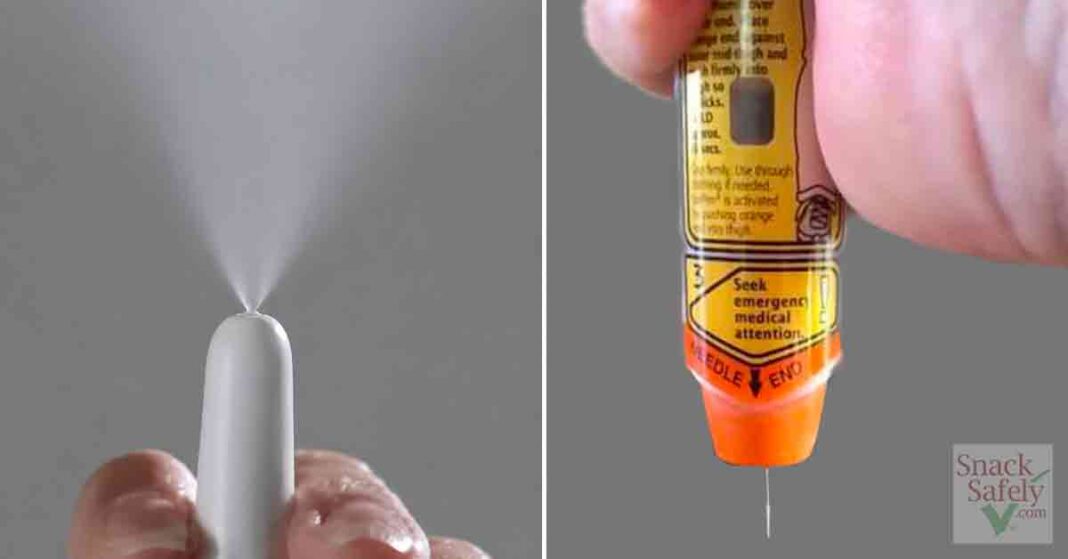
Both patients and health care professionals (HCPs) reported a strong preference for needle-free epinephrine nasal spray over traditional epinephrine auto-
injectors in survey data presented at the 2026 European Academy of Allergy and Clinical Immunology (EAACI) Annual Congress in Istanbul. The findings highlight persistent challenges with epinephrine adherence and utilization among people at risk for severe anaphylaxis.
The survey gathered insights from 122 health care professionals—including general practitioners, allergists, pediatricians, and emergency physicians—as well as 1,238 adults at risk for severe anaphylaxis across Canada, France, Germany, and the United Kingdom. Lead researcher Margitta Worm, MD, head of the allergy and immunology division at Charité – Universitätsmedizin Berlin, emphasized the importance of understanding patient-centered barriers to treatment. “Doctors should take patients’ fears (eg, against needles) into account and not underestimate the barriers of patients to use their [epinephrine],” Worm told Healio.
According to the surveyed HCPs, traditional epinephrine auto-injectors present significant behavioral and adherence hurdles for patients. Clinicians estimated that only about half of their patients consistently carry their prescribed devices, with adolescents exhibiting the lowest rate of compliance. Forgetfulness, a perceived low risk of anaphylaxis, uncertainty about symptoms, and hesitation to administer epinephrine were frequently cited as key reasons patients fail to use the medication as prescribed.
The clinician data also revealed concerning patterns regarding emergency responses. Surveyed HCPs estimated that approximately one-third of patients never or only sometimes use their auto-injector during an actual emergency. Furthermore, providers estimated that about 40% of patients do not seek emergency medical care after epinephrine is administered. HCPs identified poor adherence, user hesitation, and ineffective device training as the three most important unmet needs in modern patient management.
The patient survey data echoed many of these provider concerns, revealing significant vulnerabilities in real-world situations. Nearly 40% of patients reported not regularly carrying their auto-injector, and approximately 1 in 5 said they had never filled their prescription. Even more concerning, 54% of adult patients reported not having their device on hand during a past time of need. Commenting on these findings, Worm noted that “the high rate of patients not carrying their medication against a life-threatening medical condition” was surprising.
When directly comparing delivery methods, patients across all surveyed countries “strongly and consistently preferred” epinephrine nasal spray over auto-injectors. This preference extended to individuals who had never used epinephrine before as well as infrequent users. Patients particularly valued the nasal spray’s longer shelf life and indicated a willingness to pay more for it, while device size and weight were considered relatively unimportant factors in their decision-making.
Health care providers likewise rated epinephrine nasal spray more favorably than auto-injectors in categories including portability, safety, adherence, shelf life, and temperature stability. However, clinicians continued to rate auto-injectors higher for perceived efficacy. Approximately two-thirds of surveyed HCPs said they would consider prescribing nasal epinephrine for certain patients, with their decisions heavily influenced by clinical evidence and ease of use.
Looking ahead, Worm cautioned that preference alone does not guarantee improved outcomes. “Future studies will need to show that a new route and device will decrease the barriers of epinephrine use in real life,” she concluded, emphasizing the need to determine whether increased patient acceptance ultimately translates into better emergency treatment adherence and outcomes.
While the surveys do not establish that nasal epinephrine is more effective than auto-injectors, they suggest that a needle-free option may help address some of the barriers that prevent patients from carrying and using epinephrine when it is needed most.