
In December 2021, five-year-old Benedict Blythe went to school in England. During the school day, he suffered an allergic reaction after reportedly coming into contact with cow’s milk, to which he was allergic. Despite the efforts of school staff and emergency responders, Benedict suffered anaphylaxis and later died. His tragic and preventable death exposed a systemic lack of preparedness across UK educational institutions, where research later revealed that 70% of schools lacked recommended allergy safeguards. In response, his mother, Helen Blythe, and advocacy groups launched a years-long campaign that culminated in what became known as “Benedict’s Law.” Expected to take full effect in September 2026, the landmark reforms place key school allergy safety practices under statutory guidance, transforming what had largely been voluntary recommendations into requirements that schools must follow.
Under the new requirements introduced through Benedict’s Law, all state-funded schools in England must implement three core safety measures. First, schools must keep “stock” (i.e., without a prescription) emergency epinephrine auto-injectors (known in the UK as adrenaline auto-injectors) available on campus for emergencies. Second, all school staff—not just designated first aiders—must receive allergy awareness and emergency response training appropriate to their roles, ensuring that everyone from classroom teachers to lunchtime supervisors can recognize the signs of anaphylaxis and respond quickly. Finally, every school must develop, implement, and publish a comprehensive allergy and anaphylaxis policy to standardize prevention strategies, emergency response procedures, and incident reporting.
The urgency behind these reforms is underscored by the growing burden of allergic disease. Allergic conditions are now the most common chronic childhood illnesses in the UK, affecting one or two children living with allergies in nearly every classroom and contributing to more than 500,000 lost school days each year because of illness or medical appointments. Equally concerning, up to 30% of severe allergic reactions in schools occur in children with no previous allergy diagnosis. By ensuring that stock epinephrine auto-injectors are readily available for emergencies, Benedict’s Law provides a critical safety net for children whose first allergic reaction may also be their most dangerous.
Across the Atlantic, the United States has also worked to improve preparedness for life-threatening allergic reactions in schools. In 2013, Congress passed the School Access to Emergency Epinephrine Act, which used federal grant incentives to encourage states to establish stock epinephrine programs and comprehensive allergy management plans. Today, every state and the District of Columbia allow schools to obtain and maintain undesignated, or stock, epinephrine auto-injectors, representing significant legislative progress over the past decade. However, allowing schools to stock epinephrine is not the same as requiring them to do so.
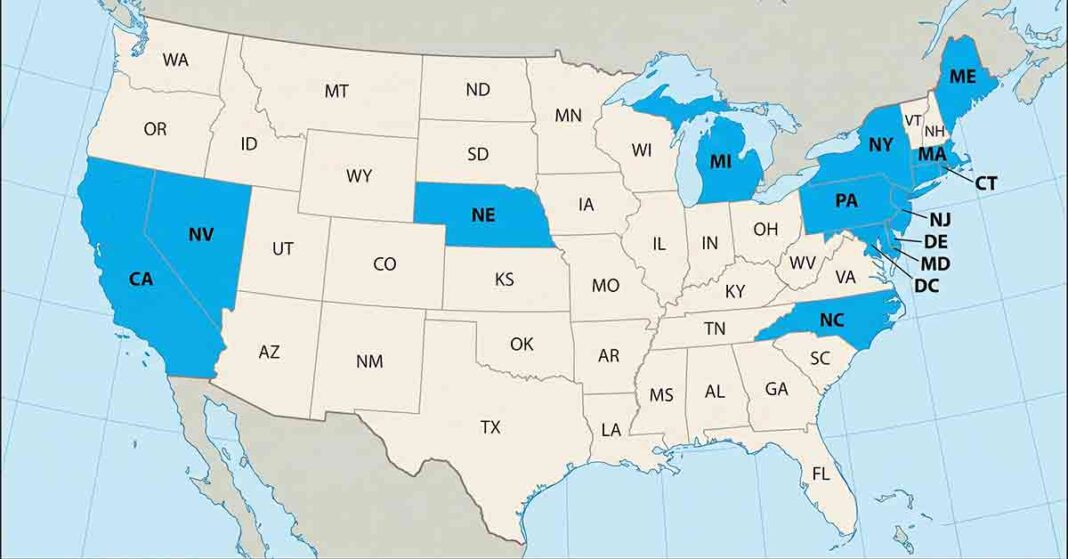
A comprehensive review published in the Journal of School Health found that while every state permits schools to stock epinephrine, only 14 states actually require schools to maintain life-saving stock epinephrine: California, Connecticut, Delaware, District of Columbia, Maine, Maryland, Massachusetts, Michigan, Nebraska, Nevada, New Jersey, New York, and North Carolina. In the remaining 37 jurisdictions, keeping stock epinephrine remains optional, creating a patchwork of policies where a student’s access to emergency medication may depend on where they attend school.
That voluntary approach creates significant implementation challenges. The review found that many schools continue to face barriers, including funding limitations, physician oversight requirements, liability concerns, and inconsistent staff training. As a result, although stock epinephrine is legally permitted throughout the United States, actual implementation and preparedness vary considerably from one community to another.
The contrast between England’s nationwide reforms and the fragmented system in the United States reflects a broader conversation about how societies protect children from life-threatening allergic reactions. Increasingly, advocates argue that epinephrine should be viewed much like a fire extinguisher or an automated external defibrillator (AED)—an essential piece of public safety infrastructure rather than a responsibility borne solely by individual families.
We call on the remaining states to shift from a reactive system centered on individual prescriptions to one focused on school-wide preparedness, thereby reducing the risk of preventable tragedies and ensuring every classroom is better equipped to respond to allergic emergencies. Whether a child survives anaphylaxis should not depend on their ZIP code.
Dave Bloom
CEO SnackSafely.com
- Benedict’s Law to overhaul school allergy training — BBC
- A National Review of State Laws for Stock Epinephrine in Schools — Journal of School Health