
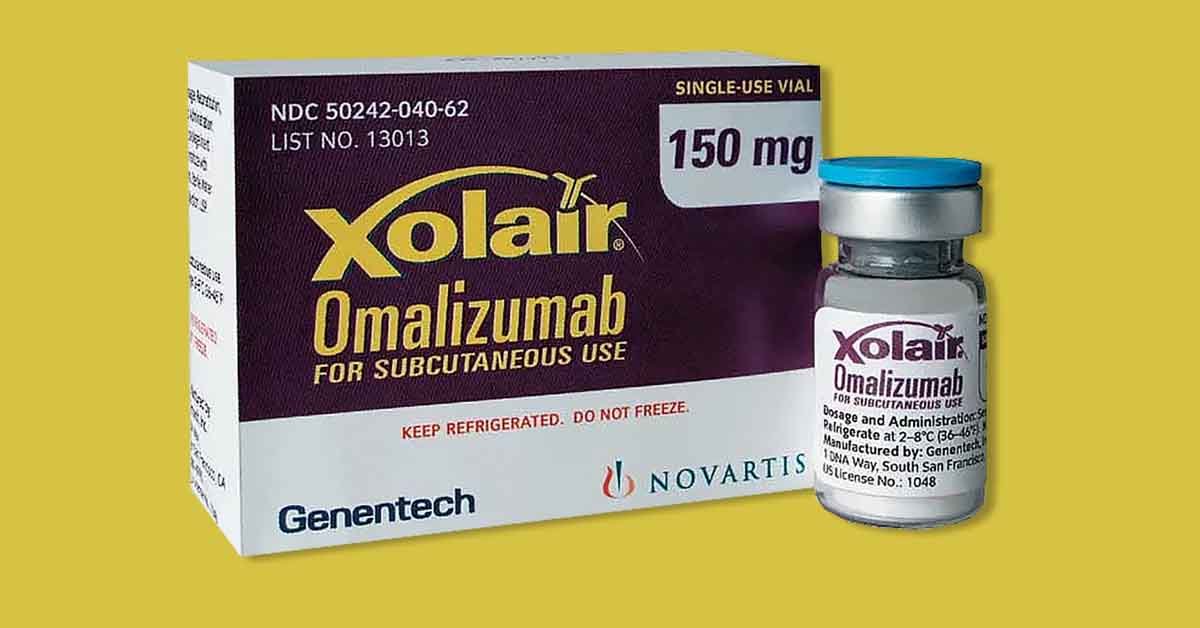
The Food and Drug Administration’s (FDA’s) approval of omalizumab (Xolair) in February 2024 marked a major milestone in food allergy treatment, a decision that was based largely on results from the landmark OUtMATCH clinical trial. However, as the researchers point out, “real-world data on the use of omalizumab in the clinical setting are limited,” underscoring the importance of assessing whether the impressive results from carefully controlled research studies hold up in everyday medical practice. To answer that question, researchers at the Johns Hopkins pediatric allergy clinic reviewed the outcomes of oral food challenges (OFCs) performed after patients began omalizumab therapy. Their findings offer encouraging evidence that the treatment works just as well in routine clinical care.
The study included 51 children, teenagers, and young adults ranging in age from 1 to 23 years, with a median age of 9. All had IgE-mediated food allergies and began omalizumab treatment between February 2024 and February 2025. Together, they completed 73 supervised oral food challenges through August 2025, typically about seven months after starting treatment. These were patients with complex allergic disease: 84% had multiple food allergies, 86% had eczema, 73% had environmental allergies, and 65% had asthma or recurrent wheezing. Milk, egg, and wheat accounted for more than 80% of the food challenges performed. Each patient’s omalizumab dose was determined using the FDA-approved dosing guidelines based on body weight and total IgE levels.
The results were highly encouraging and closely matched those seen in the OUtMATCH trial. Among the 56 food challenges that aimed for a standard serving-size target of at least 6,000 mg of food protein, 89% of patients safely consumed at least 1,000 mg, 86% reached 2,000 mg, 75% reached 4,000 mg, and 66% successfully consumed the full 6,000 mg target. As the authors noted, “these findings demonstrate that omalizumab can be successfully used for the treatment of FA in the clinical setting, even permitting ingestion of serving size portions of allergenic foods in some patients.” In other words, many patients were able to tolerate meaningful amounts of foods that previously posed a serious risk.
Success rates remained high across the three foods most often challenged. Among patients attempting a 6,000 mg serving, 61% reached the full goal for milk, 65% for egg, and 75% for wheat. These results were similar to—or even slightly better than—those reported in the OUtMATCH trial. After successfully completing a challenge, 92% of patients were allowed to begin eating the tested food at home. Rather than encouraging unlimited amounts right away, allergists usually recommended starting with about half of the amount the patient safely tolerated during the challenge and increasing intake gradually based on the patient’s goals and continued medical follow-up.
Although omalizumab greatly improved how much food many patients could safely eat, allergic reactions during the food challenges were still fairly common. Reactions occurred during 45% of the 73 challenges, although most were mild. About one-quarter were classified as mild Grade 1 reactions, while 12% were moderate Grade 2 reactions. More serious Grade 3 reactions occurred in 8% of challenges, and two patients required intramuscular epinephrine. Importantly, there were no life-threatening reactions, hospitalizations, or deaths. Even so, the researchers emphasized that oral food challenges still carry risks, even for patients taking omalizumab, and should always be performed in medical settings equipped to recognize and treat allergic reactions.
The researchers also looked for clues that might help predict which patients respond best to treatment. They found that better results were associated with higher total IgE levels before treatment, receiving omalizumab every two weeks instead of every four weeks, receiving higher doses relative to body weight, and having a lower ratio of allergen-specific IgE to total IgE. However, many of these factors are closely related to one another, making it difficult to know which truly influence treatment success. As a result, the authors caution that these findings should not yet be used to predict how an individual patient will respond.
Overall, this real-world study provides strong evidence that omalizumab can successfully help many people with food allergies tolerate larger amounts of allergenic foods under medical supervision. Although the study was relatively small, looked back at existing medical records, and included mostly White patients with private insurance, its results closely matched those seen in the landmark clinical trial. The researchers stress that treatment decisions should continue to be made jointly by patients, families, and their allergists, with food challenges and dietary introduction tailored to each person’s goals. Future studies will help determine how well patients maintain these new foods in their diets over time and identify the people most likely to benefit from treatment.