
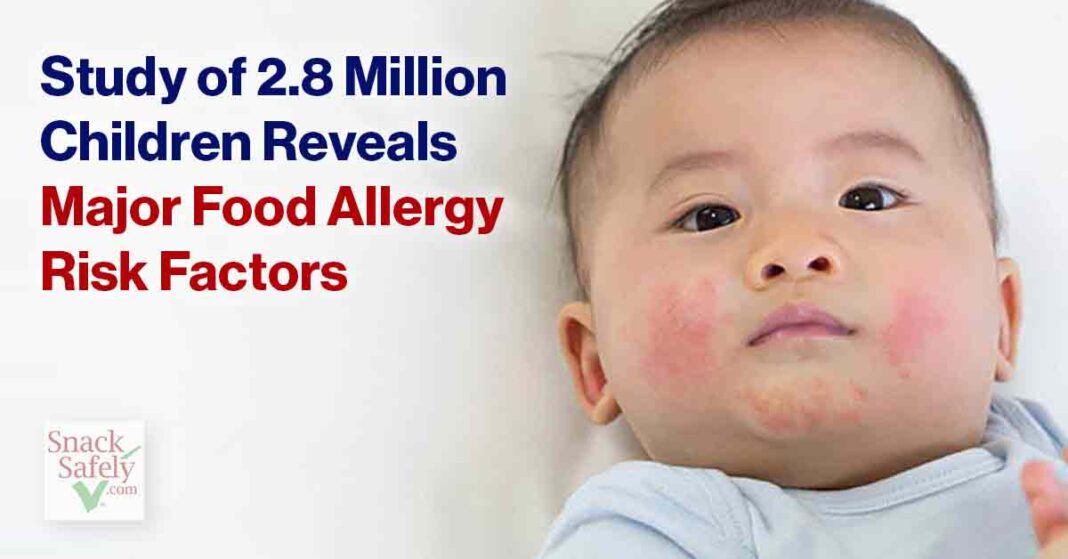
A comprehensive review published in JAMA Pediatrics has identified infant eczema, delayed introduction of allergenic foods, and early antibiotic use as among the strongest predictors of childhood food allergy. Researchers analyzed 190 studies involving 2.8 million children across 40 countries, examining 342 potential risk factors to better understand why food allergies develop. “Our study highlights that genetics alone cannot fully explain food allergy trends, pointing to interactions—or a ‘perfect storm’—between genes, skin health, the microbiome, and environmental exposures,” noted senior author Derek Chu, MD, PhD, an assistant professor at McMaster University.
Researchers searched major medical databases for studies involving children aged 6 and younger, ultimately including 156 long-term cohort studies as well as case-control and cross-sectional studies. They then combined the results to determine how strongly each potential risk factor was associated with developing food allergy. Despite the enormous number of children represented, the authors cautioned that the quality of the underlying evidence varied considerably: two-thirds of the included studies had a high or probably high risk of bias in at least one area.
Skin health emerged as particularly important. Children who developed atopic dermatitis, commonly known as eczema, during their first year of life had nearly four times the odds of developing food allergy. Allergic rhinitis and wheezing were also associated with increased risk. Researchers found additional evidence connecting problems with the skin’s protective barrier to food allergy: children with greater water loss through the skin had more than three times the odds of developing food allergy, while certain variants of the filaggrin gene—which helps maintain the skin barrier—were also associated with increased risk.
Some potentially modifiable factors showed strong associations as well. Introducing peanut after 12 months of age was associated with more than twice the odds of developing food allergy, a finding consistent with current recommendations favoring earlier introduction of allergenic foods, particularly peanut. Antibiotic exposure during an infant’s first month of life was associated with approximately four times the odds of food allergy. Cesarean delivery, being male, and being a firstborn child showed smaller associations, while having family members with food allergy or other allergic conditions also increased risk to varying degrees.
Among studies that used food challenges to confirm diagnoses, an estimated 4.7% of children developed IgE-mediated food allergy by age 6. Rates varied considerably by region, reaching an estimated 10.2% in Australia compared with 1.8% in Africa. Researchers noted that these differences could reflect genuine variations in environment and lifestyle, but differences in healthcare access and how studies diagnosed food allergy may also play a role.
The findings suggest there is no single explanation for why one child develops a food allergy while another does not. Instead, the authors describe something of a “perfect storm,” in which genetics, skin health, the gut microbiome, environmental exposures, and other factors may interact. For example, parents migrating to another country before their child’s birth may be associated with changes in an infant’s microbiome, allergen exposures, and eczema risk—all of which could potentially influence the likelihood of developing food allergy.
Despite the size of the analysis, the researchers stressed that finding an association does not necessarily mean that a particular factor causes food allergy. Evidence for many of the 342 factors was limited or uncertain, and much of the available research came from wealthier countries. Ongoing studies, including the SunBEAm birth cohort in the United States, could help researchers better understand which factors are most important and eventually improve the ability to identify children at greatest risk.
- Eczema, delayed allergen introduction, and early antibiotics top list of childhood food allergy risk factors — Contemporary Pediatrics
- Risk Factors for the Development of Food Allergy in Infants and Children — JAMA Pediatrics