
A new early-life treatment designed to influence the development of healthy gut bacteria could help prevent food allergies and eczema in high-risk babies, according to promising Phase 2 clinical trial results first announced in November 2025 by California-based biotechnology company Siolta Therapeutics. In its ADORED study, the company tested an investigational oral therapy called STMC-103H in infants with an immediate family history of allergic conditions. Rather than waiting for allergic diseases to develop, the therapy aims to guide the developing immune system during a baby’s first year of life.
Atopic diseases, including eczema, food allergies, asthma, and allergic rhinitis, affect more than one in five infants and children in the United States, with even higher rates among those with a family history of allergic disease. These conditions can follow a pattern of progression known as the “atopic march,” often beginning in infancy with eczema (atopic dermatitis) and food allergies before progressing to asthma and seasonal allergies later in childhood. While not every child follows this pattern, there are currently no approved medications specifically designed to prevent the broader development and progression of these diseases.
To determine whether influencing the infant microbiome could alter that trajectory, researchers enrolled 238 newborns across 30 clinical sites in the United States and Australia in a randomized, double-blind, placebo-controlled trial. Within their first two weeks of life, the babies were randomly assigned to receive either a daily oral dose of STMC-103H—which contains a carefully selected combination of live bacterial strains associated with a healthy infant microbiome—or a placebo for 336 days, followed by an equally long observation period without treatment. Dr Michael O’Sullivan, a consultant clinical immunologist and allergist at Fiona Stanley Hospital and the trial’s principal investigator, said the findings suggest that microbiome-based therapies could offer a new strategy for preventing allergic diseases.
Among the 158 infants who completed the full treatment regimen, the odds of developing physician-diagnosed eczema were 64% lower in the treatment group, with 23.3% developing the skin condition compared with 43.1% of those receiving the placebo. These incidence rates represent a relative risk reduction of approximately 46%. Encouraging results were also reported among infants who completed at least six months of treatment. However, when all randomized infants were included in the analysis, regardless of treatment duration, the primary efficacy endpoint did not reach statistical significance. Further research is needed to determine whether sustained treatment accounts for the stronger results among infants who completed the regimen.
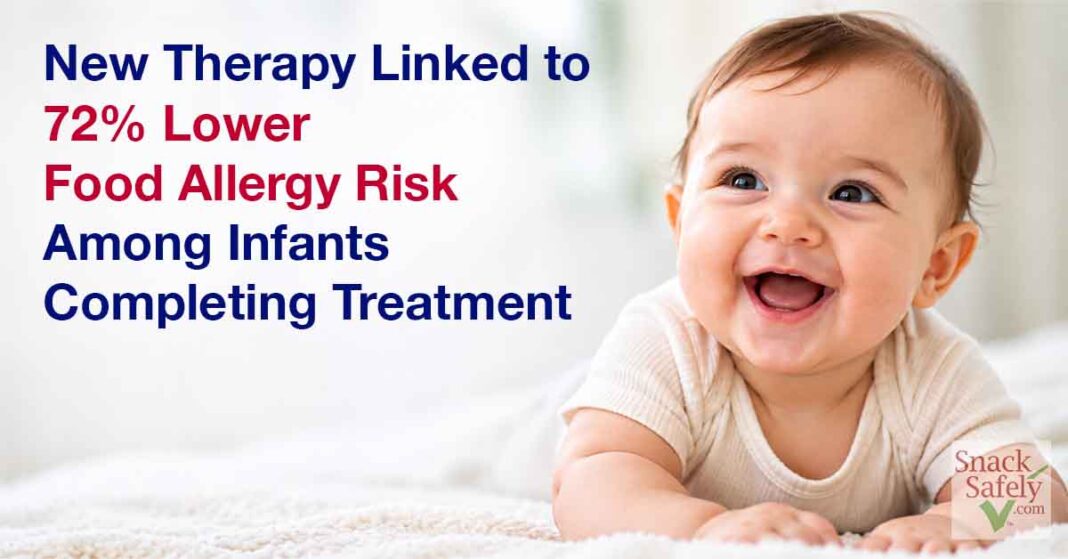
Perhaps most encouraging for the food allergy community, infants who completed the full treatment regimen had 77% lower odds of developing a physician-diagnosed food allergy, with an incidence of 4.7% compared with 16.7% in the placebo group—a relative risk reduction of approximately 72%. Researchers also reported a delayed onset of eczema and lower overall levels of immunoglobulin E (IgE), an antibody associated with allergic reactions. However, food allergy prevention was a secondary endpoint, and the reported statistical analyses were not adjusted for multiple comparisons, meaning these findings require confirmation in further studies. The investigational therapy was generally well tolerated, with comparable safety findings between the treatment and placebo groups regarding serious adverse events and adverse events of special interest.
Company leaders expressed optimism about the potential for preventive allergy care, particularly given that the US Food and Drug Administration (FDA) has granted the development program Fast Track designation. Dr Richard Shames, Siolta Therapeutics’ Chief Medical Officer, indicated that the company intends to use the findings to support further discussions with the FDA and advance the development of STMC-103H. Fast Track designation is intended to facilitate the development and review of promising therapies addressing unmet medical needs but does not constitute FDA approval.
Founded by scientists from the University of California, San Francisco, Siolta Therapeutics subsequently presented the one-year findings at the 2026 Annual Meeting of the American Academy of Allergy, Asthma & Immunology (AAAAI) in February. Longer-term follow-up will be particularly important in determining whether the protective effects persist after treatment ends. Co-Founder and CEO Nikole Kimes, PhD, described the company’s goal as influencing immune development early in life to prevent allergic disease throughout childhood and beyond. While the results offer hope for families at increased risk of food allergies, STMC-103H remains investigational, and larger clinical trials will be needed to establish its safety and effectiveness. The therapy is distinct from commercially available probiotic supplements, which should not be assumed to provide similar protection.