
Unveiled this week at the 2026 Consumer Electronics Show in Las Vegas, Allergen Alert is a “pocket-sized lab” that brings professional-grade food safety testing directly to the dinner table. Developed by a startup spun off from diagnostics company bioMérieux, the device aims to ease the persistent anxiety of the 36 million Americans living with food allergies or celiac disease. By miniaturizing complex laboratory processes into a handheld unit, the company offers a high-tech “safety belt” for diners who otherwise rely solely on verbal assurances from restaurant staff.
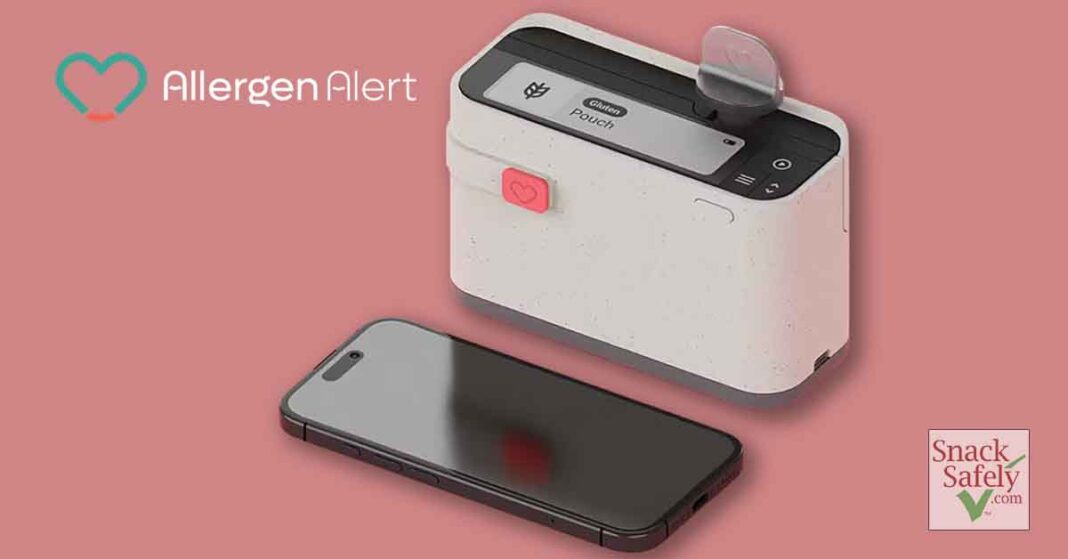
The device is a sleek, battery-powered rectangular unit roughly the size of a small softcover book. Designed for portability, it fits easily into a bag or a deep pocket for use in restaurants, school cafeterias, or while traveling. Unlike previous sensors that focused on a single allergen, Allergen Alert is being developed to detect a broad spectrum of Top 9 allergens — milk, peanuts, tree nuts, eggs, soy, wheat, fish, crustacean shellfish, and sesame — as well as gluten.
The process is engineered for simplicity and requires no scientific expertise from the user. To test a meal, the user takes a small, pea-sized sample of the food and places it inside a single-use, patented testing pouch. The pouch serves as a self-contained reaction chamber, which is then slotted into the top of the mini-lab. Once the sample is secure, the user simply presses a single button to initiate the automated analysis, ensuring a mess-free process and protection from external cross-contamination.
Inside the device, the system uses advanced immunoassay technology — a method derived from bioMérieux’s decades of experience in clinical microbiology — that detects specific proteins that trigger allergic reactions. By automating extraction and detection, the device delivers “lab-grade” results in about two minutes.
Precision is a hallmark of the device, with the company claiming sensitivity levels that meet or exceed federal labeling standards. For instance, the system can detect gluten at 4 parts per million (ppm) and milk at 5 ppm. Given the FDA’s threshold for “gluten-free” labeling is 20 ppm, this high level of sensitivity provides a rigorous screen for those with severe sensitivities or Celiac disease who require a stricter margin of safety.
The device is further enhanced by digital connectivity via a companion smartphone app. Once the analysis is complete, the results are displayed on the device’s screen and synced to the app. This allows users to keep a record of their tests and provides clear visual confirmation of whether a dish is safe to consume. The app integration also positions the device as part of a broader ecosystem of food safety management for both individual families and professional kitchens.
As Allergen Alert prepares for a market launch, it is expected to retail for approximately $200, supported by a subscription model for the necessary single-use pouches. While the company is currently refining the device with professional chefs and early adopters, the ultimate goal is to empower the allergy community. By providing immediate, scientific data at the point of consumption, Allergen Alert aims to transform dining from a high-stakes gamble into a predictable and safe experience.